Security | Threat Detection | Cyberattacks | DevSecOps | Compliance

AI and AppSec: A Partnership to Prevent Breaches

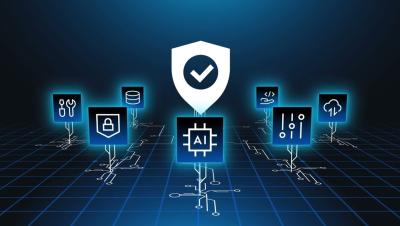
As software development accelerates, cyberattacks are also growing more sophisticated. The result? Traditional security methods are often rendered ineffective. With reactive strategies and stretched resources, application security (AppSec) teams are under increasing pressure to secure apps without sacrificing speed and innovation. Artificial intelligence (AI) has quickly become the frontrunner solution, automating labor-intensive tasks, improving accuracy, and enabling proactive security measures.

Resurgent North Korean Malware Campaign in npm

Hello from the Veracode Research blog! It’s been a minute since we’ve done a malware write-up, but we’re back and ready for action! And speaking of folks who are back and ready for action, the North Korean attackers behind the crypto wallet stealer campaign we wrote about in February of 2024 and again in May of 2024 are back at it with a new batch of malicious npm packages.

Introducing Veracode Threat Research

We are excited to announce the launch of Veracode Threat Research, a new initiative to counter software supply chain threats. Thanks to the acquisition of Phylum, Inc., we are now equipped with cutting-edge technology and a wealth of expertise to revolutionize how we secure the open-source ecosystem and protect your developers from novel attacks.

Getting an 80% Productivity Boost By Transforming Development Workflows

How much innovation could you reinvest in with 80% developer productivity recapture? My guess is: a lot. As a VP of Product at a security company, I’ve seen firsthand how making it easier for developers to manage security findings can help them focus on delivering value faster. Let me share with you about the developer security experience that can transform development workflows for increased productivity.

How to Improve Your Security Posture with the Least Effort Using ASPM

Security posture management has become exponentially more complex for organizations developing and managing a vast ecosystem of applications. Evolving architectures like microservices, hybrid cloud infrastructures, and frequent release cycles introduce constant change and challenges. Amid these growing challenges are the existing security gaps organizations are struggling to address.

ASPM Buyer's Guide: Find the Right Vendor for Your App Risk Management Needs

Security teams are overwhelmed. Whether it’s alert overload, a growing backlog of vulnerabilities, or fragmented security data, there’s no finish line in sight. The State of Software Security 2025 report reveals that security debt is rising and flaws times are increasing. Meanwhile, the traditional tools many teams leverage fail to provide the context needed to track risks across the application lifecycle and, importantly, to prioritize them.

From Lagging to Leading: The New View of Software Security Maturity in 2025

The State of Software Security (SoSS) 2025: A New View of Maturity, our 15th year publishing the report, highlights a critical shift in how organizations approach security maturity. This transition focuses on major risks and uses continuous feedback loops to identify and mitigate them. Key metrics such as flaw prevalence, fix capacity, fix speed, debt prevalence, and open-source debt are essential for benchmarking and improving security maturity.

Still relying solely on CVSS scores to prioritize software supply chain risks? Stop.

Software supply chain security risks are mounting. As noted in Veracode’s State of Software Security (SoSS) report, organizations of all sizes are drowning in security debt, and a large portion of the critical debt can be attributed to third-party vulnerabilities.

How to Securely Embrace the AI Revolution in Software Development

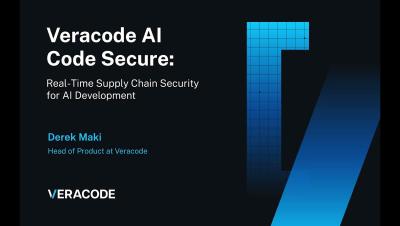
Software development is one of the most impacted workflows in the Artificial Intelligence revolution. How will you handle the AI-driven revolution in software development securely? Check out this video to see how our innovation can help you stop risks in AI and the software supply chain at the start.

Securing Code in the Era of Agentic AI

AI coding assistants like GitHub Copilot are transforming the way developers write software, boosting productivity, and accelerating development cycles. However, while these tools generate code more efficiently, they also introduce new risks more efficiently—potentially embedding security vulnerabilities that could lead to severe breaches down the line. What is your plan for reducing risk from the vast amount of insecure code coming through agentic AI in software development?