Security | Threat Detection | Cyberattacks | DevSecOps | Compliance

The Latest Cybersecurity News & Insights From Around The World

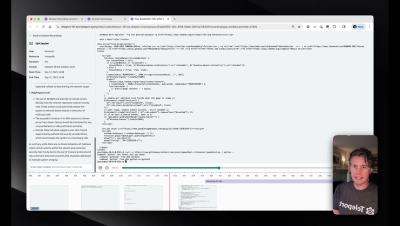
4 Ways to Secure Bedrock Agent-Initiated Actions with Teleport
AI agents powered by Amazon Bedrock are playing an increasingly central role in cloud operations. These agents can interact directly with core AWS services like S3, Lambda, RDS, and EC2 to perform tasks such as data retrieval, automation orchestration, and resource provisioning. Many teams rely on the Model Context Protocol (MCP) to structure agent behavior and convert natural language into actionable commands.
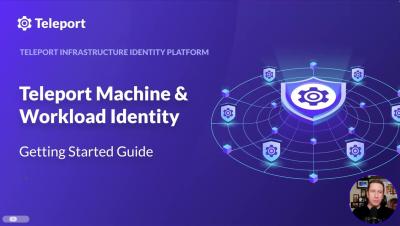
Teleport Machine & Workload Identity Getting Started Guide
Video walkthrough of the Teleport Machine & Workload Identity Getting Started Guide.
Securing Identity in the Age of AI: A Buyer's Guide to Teleport
As enterprises embrace AI, identity has become the defining security challenge. Every new database, Kubernetes cluster, SaaS app, and now every AI agent introduces yet another identity that must be governed and protected. At the same time, attackers are weaponizing AI to accelerate identity-based threats, exploiting fragmentation and credential sprawl to devastating effect.
Speedrun Incident Investigations Across GitHub, AWS, Okta, and More
Security teams spend hours stitching together logs from disconnected systems during investigations. Learn how to get clarity in minutes by tracing identity signals across everything in your stack.
Immediate, Automated, Compliant Access Enforcement with Teleport JIT Watcher
A common request we hear at Teleport is for immediate Just-in-Time (JIT) access. Users shouldn't have standing access to resources, but they do need an audited escalation and approval process they can personally execute when access is required. This raises an important challenge: how do we ensure users only access the resources they truly need, without creating access sprawl or slowing teams down?
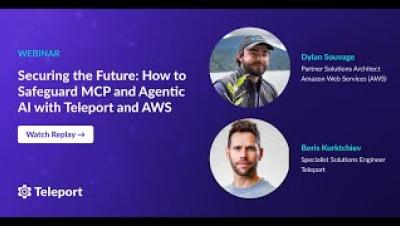
Securing the Future: How to Safeguard MCP and Agentic AI with Teleport and AWS
As enterprises rapidly adopt agentic AI and large language models (LLMs) to automate critical business processes and access sensitive data, the traditional security playbook is no longer sufficient. The Model Context Protocol (MCP), a new connector for AI systems like Amazon Bedrock Agents, is revolutionizing enterprise integration—but it also introduces new risks. Join us for an in-depth session exploring how to secure MCP-based AI architectures using Teleport’s Infrastructure Identity Platform and AWS. We’ll cover.
5 Ways to Keep AWS Fast with Just-in-Time Access
Modern AWS environments move fast. Engineers spin up EKS clusters for testing, automation pipelines deploy to production, and AI agents trigger infrastructure workflows via Amazon Bedrock. AWS provides ways to manage access primitives such as roles and privileges to keep up with this velocity, such as STS AssumeRole, OIDC federation, IAM Authenticator, and Identity Center. But the challenge isn’t in these primitives themselves. It's the human factor behind the primitives.
ISO 27001:2022 Requirements Explained for 2025
ISO/IEC 27001:2022 provides a framework for managing information security using an Information Security Management System (ISMS). The October 2025 deadline to upgrade from the previous ISO 27001:2013 standard is coming fast, and organizations yet to transition risk losing their certification. Maintaining ISO/IEC 27001 certification is especially relevant for regulated industries, SaaS providers with enterprise customers, and global organizations handling sensitive data.
Teleport announces general availability of Secure Model Context Protocol (MCP)
With nearly half of enterprises deploying AI, innovation accelerates security risks, but Teleport's new solution ensures only trusted AI get access to tools, databases, and apps.