Security | Threat Detection | Cyberattacks | DevSecOps | Compliance

This Month in Datadog: February 2022 (Episode 8)

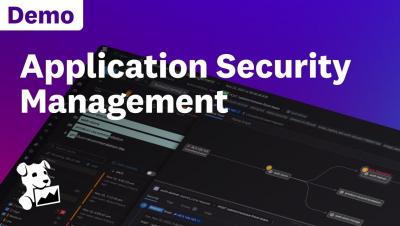
Datadog is constantly elevating the approach to cloud monitoring and security. This Month in Datadog updates you on our newest product features, announcements, resources, and events. To learn more about Datadog and start a free 14-day trial, visit Cloud Monitoring as a Service. This month we put the Spotlight on Datadog Application Security which is now in public beta.

Best practices for securing Kubernetes applications

Cloud-based Kubernetes applications have become the standard for modernizing workloads, but their multi-layered design can easily create numerous entry points for unauthorized activity. To protect your applications from these threats, you need security controls at each layer of your Kubernetes infrastructure.

Introducing Datadog Application Security

Securing modern-day production systems is expensive and complex. Teams often need to implement extensive measures, such as secure coding practices, security testing, periodic vulnerability scans and penetration tests, and protections at the network edge. Even when organizations have the resources to deploy these solutions, they still struggle to keep pace with software teams, especially as they accelerate their release cycles and migrate to distributed systems and microservices.

The PwnKit vulnerability: Overview, detection, and remediation

On January 25, 2022, Qualys announced the discovery of a local privilege escalation vulnerability that it identified as PwnKit. The PwnKit vulnerability affects PolicyKit’s pkexec, a SUID-root program installed by default on many Linux distributions. The same day of the announcement, a proof of concept (PoC) exploit was built and published by the security research community.

Elevate AWS threat detection with Stratus Red Team

A core challenge for threat detection engineering is reproducing common attacker behavior. Several open source and commercial projects exist for traditional endpoint and on-premise security, but there is a clear need for a cloud-native tool built with cloud providers and infrastructure in mind. To meet this growing demand, we’re happy to announce Stratus Red Team, an open source project created to emulate common attack techniques directly in your cloud environment.

Datadog Cloud Security Platform

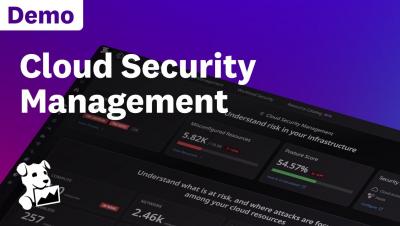
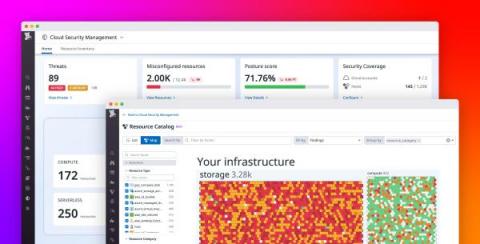
Datadog's Cloud Security Platform—consisting of Cloud SIEM, Posture Management, and Workload Security—delivers real-time threat detection and continuous configuration audits across your applications, hosts, containers, and cloud infrastructure. Datadog derives security insights from your observability data, enabling security and DevOps teams to work together to detect, investigate, and remediate threats.

Monitor Kubernetes with Fairwinds Insights' offering in the Datadog Marketplace

Fairwinds Insights is Kubernetes governance and security software that enables DevOps teams to monitor and prevent configuration problems in their infrastructure and applications. Not only does Fairwinds simplify Kubernetes complexity, but it also reduces risk by surfacing security and reliability issues in your Kubernetes clusters.

The Log4j Log4Shell vulnerability: Overview, detection, and remediation

On December 9, 2021, a critical vulnerability in the popular Log4j Java logging library was disclosed and nicknamed Log4Shell. The vulnerability is tracked as CVE-2021-44228 and is a remote code execution vulnerability that can give an attacker full control of any impacted system. In this blog post, we will: We will also look at how to leverage Datadog to protect your infrastructure and applications.

Obfuscate user data with Session Replay default privacy settings

Session Replay enables you to replay in a video-like format how users interact with your website to help you understand behavioral patterns and save time troubleshooting. Visibility into user sessions, however, can risk exposing sensitive data and raise privacy concerns. For example, a user session may include typing in a credit card or social security number into an input field.