Security | Threat Detection | Cyberattacks | DevSecOps | Compliance

The origin of Open Policy Agent and Rego

Why the cloud-native architecture required a new policy language I recently started a new series on the Open Policy Agent (OPA) blog on why Rego, OPA’s policy language, looks and behaves the way it does. The blog post dives into the core design principles for Rego, why they’re important, and how they’ve influenced the language. I hope it will help OPA users better understand the language, so they can more easily jump into creating policy of their own.
Performing Image Scanning on Admission Controller with OPA

In this post we will talk about using image scanning on admission controller to scan your container images on-demand, right before your workloads are scheduled in the cluster. Ensuring that all the runtime workloads have been scanned and have no serious vulnerabilities is not an easy task. Let’s see how we can block any pod that doesn’t pass the scanning policies before it even runs in your cluster.

PCI Compliance for Containers and Kubernetes

Attend our webinar about PCI compliance in containers & Kubernetes: Download our PCI Guide: More info in our blog: Many of your applications are now starting to run on containers in the cloud. If your applications are at all dealing with credit card data, you may be wondering how to validate PCI compliance, a well known regulation for handling this data securely. PCI is also a must have requirement to check off before your code gets to production.

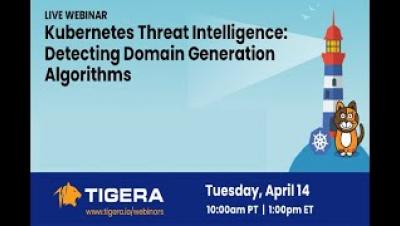
Kubernetes Threat Intelligence: Detecting Domain Generation Algorithms (DGA)

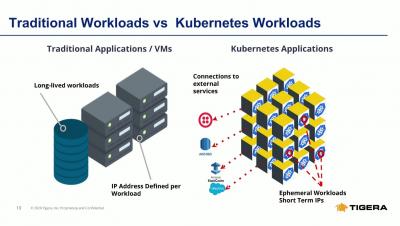
Malicious actors often use Domain Generation Algorithms (DGA) to exploit the DNS protocol and execute command-and-control (C & C) malware attacks. In this webinar, threat researchers Manoj Ajuhe and Chris Gong from Tigera’s Threat Detection Team will be sharing the latest insights into DGAs, the risks they present, along with best practices to speed detection and mitigation.

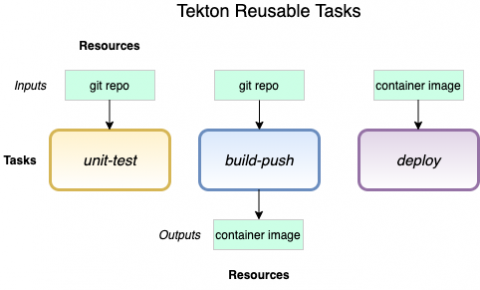
Securing Tekton pipelines in OpenShift with Sysdig

In this blog post, you’ll learn how to create a reusable Sysdig Secure image scanning task, for Tekton pipelines and Openshift clusters, that can be deployed in many pipelines. As a DevOps engineer, you want to deliver applications fast but keeping compliance with security standards like CIS, PCI DSS or NIST 800-190, GDPR can be an arduous task. You might implement image scanning in your CI/CD pipelines to detect and resolve issues such as known vulnerabilities and incorrect configurations.

Falco Support on AWS Fargate

Today we’re very excited to announce a partnership with Amazon to support Fargate in Sysdig’s product line. We are also announcing that Falco, the world’s most popular runtime security tool for containers, will soon be able to work on Fargate. This is an important milestone. For the first time, Fargate users will enjoy the benefit of deep instrumentation. This will make their workloads more secure, reliable, and efficient.

Why use Typha in your Calico Kubernetes Deployments?

Calico is an open source networking and network security solution for containers, virtual machines, and native host-based workloads. Calico supports a broad range of platforms including Kubernetes, OpenShift, Docker EE, OpenStack, and bare metal. In this blog, we will focus on Kubernetes pod networking and network security using Calico. Calico uses etcd as the back-end datastore. When you run Calico on Kubernetes, you can use the same etcd datastore through the Kubernetes API server.

Alcide kAudit Integrates with Sumo Logic

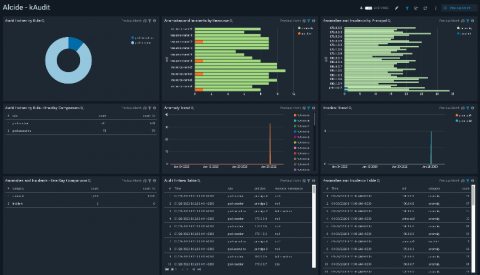
Alcide recently introduced Alcide kAudit, an automatic tool for analyzing Kubernetes Audit logs. This tool focuses on detecting non-compliant and anomalous behavior of users, automated service accounts and suspicious administration operations. Alcide’s recent integration with Sumo Logic enables users to gain full access to insights and real-time alerts from Alcide kAudit.