Researchers at BlueVoyant warn that attackers are increasingly adding an extra step to their phishing campaigns, impersonating third-parties to lend credibility to the scams. “Third-party phishing sites…will include some characteristics of the original flow, with an added step – the initial impersonation that establishes credibility to the end user is a service that is not connected to the targeted organization,” the researchers write.
During the summer months, when employees and customers are away on vacation, things usually slow down for businesses. But for cybercriminals, the opposite is true because they are busy taking advantage of minimal staffing levels in companies during the vacation period to launch complex attacks. The U.S. Federal Cybersecurity and Infrastructure Security Agency (CISA), warns that the risk of being hit by a cyberattacks rises over the holidays and summer vacation-themed phishing attacks gain momentum.
Researchers at Akamai describe a credential phishing campaign that’s been running since at least March 2022. Due to the volume of traffic to the phishing sites, the researchers estimate that the attackers are raking in up to $150,000 per year by selling the stolen credentials. “This ongoing research led to the discovery of multiple templated sites used as front-ends for the scam infrastructure that have been tied to more than 40,000 malicious routing domains,” the researchers write.
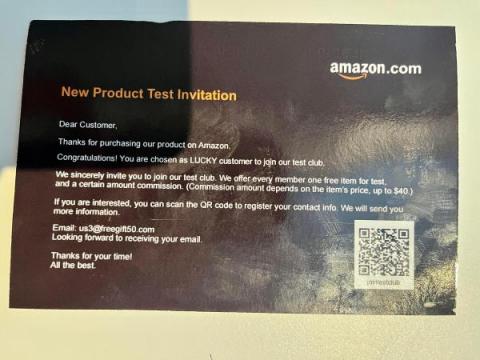
We've reported on several Amazon scams, but for once, there is positive news. Amazon sent an email Thursday morning highlighting the top scams your users should watch out for: Prime Membership Scams Per Amazon, "These are unexpected calls/texts/emails that refer to a costly membership fee or an issue with your membership and ask you to confirm or cancel the charge.
The US Cybersecurity and Infrastructure Security Agency (CISA) has found that compromise of valid accounts and spear phishing attacks were the two most common vectors of initial access in 2022, Decipher reports. Valid accounts were compromised in 54% of successful attacks. “Valid accounts can be former employee accounts that have not been removed from the active directory or default administrator accounts,” CISA said.
Business email compromise (BEC) continues to be one of the fastest growing and most risky attack vectors for companies, as it has become a multimillion-dollar business that causes almost 80 times more losses than ransomware.
It’s late Friday evening and Tom (your average everyday employee) has worked diligently to meet project deadlines and follow up with customers before his much-anticipated weeklong vacation. Exhausted from burning the midnight oil and juggling multiple tasks, he’s eager to wrap up his work and enjoy a well-deserved break. As Tom completes his last remaining task, he is greeted with one final email before signing off for the week.
New data focused on the first half of the year shows some anomalies. Phishing attacks are slowing down… that is, until you dive into the details. I can’t remember the last time I posted a headline stating that phishing numbers were down; that’s because we haven’t seen this trend occur in a number of years. But new data from Vade Secure’s H1 2023 Phishing and Malware Report shows an interesting outlier that skews a high-level view of the data.