The evolution of phishing attacks
A practical guide to phishing and best practices to avoid falling victim.


A practical guide to phishing and best practices to avoid falling victim.
Threat actors launched 156,000 business email compromise (BEC) attempts per day between April 2022 and April 2023, according to Microsoft’s latest Digital Defense Report. While most of these attempts go unanswered, criminals can receive massive payouts when they succeed.
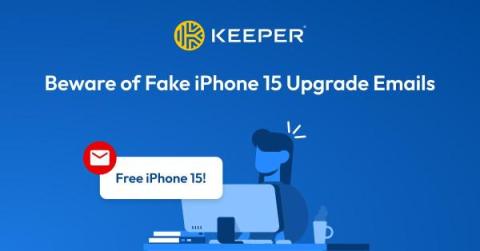
With the new iPhone 15 release, scammers are taking advantage by impersonating mobile carriers or Apple support, claiming their target is eligible for a free or discounted iPhone upgrade. The scammer’s goal is to get their target to provide personal and financial information which is then used to attempt identity theft or make unauthorized charges. Read on to learn what signs to look out for and what to do if you fall victim to this iPhone 15 scam.
What Are Microsoft 365 LinkedIn Smart Links? LinkedIn Smart Links are a relatively new feature introduced by LinkedIn to simplify the way users share content, profiles, and documents within the platform. Smart Links allow you to share specific pieces of content, making it easier for connections to access information you deem relevant. Smart Links are dynamic, which means they change each time someone accesses the link.
When was the last time you received a phishing attempt through text? I’m guessing it was earlier this week, if not at some point today. Being part of the cybersecurity community keeps us watchful and aware of the ways scammers try to steal our information. But how adept are our parents at spotting these scams? The dangers of online scams and mobile phishing are real and everywhere. Yet, many of our parents and grandparents are navigating this new form of deception without much understanding.
The massive uptick in business email compromise (BEC) is considered one of the costliest attack types, requiring organizations to put employees on notice to stay vigilant. The latest research from the FBI puts the average cost of BEC attacks at around $125,000. What makes them so dangerous is that they largely rely on text-only emails using social engineering to trick those with finance responsibilities into parting with the money they control.
Understanding Qakbot Malware Qakbot is a sophisticated banking Trojan that first emerged around 2007 and has continued to evolve over the years. Its primary goal is to steal sensitive financial information, including banking credentials and personal data, from infected systems. Once it infiltrates a system, it can also serve as a delivery mechanism for other malicious payloads, making it a potent tool for cybercriminals.
The most often recommended piece of anti-phishing advice is for all users to “hover” over a URL link before clicking on it. It is great advice. It does assume that the involved users know how to tell the difference between rogue and legitimate URL links. If you or someone you know does not know how to tell the difference between malicious and legitimate URL links, tell them to watch my one-hour webinar on the subject. We are going to recommend a slight update on the rule.
The Importance of Email Continuity Email is the lifeblood of many organizations. It serves as a primary channel for communication, document sharing, scheduling, and collaboration. When email services experience downtime due to various reasons such as server issues, maintenance, or cyberattacks, businesses can face significant challenges: Microsoft 365: A Powerful Email Solution Microsoft 365 offers a robust and feature-rich email service through Exchange Online.