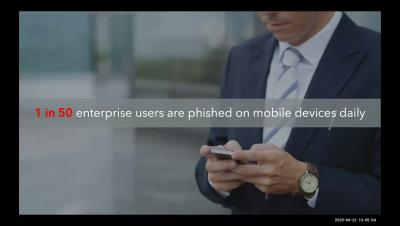
Phishing Threats in Mobile-enabled world
Your employees work differently now and the usage of primarily mobile devices opens a whole new door of vulnerabilities that organizations need to consider. Namely, phishing threats.


Regardless of the industry or organization, corporate email is the main cause of unauthorized and accidental data leaks. Employees are constantly sending emails to external parties that may contain sensitive company data, personally identifiable information (PII), trade secrets and other intellectual property.
From nation-state threat actors to typical cybercriminals, the public sector faces a multitude of cybersecurity threats. At the same time, public-sector organizations struggle to maintain a robust cyber hygiene posture because they need to balance limited budgets with complex IT environments and highly interconnected ecosystems.
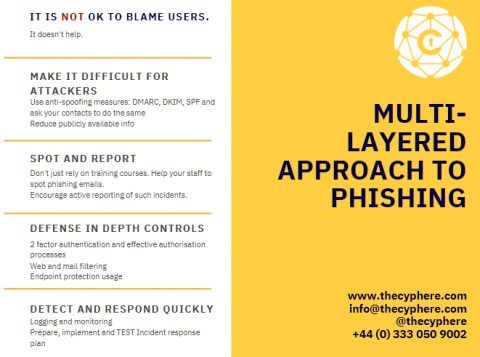
Phishing emails are a serious problem for both businesses and consumers. Phishers use phishing emails to steal users’ personal information, like usernames, passwords, credit card numbers, social security numbers and other sensitive data.
Recently, we observed a malware spam campaign leveraging the current COVID-19 situation. The emails were sent from a compromised mailbox using a mailer script. The message contains a link leading to a Word document. The email takes advantage of a COVID-19 test mandate as a pretext to lure the unsuspecting user into clicking the link and downloading the document. Figure 1. COVID-19 themed malspam with link to the malicious document.
Gmail is an immensely popular service, with nearly 2 billion active accounts. And as the service has grown, businesses have turned to it for all kinds of things it was never meant to do: user authentication, password recovery, and perhaps most problematic, the passing of sensitive or regulated data between parties.
Here at Lookout, our Threat Intelligence Services teams work with a massive data set that enables them to proactively hunt for threats and conduct forensic investigations. While our findings are used to protect Lookout customers, we also pride ourselves in contributing to the cybersecurity community ensuring that everyone’s security and privacy are safeguarded.