Security | Threat Detection | Cyberattacks | DevSecOps | Compliance

Roblox Script Executor: What It Is, How It Works, and Why It's Risky

In the cybersecurity arena, script executors are among the most divisive tools. On the face of it, they appear harmless enough; in fact, these tools are generic script-execution utilities that can be used for automation but are also widely abused outside legitimate development environments. They become powerful tools against cybercrime, malware deployment, and privacy invasions when corrupted.


Why the Defense Industrial Base is Prioritizing CMMC

As global tensions and AI-driven threats accelerate, the "trust but verify" model of the past has been replaced by a "verify then trust" mandate. At the heart of this shift is the Cybersecurity Maturity Model Certification (CMMC); a framework that has transformed from a roadmap into a non-negotiable requirement for doing business with the Department of Defense (DoD).

PIM: The Secret to Scaling Your E-commerce

To stay competitive in 2026, your business has to face an increasingly complex challenge: manage product information across multiple channels while maintaining accuracy, consistency, and speed. As your online store grows from selling dozens to thousands of products, the spreadsheets and manual processes that once seemed adequate quickly become bottlenecks. These increasingly complex industry requirements are difficult, if not impossible, to meet without a dedicated Product Information Management (PIM) system, particularly for businesses in a growth phase.

Protecting Your Finances from Cyber Threats: A Comprehensive Guide

Welcome to the digital age, where convenience often comes at the cost of security. As cyber threats continue to evolve, safeguarding your financial information has never been more critical. In this guide, we'll explore practical strategies to protect your finances from cybercriminals and ensure your hard-earned money stays safe.

Cybersecurity Automation: Transforming Modern Security Operations

Organisations now face a relentless volume of cyber threats, expanding infrastructure, and constant monitoring requirements. Traditional security operations built on manual processes can no longer scale effectively. Security teams must handle thousands of alerts, system logs, and security incidents daily, which increases operational costs and creates opportunities for human error.

Affordable Bitcoin Hosting Without Sacrificing Premium Quality or Performance

Affordable Bitcoin hosting levels the playing field, offering 99.99% uptime guarantees, unlimited automated snapshots, global unmetered bandwidth, and crypto-optimized templates without enterprise price tags. hosting-bitcoin.com entry-level plans match mid-tier competitors' specs at starter rates, enabling solo miners, node operators, and Lightning hubs to compete professionally.

Phishing Kit Attacks Are Now Everywhere: How SOC Analysts Can Detect Them

Phishing kits have changed the speed of compromise. Attackers no longer need malware or complex tooling. With ready-made phishing platforms, they can launch large-scale credential theft campaigns that bypass MFA and deliver valid sessions almost instantly. By the time an alert reaches the SOC, the attacker may already be inside. Stopping these attacks now depends on seeing the full phishing chain early, before stolen access turns into business damage.
Featured Post

AI in the SOC: Why Complete Autonomy Is the Wrong Goal

As artificial intelligence (AI) becomes more deeply embedded in security operations, a divide has emerged in how its role is defined. Some argue the security operations centre (SOC) should be fully autonomous, with AI replacing human analysts. Others believe that augmentation is the right path, using AI to support and extend existing teams. Augmentation probably reflects how SOCs operate in practice. It helps analysts triage alerts, investigate incidents faster, and it brings better context into their work, while still ensuring humans are accountable for decisions.

How to Respond After an Active Directory Compromise: Step-by-Step Active Directory Response and Recovery Playbook

Enterprise IT relies heavily on Active Directory (AD) for user, access, and authentication management. A compromise can harm systems, data, and accounts. Why Swift Response Matters A fast, effective response can contain an AD incident, while delays can turn it into a major organizational crisis, including: A clear AD response plan is essential to systematically: Long downtime, damage to organization’s reputation, and problems with compliance can result from neglecting proactive AD recovery.

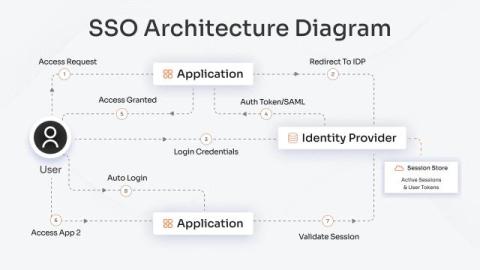
Single Sign-On Architecture Deep Dive: Protocols, Tokens & Identity Flow

Given the mountain of applications that we use today, having them together and logging in to each of them can be a hassle. However, a well-designed SSO architecture comes to your rescue increasing productivity and simplifying your daily worklife. This blog aims to unfold the differences in SSO architecture, with a focus on SSO protocols like SAML, OAuth, as well as architecture diagrams, integrations, challenges, and best practices that expert teams are already using.