Security | Threat Detection | Cyberattacks | DevSecOps | Compliance

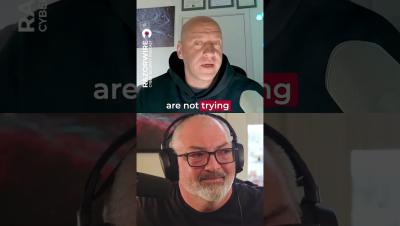
Nicole Perlroth & Garrett Hamilton at UCI - How AI Changes the Security Operating Model

Moderated by Nicole Perlroth, this session at UC Irvine’s Digital Leadership Agenda 2026 surfaces a foundational reality in cybersecurity: Most organizations lack a clear, empirical understanding of how their security is actually deployed. Our Co-founder & CEO Garrett Hamilton outlines: Why proactive security remains difficult — because accuracy depends on conversations, assumptions, and fragmented knowledge across IT and security teams.

Ep 19: The atomic habits of cybersecurity professionals

In this Masters of Data episode, we welcome back Zoe Hawkins and Roland Palmer to discuss building better security practices through small, incremental improvements personally and professionally. We emphasize regularly auditing security policies to avoid unnecessary friction that forces workarounds, treating security as sociology rather than just technology. We cover practical approaches like habit-stacking, weekly business reviews, staying informed about threats through intentional news consumption, and developing cognitive humility with security prompts.

The Missing Link in OWASP is Found: Business Logic Abuse#owasp #owasptop10 #businesslogic

For years, security lists focused on technology (Cloud , Mobile , Serverless ). We desperately needed a list that focused on the core problem: flawed application logic, regardless of the stack. The OWASP Top 10 Business Logic Abuse (BLA) list fills that critical, architectural gap. Why? Because exploitation often happens between technologies, not within them. We must be able to categorize and talk about these intricate logic threats in a technology-agnostic way.

Inside Cybersecurity's New Arms Race with Vladimir Krupnov and Blake Darché

In this episode of The Connectivity Cloud Podcast with Cloudflare, host Mark Dembo is joined by Vladimir Krupnov, Threat Intelligence Lead at Revolut, and Blake Darché, Head of Cloudforce One and Threat Intelligence at Cloudflare, to expose the evolving tactics of cybercriminals and what it really takes to stop them.

Shadow SaaS IS lurking in your organization. Here's what you need to know.

Is shadow SaaS lurking in your organization? The answer is "yes". Now, what do you do about it? User Risk gives security teams complete visibility into their human risk, enabling safe AI adoption, and driving a security-first culture. Discover more of what User Risk can do for you.

Flying blind on workforce security? Let User Risk be your co-pilot.

What we heard loud and clear from security teams is that they’re flying blind when it comes to securing their workforce. In fact, companies often have more SaaS applications than they do employees. They just don’t realize it. Secondly, there’s a tremendously long tail of SaaS applications only being used by one person in the organization. Imagine trying to imagine that manually. User Risk, solves this visibility gap by giving organizations visibility into your human risk, enabling safe AI adoption, and driving a security-first culture.

How Snowflake Saves 2,000+ Hours a Year with Vanta | Scaling Trust Through Automation

Video Disclaimer: The ROI visual in this video contains mock data from fictional companies and is intended for illustrative purposes only. It does not represent real customer data or actual performance metrics. How does Snowflake, the data-cloud company trusted by over 12,000+ customers, scale trust globally? Before Vanta, Snowflake’s trust team spent nearly 3,000 hours annually responding to repetitive security documentation requests. Now, Snowflake saves 2,000+ hours annually, accelerates sales velocity, and strengthens customer trust worldwide..

Platformization in Security: Why "One Platform to Rule Them All" Doesn't Exist

One platform to rule them all? Not quite. As Jay Wilson puts it, security stacks behave like a rubber band — always stretching between broad platforms and best-of-breed tools. No enterprise runs on a single vendor. But no one survives seventy, either. The real objective is coherence: a custom platform built from what your business already owns. That’s where Reach fits. ⇢ Unifies disparate controls into one operational view⇢ Bridges gaps as stacks expand or contract⇢ Turns your actual environment into a cohesive, measurable platform.