Security | Threat Detection | Cyberattacks | DevSecOps | Compliance

SSO for AI Agents: The Identity Gap No One is Talking About

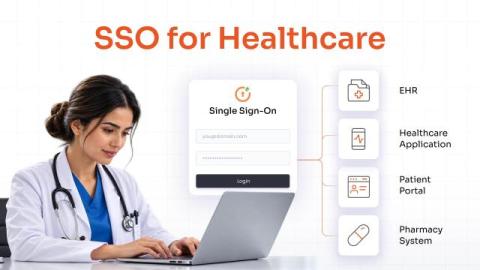
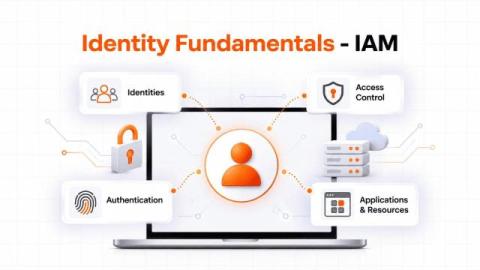
Single Sign-On (SSO) means fewer password headaches, faster access, and better security for human users. But the same cannot be said for AI agents. SSO, a core part of Identity and Access Management (IAM), which was initially built for humans, can no longer be used for AI agents. For humans, it was quite simple - just log in once, and authenticate across connected apps. However, when an AI agent tries to authenticate the same way, the traditional access model breaks fast.

SSO Access Governance: How Enterprises Control, Monitor & Secure Identity at Scale

One compromised login should never unlock an entire enterprise environment. Yet that is exactly the risk many organizations face when Single Sign-On is implemented without governance controls. While SSO simplifies authentication and improves user experience, it also concentrates access into a single identity layer that attackers actively target. That is why enterprises are investing in SSO access governance to bring structure, visibility, and accountability into identity management.

What Is the IAM Maturity Model? A Complete Guide

Most organizations do not fail IAM because they chose the wrong technology. They fail because identity controls evolve unevenly across the environment. MFA may protect workforce users but not contractors. Provisioning may be automated for SaaS applications while privileged accounts are still managed manually. Access reviews may exist on paper but lack enforcement, visibility, or accountability.

What is Remote Device Management? RDM Guide

The shift from traditional office setups to remote and hybrid work has changed how IT teams operate. Employees are no longer working from a single location. They use laptops, smartphones, tablets, and even rugged devices across homes, offices, and field environments. Managing all of this securely is not simple. IT teams now have to balance speed, security, and support without physical access to devices. When something breaks, they cannot walk up to a desk and fix it.

What Is Third-Party Risk Management (TPRM)?

Your security team has hardened your perimeter. You have MFA enforced, endpoint detection running, and your crown-jewel systems are locked down tight. Then a vendor you onboarded two years ago, a mid-size SaaS tool your procurement team signed off on, gets breached. They had access to your customer data. Now it is your problem. This is the third-party risk problem in one paragraph. And it is why TPRM has moved from a compliance checkbox to a board-level conversation.

5 Best Mobile Device Management (MDM) Solutions

With the surge in remote work and BYOD (Bring Your Own Device) policies, securing corporate data across thousands of mobile endpoints has become a critical challenge. In fact, over 80% of small business owners rely on mobile devices for work daily (Zen Business), making mobile device security a critical aspect for businesses. To meet this requirement, businesses are opting for Mobile Device Management (MDM) software at scale.

AI Governance for WordPress: How to Ensure Safe and Ethical AI Use

WordPress sites are adopting AI faster than any other web technology category, and the impact is already visible. Over 61% of WordPress site owners now use at least one AI tool for content creation or marketing. WordPress teams are using that access to write content, automate workflows, run chatbots, and process customer data at a scale that was simply not possible before. But as AI adoption grows, so does the risk.

AI Agent for WordPress: The Complete 2026 Guide

In 1997, IBM’s Deep Blue, the first AI agent, made history by defeating Garry Kasparov at chess. Since then, AI agents have advanced dramatically, evolving from single‑task systems to agents like OpenAI’s Operator, which can autonomously fill out forms, place orders, and schedule appointments. WordPress is a popular CMS that powers more than 20% of the top one million websites. Bringing AI agents into WordPress opens up new possibilities, making sites more capable and adaptive.