Security | Threat Detection | Cyberattacks | DevSecOps | Compliance

Troubleshooting Cilium network policies: Four common pitfalls

Cilium network policies (CNPs) extend Kubernetes’ L3/L4 controls to the application layer (L7). CNPs provide teams with advanced networking capabilities, but they can also introduce new ways for connectivity to fail, especially in environments running thousands of workloads. Many of these issues stem from differences in how Kubernetes and Cilium interpret the same concepts, such as label scoping, IP-based rules, service identities, and how default-deny behavior is applied.

2025 cloud security roundup: How attackers abused identities, supply chains, and AI

In 2025, many of the long-standing cloud security concerns remained, but new areas of focus also developed. The significant increase in AI adoption enabled organizations to deliver features faster but also introduced new attack surfaces, such as untrusted or unpredictable user input for large language model (LLM) applications. At the same time, long-lived credentials and vulnerabilities in third-party packages continued to expose cloud environments to risk.

Evolving security at Datadog: How we designed roles to support a growing organization

Defining success looks different for security organizations than it does for product, infrastructure, and other engineering teams. The latter group can often point to tangible outcomes, such as newly shipped features or performance improvements. Security orgs succeed when risks are lowered and the company’s posture improves over time, which are results that aren’t as easy to recognize but still valuable.

Datadog Cloud SIEM: Driving innovation in security operations

Security can quickly become overwhelming for large organizations, with teams processing logs that are fragmented across cloud providers and SaaS platforms, staggering alert volumes, and the need to scale operations efficiently as environments grow. Datadog Cloud SIEM is designed to help teams manage this workload by centralizing insights, detecting threats faster, and prioritizing investigations with rich risk context.

Secure your code at scale with AI-driven vulnerability management

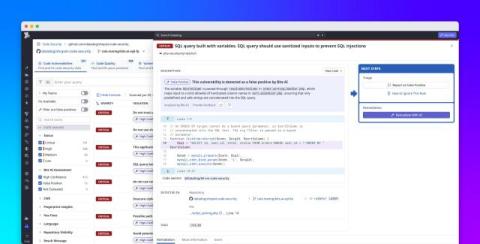
As development teams adopt generative AI at an unprecedented pace, security teams face an evolving set of challenges in securing the software development life cycle. The increasing speed and scale of code changes make it more difficult for organizations to manage risk effectively. Legacy scanners often fail to keep up, returning slow results and noisy alerts that increase remediation time and leave organizations exposed to potential breaches.

Detect and block exposed credentials with Datadog Secret Scanning

Securing secrets is a difficult task. Developers frequently hardcode credentials for quick testing or use AI-generated code snippets that include live API keys or tokens. This means that enterprise secrets can inadvertently make their way into repositories and pipelines, exposing organizations to security and compliance risks without anyone noticing. When a secret is committed to a repository, it spreads quickly across branches, becomes difficult to track, and leads to leaks that are hard to clean up.

Rehydrate archived logs in any SIEM or logging vendor with Observability Pipelines

Security and observability teams generate terabytes of log data every day—from firewalls, identity systems, and cloud infrastructure, in addition to application and access logs. To control SIEM costs and meet long-term retention requirements, many organizations archive a significant portion of this data in cost-optimized object storage such as Amazon S3, Google Cloud Storage, and Azure Blob Storage.

Secure your APIs at the edge with Datadog App and API Protection

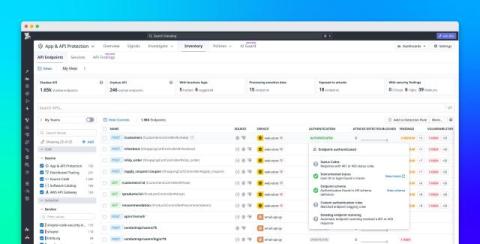
Modern applications are constantly exposed to various malicious activities, including credential stuffing, API abuse, and advanced injection attacks. Many of these threats can be stopped at the network edge, before they ever reach your application. That’s why Datadog App and API Protection offers real-time threat detection and blocking for popular edge proxies and load balancers, which include integrations for Envoy, Istio, NGINX, and Google Cloud Load Balancers (using Google Service Extensions).

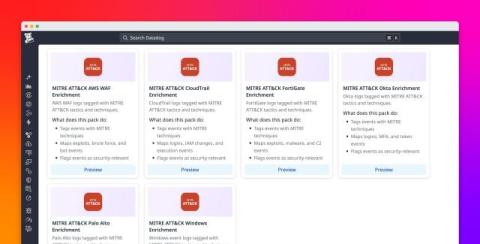
Control logging costs on any SIEM or data lake using Packs with Observability Pipelines

Rising log volumes are making it harder than ever for security and SRE teams to balance visibility with cost. Every network, CDN, and security layer generates continuous streams of telemetry, but deciding what to parse, retain, or drop often requires manual configuration, specialized knowledge, and extensive tuning.

Key learnings from the 2025 State of Cloud Security study

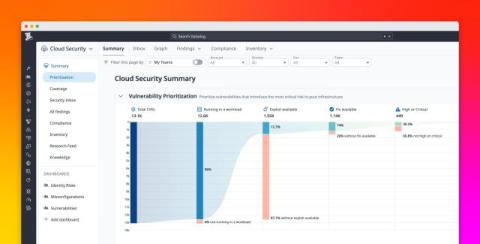
We have just released the 2025 State of Cloud Security study, where we analyzed the security posture of thousands of organizations using AWS, Azure, and Google Cloud. In particular, we found that: In this post, we provide key recommendations based on these findings, and we explain how you can use Datadog Cloud Security to improve your security posture.