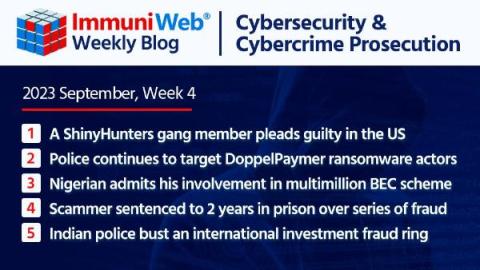
A ShinyHunters Gang Member Pleads Guilty In The US
Read also: Ukraine and Germany hunt for DoppelPaymer ransomware actors, a Nigerian scammer faces up to 20 years in prison, and more.


Read also: Ukraine and Germany hunt for DoppelPaymer ransomware actors, a Nigerian scammer faces up to 20 years in prison, and more.
Penn State University is in hot water again for legal and compliance violations. This time, the activities in question are related to the university’s claim to be compliant under NIST SP 800-171, as required by Executive Order 13556 (2019). As a contractor and partner of the U.S. Government, Penn State is required to implement a minimum set of security controls around Controlled Unclassified Information (CUI) it collects, creates, or handles as part of its partnership with the government.
When asked why he robbed banks, Willie Sutton, one of the first fugitives named to the U.S. FBI’s most wanted list, reportedly replied, “Because that’s where the money is.” As any infosec professional working for a financial institution can tell you, loads of cybercriminals will likely agree with that sentiment. Banks and similar organizations are no stranger to cyber threats.
Cybercriminals are not holding back on LastPass users as a new phishing campaign has recently launched with the intent to steal your data. The first portion of the campaign is a phishing email that asks you to verify your personal information by clicking on a link. The messages launch in waves with several attempts to impersonate LastPass.
Researchers at NSFOCUS are tracking a phishing campaign by a new threat actor called “AtlasCross” that’s impersonating the Red Cross in order to deliver malware. “NSFOCUS Security Labs validated the high-level threat attributes of AtlasCross in terms of development technology and attack strategy through an in-depth analysis of its attack metrics,” the researchers write.
The latest cyber claims report from Coalition, a digital risk insurance provider, finds a 12% increase in cyber insurance claims in the first half of 2023 over the second half of 2022, due to surging attack frequency and severity. No industry or company size is immune as the increase was seen across all organizations, however companies with $100 million in revenue saw the largest increase in number of claims (+20%), as well as staggering losses resulting from attacks (+72%).
In this era shaped by digital innovation, the concept of Secure by Design is a critical safeguard against cyber threats. Read on to delve into the essence of Secure by Design and its profound relevance in today's technology landscape. As cyberattacks grow more sophisticated, comprehending the proactive principles behind secure design is paramount to ensuring a resilient and protected digital future.
A selection of this week’s more interesting vulnerability disclosures and cyber security news. Back again in the news but with a different twist….
Businesses can now automate threat detection for 1Password and their broader work environment with Obsidian Security, a security platform for software as a service (SaaS) tools.