Security | Threat Detection | Cyberattacks | DevSecOps | Compliance

Threat Exposure Management: A Better Way to Answer "How Exposed Are We?"

Security leaders are asking a new question with greater urgency: How exposed are we? In an era where every application, identity, and integration expands the attack surface, answering that question with clarity is no longer optional. The traditional model of vulnerability management cannot keep up. Findings come in faster than they can be addressed. Visibility is fragmented. Risk prioritization is often based on severity scores rather than business impact.
Nicole Perlroth & Garrett Hamilton at UCI - How AI Changes the Security Operating Model

Moderated by Nicole Perlroth, this session at UC Irvine’s Digital Leadership Agenda 2026 surfaces a foundational reality in cybersecurity: Most organizations lack a clear, empirical understanding of how their security is actually deployed. Our Co-founder & CEO Garrett Hamilton outlines: Why proactive security remains difficult — because accuracy depends on conversations, assumptions, and fragmented knowledge across IT and security teams.

Platformization in Security: Why "One Platform to Rule Them All" Doesn't Exist

One platform to rule them all? Not quite. As Jay Wilson puts it, security stacks behave like a rubber band — always stretching between broad platforms and best-of-breed tools. No enterprise runs on a single vendor. But no one survives seventy, either. The real objective is coherence: a custom platform built from what your business already owns. That’s where Reach fits. ⇢ Unifies disparate controls into one operational view⇢ Bridges gaps as stacks expand or contract⇢ Turns your actual environment into a cohesive, measurable platform.
Featured Post

My Black Friday Cybersecurity Wishlist

Black Friday and Cyber Monday always bring bargain buys as consumers hunt for deals to make the upcoming festive season special, but they are also a bonanza for cybercriminals. Attacks spike during the holiday season as cybercriminals take advantage of workers being out of their usual routine and less vigilant than normal. This makes for far from happy holidays for the businesses affected. However, what many organizations don't realize is that often they already have the tools to protect themselves in their security armory; they just haven't activated them.

Proactively Identify and Eliminate Defensive Weaknesses with Cybersecurity Domain-Specific AI

AI is everywhere. I live in San Francisco, and a day doesn’t go by that I don’t see a billboard, an advertisement on the side of a bus, or a tech bro’s hoodie with two big letters on it: AI. It’s no different in cybersecurity marketing – AI terminology is everywhere. But too often, it’s tacked on as a buzzword – a thin layer washed on top of existing security tools, with little real impact. This makes it tricky to decipher what’s real and what’s hype.

Network Security Policy Management (NSPM): Keeping Policy and Reality Aligned

Network Security Policy Management (NSPM) is the discipline of defining, enforcing, and maintaining the network policies that govern how systems communicate, what data moves where, and who can access what. It sits at the intersection of security and operations, helping organizations maintain consistent, enforceable rules across increasingly complex infrastructures.

Unlocking Microsoft E3/E5 Security: How Reach Finds Hidden Gaps and Automates Remediation

New product tour who dis Most teams aren’t getting the full value out of their Microsoft E3/E5 stack — not because the tools aren’t powerful, but because the configurations are complex, scattered, and hard to operationalize. Reach maximizes your Microsoft security investment: Interrogating your current Microsoft security configurations→ Reach evaluates the current capabilities of the existing E3/E5 environment, analyzes how the current licenses are being utilized, and identifies opportunities to leverage E5 features to enhance the organization’s security posture.

Come see us at Microsoft Ignite: Live Demos & How We Optimize Your Security Stack

We're live. Cheyenne, Walter, and Cain are giving demos, answering questions, and showing how Reach helps teams optimize their security stack. Level up your knowledge and get some loot on this side quest. Come see us: Microsoft Ignite — San Francisco Booth 4037 November 18–21, 2025.

Microsoft E3/E5 Security Optimization | Reach Demo

Microsoft's E3 and E5 security tools offer powerful defensive capabilities, but without proper configuration, critical protections can be overlooked. Reach identifies misconfigurations and underutilized capabilities across your Microsoft security stack, then deploys fixes to optimize your tooling, eliminate exposures, and reduce risk. Learn more at reach.security.

Why AI's Real Value in Security Isn't What You Think

Security is entering a phase where operationalization becomes the true competitive edge. Garrett puts it plainly—much of AI’s usefulness right now comes from supporting the repetitive, high-volume operational work, and that is likely here to stay. Sebastian and John point to the same pressure: more sensors, more platforms, more enforcement points… yet the real bottleneck is how teams turn those capabilities into daily practice.

How Reach Security Automates Remediation and Prevents Configuration Drift

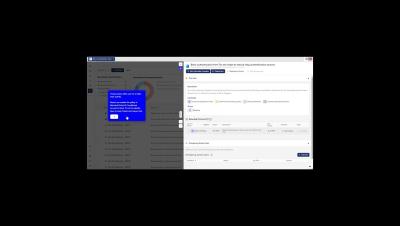
From identification to remediation to drift management. When Reach flags an exposure, it doesn’t stop there. It shows exactly how much risk you’ll reduce by fixing it — and what impact it’ll have on users. In this short demo, CRO Jared Phipps walks through how Reach:︎ Quantifies residual risk reduction (e.g., 62%, 91%, etc.)︎ Weighs that against user impact︎ Guides teams through the remediation process︎ Integrates with Jira or other ticketing systems to track fixes︎ Monitors configurations to prevent drift and maintain baselines.

"Trust in AI Starts with Transparency | Sebastian Goodwin (Autodesk) x Reach Security"

Trust in AI starts with transparency. In our recent conversation, “No Time to Drift,” Sebastian Goodwin, Chief Trust Officer at Autodesk, shares how his team is putting that principle into practice — by creating AI Transparency Cards. Think of them like nutrition labels for AI: clear, consistent, and designed to help customers understand what’s inside. Each one outlines what the model does, how it’s trained, safeguards in place, and more.

Reach Security Recognized as a CRN® 2025 Stellar Startup!

Reach Security announces that CRN , a brand of The Channel Company, has included Reach Security on its 2025 Stellar Startups list in the Security category. This prestigious list highlights fast-rising technology vendors that are driving innovation and fostering growth in the IT channel with groundbreaking products.

How Insurity and Reach Built a Living Zero Trust Model - with Jay Wilson & Garrett Hamilton

Would you rather run a network where everyone trusts everything, or one where nothing moves without being continuously verified? Most would agree that the most secure is ideal. The real question is: how do you get there, and by what means? And where is "there"? That’s the spectrum of Zero Trust maturity most organizations find themselves navigating—from implicit trust and flat networks to real-time validation and least-privilege access that adjusts as environments change.

Experience Over Hype: How Reach Built AI for Real-World Security

Innovation comes from experience — and from taking a pragmatic, problem-driven approach. As Garrett Hamilton told Ed Amoroso, Reach’s foundation is built on the work of co-founder Colt Blackmore — whose experience building machine-learning models at Cylance and Proofpoint now drives how we apply AI to exposure management today. That experience shapes how Reach approaches AI: practical, proven, and focused on results — not trends.
Featured Post

The Shift Left of Boom: Making Cyber Threat Prevention Practical Again

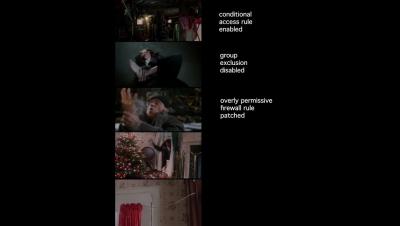
The old saying "prevention is better than cure" has lost currency in today's cybersecurity industry. Instead, security teams are advised to assume that the business has been breached and focus on threat detection, investigation, response, and recovery. Yet, during cyber incident post-mortems, it is not uncommon to find that the business owned the tool that would have protected it against the breach. The problem arose because it wasn't correctly configured before the incident happened, and no one knew this - or if they did, they didn't have the time or resources to fix it.

No Time to Drift: How AI Is Changing the Way Security Teams Manage Configuration Drift

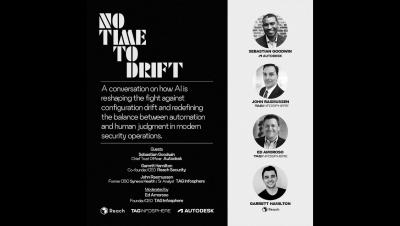
In this episode of No Time to Drift, Reach CEO Garrett Hamilton sits down with Sebastian Goodwin (Chief Trust Officer at Autodesk), John Rasmussen (Senior Analyst at TAG Infosphere, former CISO at Syneos Health), and Ed Amoroso (CEO, TAG Infosphere) to unpack one of security’s most persistent challenges — configuration drift. They explore why drift happens quietly, how it compounds into real risk, and how AI-driven automation is helping teams detect, manage, and prevent drift faster — without losing human oversight or control.

How Reach Security Works (Step-by-Step Breakdown by CRO Jared Phipps)

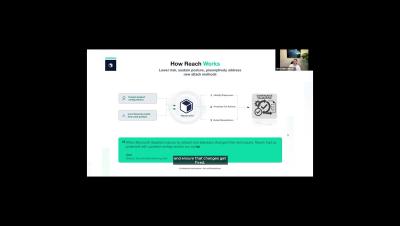
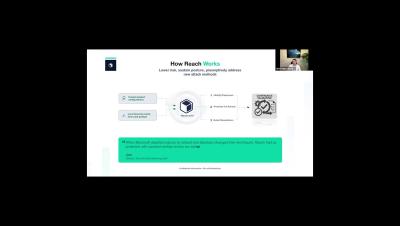
What does Reach actually do — and why does it matter? In this short breakdown, CRO Jared Phipps explains how Reach connects to your existing security tools — EDRs, firewalls, email gateways — to identify hidden exposures and guide real-world fixes. Reach doesn’t add another dashboard. It operationalizes the ones you already have — showing you what to fix, why it matters, and the impact each action has on risk and users.