When it comes to security, organizations often consider themselves well-covered. But in today’s landscape, where cybersecurity threats evolve at breakneck speed, even the most well-prepared teams cannot afford to have testing gaps. The reality is that if your primary strategy for removing security testing gaps is tightening scanning policies or expanding penetration test scope, you are trying to patch a dam with bubble gum. Is your attack surface covered?
CVE-2024-28987 is a critical (CVSS v3 score: 9.1) hardcoded credential vulnerability in the SolarWinds Web Help Desk (WHD) software. If exploited, this Java deserialization remote code execution (RCE) vulnerability allows attackers remote unauthenticated access to create, read, update and delete data on specific WHD endpoints.
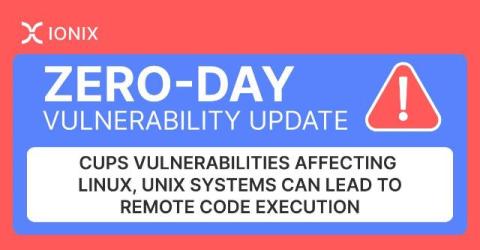
CUPS is a suite of programs and daemons that provide local and network printing capabilities on Unix-like systems such as Linux and macOS. Versions before and including 2.0.1 are vulnerable to CVE-2024-47076 (libcupsfilters), CVE-2024-47175 (libppd), CVE-2024-47176 (cups-browsed) and CVE-2024-47177 (cups-filters), all of which can be chained together to allow remote unauthenticated code execution. At this time there is no updated version available.
CVE-2024-6670 is a critical (CVSS v3 score: 9.8) SQL injection vulnerability. Threat researcher Sina Kheirkhah (@SinSinology) of Summoning Team (@SummoningTeam) discovered that, if the application is configured with only one user, unauthenticated attackers can leverage this vulnerability to retrieve users’ encrypted passwords.
Legacy attack surfaces were small and simple. There were fewer servers and endpoints to protect. The tooling required to secure it was basic – perimeter firewalls, antivirus software, and server/network/application monitoring tools. When organizations migrate to the cloud, things change and become complex. For starters, on-premise infrastructure and applications can’t be left out in favor of the cloud. Most organizations run hybrid setups.
The ability to manage and monitor your attack surface is no longer a luxury—it’s a necessity. The rapid expansion of networks, coupled with the shift to cloud computing and remote work, has created a vast and ever-changing attack surface that requires constant vigilance. This article delves into the most effective attack surface management tools and techniques, offering insights into how they can bolster your cyber security posture and safeguard your organisation against evolving threats.
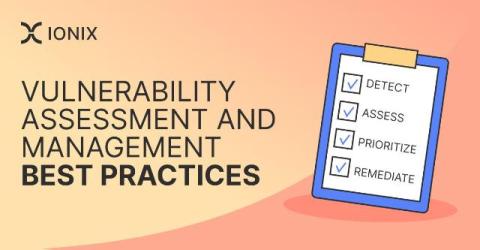
Vulnerability management is a major component of any cybersecurity strategy, simply because every vulnerability represents another potential vector through which an organization can be attacked.
The expansion of your attack surface is inevitable. As your business grows, so does the need to leverage API integrations and third-party tooling to ensure your product remains competitive. But what about ensuring that your product remains secure? The proportion of breaches involving supply chain interconnection increased by 68% between 2023 and 2024. Attackers are not just interested in your data – they are after the weak links in your interconnected systems.
When managing an organization’s attack surface, the focus often falls on broad categories like firewalls, endpoints, or software vulnerabilities. Yet, one obvious blind spot is login pages. Login pages are not just entry points for users but potential gateways for attackers. From an EASM point of view, login pages pose important security concerns because of their exposure to the Internet.