
Security | Threat Detection | Cyberattacks | DevSecOps | Compliance

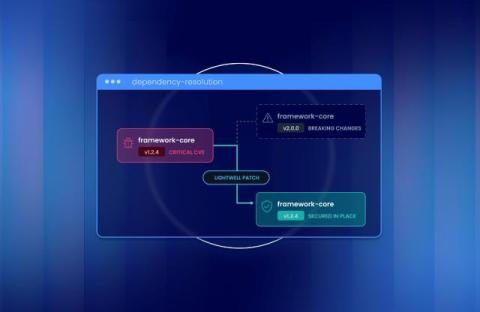
Mend.io and Red Hat Lightwell: Open source security fixes for the version you already run

Open source security now moves at two speeds. AI toolsets accelerate the discovery of vulnerabilities in legacy codebases and can help weaponize them into working exploits. Meanwhile, validating findings and deploying reliable security patches into production still requires rigorous engineering work. As a result, organizations remain exposed while navigating complex dependency updates. Closing this gap is one of the most critical challenges in modern application security.

ARTEX shows attackers now find your weak spots in minutes

An AI agent with no secret-scanning code was pointed at a code repository. In GitGuardian’s sealed lab test, it still found eight of nine planted secrets. One was a cloud key deleted from the code but still in git history. That agent was ARTEX. It is an open source AI penetration-testing framework published on GitHub in July 2026. Within three months, criminal groups and state-aligned actors had turned it against real organizations. ARTEX doesn’t use new exploits.

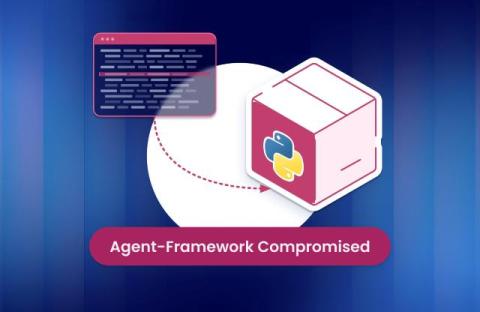
Microsoft agent-framework on PyPI: .pth hook steals Azure and CI credentials

On November 17, 2026, two malicious versions of Microsoft’s agent-framework Python package were published to PyPI: 1.26.1 at 20:35 UTC and 1.26.2 at 21:08 UTC. The package as a whole has roughly 196,000 downloads a month; the figure covers all versions, not the two malicious releases. Both versions add a credential stealer that executes automatically during normal Python startup, without requiring the application to explicitly import the package.

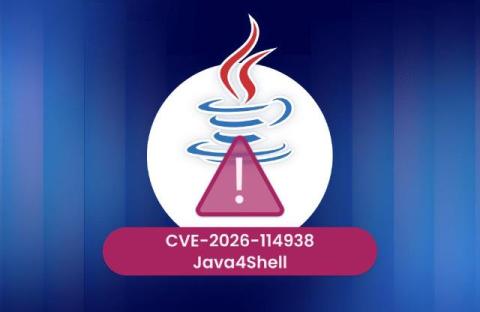
CVE-2026-114938 (Java4Shell): Heap overflow in OpenJDK's Base64 decoder

On November 17, 2026, OpenJDK and Oracle released fixes for CVE-2026-114938, a memory corruption flaw in the HotSpot JVM that its reporters named Java4Shell. The bug sits in the hand-written x86-64 routine the JVM uses to speed up Base64 decoding, and it affects Java 17 (from 17.0.6), 21, 25, and 27. A malformed Base64 string can make the decoder write past the end of a heap buffer, which can crash the JVM and, in some cases, lead to unauthenticated remote code execution.

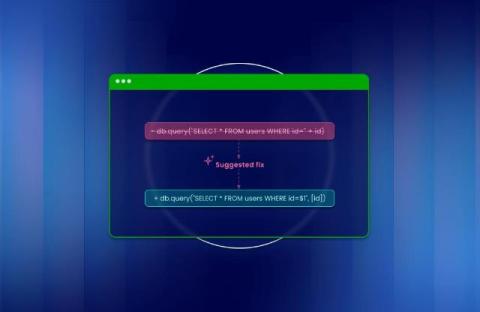
The four places AI runs in Mend SAST

Four jobs, two years in production, and measured results. Here is what each one does for the developer on the other end. Mend SAST has been running frontier models in production since 2024. Not in a lab, not in a pilot, in the scans our customers run every day. There are four places a model does work in the product, and each one takes work off a person. Here is what they are and what you actually get out of them.

Your AI Code Assistant Can't Audit Itself. Here's Who Should.

AI coding tools make code generation fast and cheap, but self-attesting LLMs introduce critical security blind spots, secret leakages, and unverified vulnerabilities. In this executive panel, Mend.io leadership explores why the author cannot be the auditor and how independent, continuous verification protects modern applications without decreasing developer velocity. Visit us at Mend.io Key Topics Covered: Why AI-generated code suffers from higher vulnerability rates and volume spikes.

AI agents are making decisions before security can

AI agents can interpret objectives, select dependencies, write code, and even deploy before traditional security gates enter the process. The scanners may still run, but security could already be evaluating decisions it never had a chance to influence. That shift changes how AppSec teams need to think about agentic development.

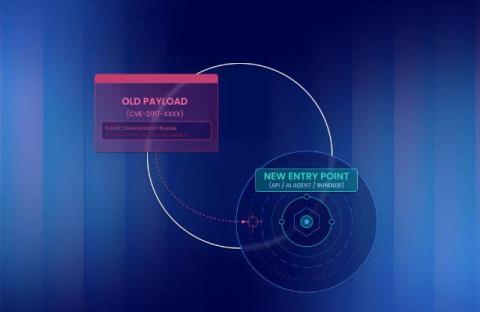
AI supply chain attacks: Old payloads, new entry points

There’s a strange thing happening in AI supply-chain security right now. We keep talking about AI as though every risk it introduces must also be new. It isn’t. Malicious packages aren’t new. Typosquatting isn’t new. Dependency confusion isn’t new. Credential theft certainly isn’t new. But put AI into the development workflow and something important changes. The way developers reach those threats.