Security | Threat Detection | Cyberattacks | DevSecOps | Compliance

When Metrics and Logs are Unified, Good Business Ensues

If you’re reading this, you likely know what a log is, and what a metric is. But sometimes there are questions on their differences, whether you really need both, and if you should use dedicated solutions to manage each type. The answers? Yes, you need both; yes, they should be unified. Logs and metrics, aka machine data, are complementary.

Introducing Devo Activeboards: A New Way to Visualize Machine Data

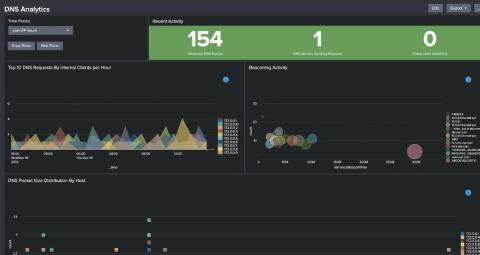
The data visualization space is crowded. There are lots of tools, each purporting to be the tool that solves your data woes and leads you to insight via illustrations. But while you may get good-looking graphs, you are probably not seeing the behind-the-scenes pain from IT: analytics dashboards and vertical applications take multiple meetings for gathering requirements, and they discover the direction wasn’t quite right the first time around.

Miles Ahead in the Cloud - Using Sumo Logic for security and compliance challenges

Digital innovation and transformation are critical strategies in keeping pace with competitors and customer needs in today's rapidly changing environment. Many organizations are moving to the cloud to take advantage of the operational and financial gains available in this new environment. But these organizations are also quickly learning that their legacy security and compliance tools, including their SIEMs, are not able to provide the insights they need.

Log Management Best Practices for SIEM

Undoubtedly, log management is the heart of any SIEM solution. The more access to logs your SIEM has the better it will be able to perform. Logs help in identifying who attacked your organization and how these malicious actors penetrate your corporate network. By logging all the vital information related to network devices and other critical systems, you will be able to get a deeper insight into your organization’s cybersecurity posture.

Data-first Culture + Employees = Better CX

There’s a lot of talk about the ability of AI and machine learning to augment digital transformation journeys by creating better customer experiences and empowering employees to make decisions using data. However, IT and business leaders can sometimes face analysis paralysis when confronted with this topic because it means something different for every business – and it means shifting an entire company culture towards a new way of working. One key shift is making use of machine data.

Athleticism and AIOps: What's your checklist?

Here at Devo’s Cambridge, MA office, we’ve been steeped in news of national sports league playoffs for several weeks. The games are great, even with the stress and uncertainty of overtime, but it’s gotten me thinking about the professional hockey and basketball players, and how they’ve become as successful as they are.

Enterprise log management is here to stay: Part 1

Logs began with UNIX in the 1960s, partly to preserve the culture of close communication in programming. Luckily, that culture has held fast as programming and technology have taken many different shapes and evolutions over the years, and today, the idea behind logs is still to maintain data for correlation and analysis to meet enterprise security and compliance needs.

Logging in a DevOps environment: what you should know

DevOps is the new normal, and cloud here is to stay – sound familiar? When you combine the two and distill the technology at the core, what you end up with is the realization of the importance of logs and log management. This is because logs at multiple levels help DevOps teams understand their application and even allow them to detect and address application issues before being promoted into production.

3 Reasons Log Management is Critical for Business Intelligence

Log management is the answer to all of your digital transformation woes. No, hear me out. At its heart, log management is the (challenging) task of collecting and storing all machine-generated data from across your entire enterprise into a common repository. If this collection doesn’t happen, or if log collection is limited to certain datasets, there’s little chance of deriving those high value insights you dream of.