Security | Threat Detection | Cyberattacks | DevSecOps | Compliance

Cato AI Security: Is Your Security Stack Built for How AI Works?

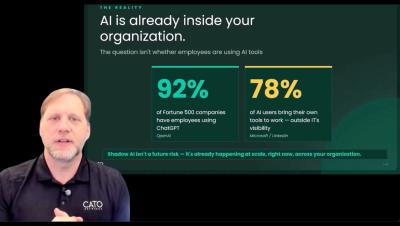
AI adoption is accelerating across enterprises — often faster than security teams can respond. Employees are using AI tools and copilots across SaaS apps and workflows, creating new exposure around sensitive data, shadow AI, and attack surfaces that traditional tools weren't built to see. This video breaks down the four AI security challenges every enterprise is facing, where existing controls fall short, and how Cato AI Security gives you visibility, guardrails, and enforcement across the AI your employees use, the applications you build, and the agents acting on your behalf.

AI in Cybersecurity Certification

Positive feedback can lead to unintended consequences. A dog learned that saving kids from the River Seine earned food and praise. So he started dragging them in to “save” them. AI models optimize for feedback in a similar way. Cato’s AI in Cybersecurity course shows how to manage the risks. It’s free and earns you CPE credits.

OpenClaw: Cato Governance Controls and Sector Exposure Insights from the Cato SASE Platform

Agentic AI does not just answer, it acts. The moment an agent has a reachable control plane, you have effectively created a “remote hands” interface into your environment. In our recent blog post, “When AI Can Act: Governing OpenClaw,” we explained why this shift breaks old security assumptions and why governance must be continuous, enforced, and context-aware rather than a one-time checklist.

Complexity is a choice. SASE migrations shouldn't take years.

For years, the cybersecurity industry has accepted a grim reality: migrating to a zero trust architecture is a marathon of misery. CIOs have been conditioned to expect multi-year deployment timelines, characterized by turning screws, manual configurations, and the relentless care and feeding of legacy SASE vendors. But at Cloudflare, we believe that kind of complexity is a choice, not a requirement. Today, we are highlighting how our partners are proving that what used to take years now takes weeks.

Cato Networks Named a SASE Industry Leader and Outperformer for the THIRD Consecutive Year

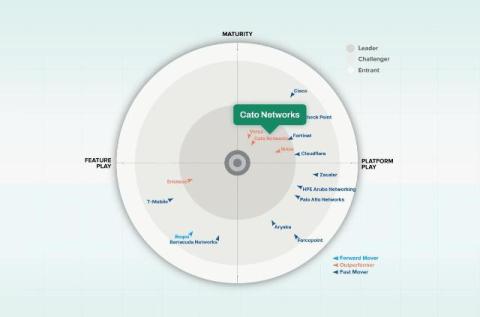
Cato Networks has been named a Leader and Outperformer in the 2026 GigaOm Radar for Secure Access Service Edge (SASE) — marking the third consecutive year we’ve earned this distinction. And, once again, Cato is positioned closest to the center of the Radar, of all participants. In this year’s GigaOm Radar for SASE, Cato is positioned in the Maturity/Platform Play quadrant, reflecting the depth, completeness, and enterprise readiness of the Cato SASE Platform.

A QUICker SASE client: re-building Proxy Mode

When you need to use a proxy to keep your zero trust environment secure, it often comes with a cost: poor performance for your users. Soon after deploying a client proxy, security teams are generally slammed with support tickets from users frustrated with sluggish browser speed, slow file transfers, and video calls glitching at just the wrong moment. After a while, you start to chalk it up to the proxy — potentially blinding yourself to other issues affecting performance.

AI certificate

You can ask AI to create a song that sounds like a famous band sang it. But what happens if you use it or share it? Are there legal or other implications? AI tools must be visible and governed. Shadow AI isn’t. Take Cato’s AI in Cybersecurity course to understand the risks of unsanctioned AI tools. It’s free, comes with a downloadable cert, and earns CPE credits. Register now.

Modernizing with agile SASE: a Cloudflare One blog takeover

Return to office has stalled for many, and the “new normal” for what the corporate network means is constantly changing. In 2026, your office may be a coffee shop, your workforce includes autonomous AI agents, and your perimeter is wherever the Internet reaches. This shift has forced a fundamental change in how we think about security, moving us toward a critical new architecture: agile SASE.