Security | Threat Detection | Cyberattacks | DevSecOps | Compliance

When Secure Isn't Safe Uncovering OWASP Top 10 Business Logic Abuse

The OWASP Top 10 for Business Logic Abuse reveals the most critical ways attackers exploit the design of your applications, not just their code. Business logic abuse isn’t about SQL injection or XSS, it's about bypassing the rules, manipulating workflows, and triggering unintended behaviors in ways your functional tests never anticipated. Why this Matters? Attackers are shifting from exploiting code flaws to abusing the intended functionality of your applications.These logic-level threats are particularly dangerous because they.

From Black Hat to Boardrooms: Making Sense of the SASE Market Shift

Dave McGrail and Jaye Tillson cut through the noise on the biggest shifts in security right now. From Black Hat insights to Palo Alto’s CyberArk acquisition, they discuss what it all means for SASE, Zero Trust and the growing importance of identity. Plus, why VPN replacement is more than just a tech swap — and how choosing the right partner makes or breaks SASE transformation.

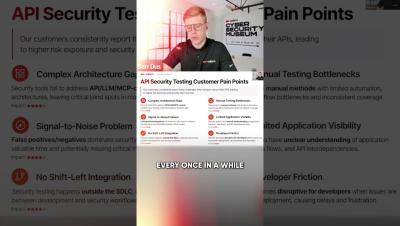
This API Security Mistake Could RUIN Your Business #apitesting #hacking_or_secutiy #apisecurity

Testing your APIs after deployment is one of the biggest mistakes teams make. By the time vulnerabilities are discovered in production, the risk is higher, fixes take longer, and attackers may already exploit them. In this short clip from our API Security webinar, we explain why “shift-left” testing — securing APIs before deployment — is critical to prevent breaches.

From Firewalls to AI: Understanding the Evolution of Cybersecurity

From Firewalls to AI: Understanding the Evolution of Cybersecurity The history of IT security has always been a journey of adapting to new threats. It started with simple firewalls to protect the "front door" and evolved to include endpoint, database, and Docker security. But what happens when the very intelligence you're building becomes a new kind of front door—and a new attack surface?