AWS IAM Policy Simulator is a testing tool that helps teams evaluate whether an IAM policy allows or denies specific AWS actions before those permissions are applied in production.
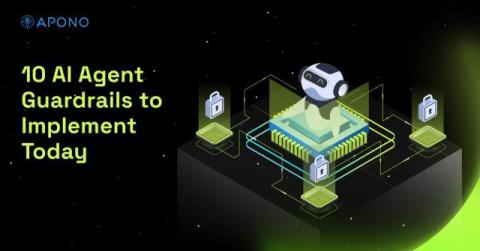
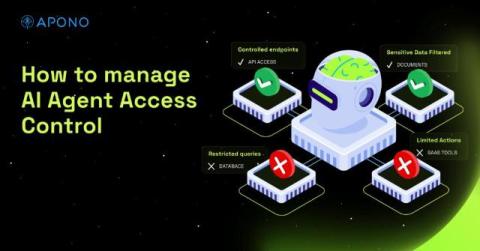
AI agent access control is about governing what autonomous software agents are allowed to do and access across your cloud infrastructure, data systems, and internal tools at runtime. It’s about identity ownership and action-level authorization, so your AI agents operate within tightly scoped, time-bound, and policy-enforced permissions that you can keep track of.
Today, Apono is joining 1Password. This is a major step forward for the company we set out to build, the customers who helped shape it, and the future of access governance. When we started Apono, we set out to eliminate the friction that access management creates between security and engineering teams. Access in the cloud was dynamic, but the systems meant to govern it were not. Widespread standing access became an accepted cost of doing business. Engineers waited on tickets.
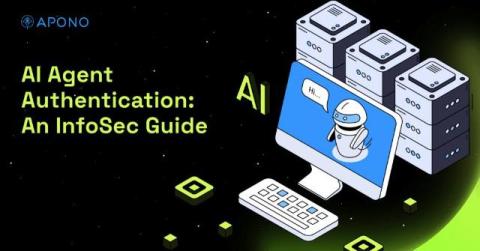
Security teams have spent years securing human logins, service accounts, and machine identities. Agentic AI introduces a more autonomous class of software actor: systems that can plan, call tools, delegate tasks, and act across environments. This is a concern because most access models were built around static roles and pre-approved permissions. Multi-agent systems put a new spin on those assumptions.
Two protocols are shaping the AI revolution: A2A for agent-to-agent delegation, and MCP for agent access to tools and external systems. A2A expands who can participate in a workflow by enabling agent-to-agent delegation. MCP expands what agents can reach by connecting them to data and systems. By the end of 2026, task-specific AI agents are expected to appear in 40% of enterprise applications, up from less than 5% in 2025. That shift changes where security has to live.
A GitHub breach occurred on May 18, 2026 when a threat actor called TeamPCP pushed a malicious version of Nx Console (a widely used VS Code extension with 2.2 million installs) to Microsoft’s official Visual Studio Marketplace.
Trust is expensive. The wrong zero trust network security tool can leave you with more standing access and more risk than you started with. In today’s modern and complex environments, this sentiment matters more than ever. 22% of breaches involved credential abuse as the initial access vector. In this guide, we break down the best zero trust network security tools by category, helping you choose the optimal solution for your requirements.
The moment teams move from one cloud to two, identity governance starts to fracture. Roles don’t translate cleanly, and access reviews lag behind deployment velocity. Multi-cloud identity management is the practice of controlling who can access what across AWS, Azure, GCP, Kubernetes, SaaS tools, databases, and other cloud-connected systems.
Everyone uses developer tools to get through the day. A JSONFormatter to inspect an API response, or a JWT decoder when you need to inspect a token quickly. In most engineering teams, these tools are treated as harmless productivity aids. In November 2025, researchers discovered that JSONFormatter and CodeBeautify had been storing everything users pasted into them via a save feature that generated shareable links with fully predictable URL structures. A simple crawler could retrieve all of them.
There’s never a good time to lose a production database, but losing one to your own AI coding agent on a Friday afternoon has to rank near the bottom of the list. That’s the backdrop to the PocketOS incident, and it’s the clearest case yet for why AI agent security and intent-based access control belong at the top of every cloud security roadmap this year.