Security | Threat Detection | Cyberattacks | DevSecOps | Compliance

ASM Has a Silent C, and It Stands for Change Management

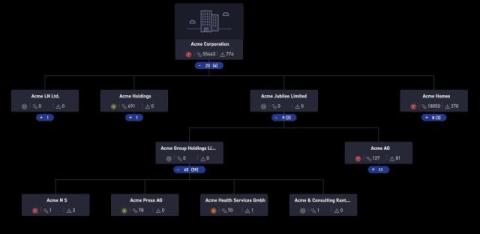
If you run a security team, a large part of the job is responding to change. Something in the environment moves, and you have to work out whether risk moved with it, and how quickly you need to act. Those changes arrive from two different directions, external and internal. Of course, we’re all familiar with the external ones. A new CVE drops, a proof of concept goes public, a ransomware group starts naming your sector. The internal ones start inside your own organization.


Closing the Gap: What Actually Turns Agent Telemetry Into Evidence

‍ An AI coding agent's own telemetry answers real questions well: which agents are running, what they invoked, the shape of a session, whether a run looks abnormal. It cannot, no matter how completely it is instrumented, stand alone as evidence. The agent under review is also the party writing the record. The record shows an attempt, not an outcome. And the vocabulary for describing any of it is still being written in public, one unstable commit at a time.

Prompt Injection CWE: The ID Exists and EchoLeak Never Used It

Prompt injection has a CWE, and the two incidents everyone cites were not filed under it. That is not a clerical detail. A CWE ID is a claim about root cause, and every entry carries a mitigation table that follows from the root cause it names. When a record says CWE-1427, it is saying the product failed to neutralise input before building a prompt, and it is implying that neutralising the input is the fix.

How to Do Prompt Injection Testing on an Agent in Under Ten Tests

A prompt injection test suite can only report on the payloads it contains. That sentence is the whole problem with the number most teams have. Somewhere in a ticket there is a scan result: a scanner threw several hundred probes at the endpoint and a percentage got through. The percentage is real.

Mini Shai-Hulud hits openapi-react-query-codegen: 10 malicious npm versions

On August 28, 2026, ten malicious versions of @7nohe/openapi-react-query-codegen were published to npm between 20:00 and 20:21 UTC. The package generates React Query hooks from an OpenAPI schema and draws roughly 150,000 weekly downloads. The latest tag pointed at the malicious 3.0.4 for the duration of the window. Eight of the ten releases carry a multi-stage loader that reaches for cloud, registry, and developer credentials. The attacker needed no stolen npm token and no hijacked maintainer account.

Warning: Replying to a "Wrong Number" Text Marks You as a Target for Scams

Attackers are using “wrong-number” texts to identify potential targets for scams, according to researchers at Malwarebytes. These texts appear to be harmless messages meant for another person, such as “Are we still on for dinner tomorrow?” or “Where’s the PowerPoint?” Recipients often try to be helpful by replying to let the person know they’ve got the wrong number.

The .vu Surge: How Threat Actors Are Exploiting Vanuatu's Domain Extension

Phishing infrastructure is built to be thrown away. When a domain gets blocklisted, scrutinized, or too hot to handle, the attackers don't stop. They just move. To them, a domain extension is just a cheap tool. They go wherever it is easiest to strike. That pattern is visible in our own telemetry. In late 2024 and early 2025, KnowBe4 Threat Lab documented a 98% spike in phishing campaigns abusing.ru domains. 1,500 unique domains, over 13,000 malicious emails, with an average domain age of just 7.4 days.

New Phishing Kit Gives Threat Actors Live View Into Attacks

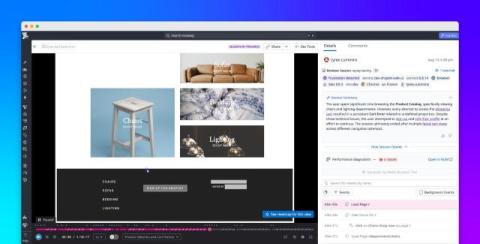
A new phishing platform called “JWR” gives attackers real-time control over social engineering attacks, according to researchers at Cisco Talos. The kit livestreams the phishing page to the attacker as the victim is entering information, allowing the attacker to steer the victim’s experience and maximize the damage.

Reduce sensitive data exposure with build-time allowlists

Build-time allowlists help teams preserve readable Real User Monitoring (RUM) action names while reducing the risk of exposing runtime-generated sensitive data. RUM action names turn user interactions into descriptions that engineers can use to understand application behavior, but that readability can also create risk. Datadog provides a build-time privacy approach that preserves readable action names when their contents are known to be static while masking text constructed at runtime.