Security | Threat Detection | Cyberattacks | DevSecOps | Compliance

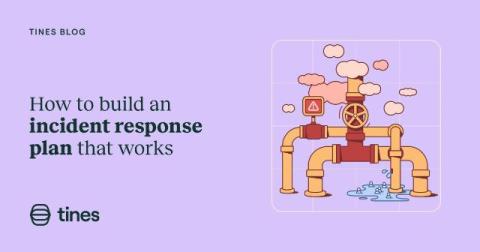
How to build an incident response plan that works

Most organizations have an incident response plan on file. Few have one that survives first contact with a real incident. Rigorous, recurring testing remains the exception, so most teams only discover their plan's failure points during an actual breach. That gap is expensive. Teams that lean on security AI and automation consistently contain breaches faster than those still running responses by hand.

Using Generative AI for Incident Response Automation: A Complete Guide to AI Agent Development

Security Operations Centers run on caffeine and context-switching. Any given shift means hundreds of alerts, tools that don't talk to each other, and analysts who know that somewhere in that noise is a real threat - they just need time to find it. That's the core tension AI agent development is built to resolve. This guide covers the full lifecycle: from scoping your first use case to maintaining a production-grade agentic SOC.

How Businesses Prepare for Security Risks

Security risk is no longer limited to locked doors or antivirus software. Modern businesses face physical threats, cyberattacks, insider mistakes, supply chain disruption, workplace violence, fraud, and data loss. Preparation starts with one idea. Risk must be managed before an incident occurs. A strong security plan connects people, technology, policies, and response procedures. It protects employees, customers, property, systems, and sensitive data.

Incident Response: Keeping Cool When Everything's on Fire

The DevOps revolution broke down the traditional silos between development and operations, fundamentally reshaping how we build and maintain software. But with this evolution came an inevitable, and often stressful, reality for many engineers: being on-call and responding to incidents. In this session, Daljeet Sandu will explore how on-call has evolved in recent years, highlight proven best practices, and share insights into the future of incident response in DevOps.

AI Agent Incident Response in Cloud-Native Environments: A Playbook for Modern SOCs

It’s 2 a.m. and the SOC has a Tier 3 page. A customer-service agent on the production cluster has just wired refund payments to seven addresses outside the approved disbursement list. The runbook is unambiguous: isolate the pod, image the disk, image the memory, root-cause within 48 hours.