Security | Threat Detection | Cyberattacks | DevSecOps | Compliance

Hashing in Cryptography Explained: How It Works, Algorithms, and Real-World Uses

Hashing takes your data (like a password or file) and converts it into a fixed-length code that can’t be reversed. This makes it nearly impossible for attackers to figure out what the original data was, even if they steal the hash. In this article, I’ll explain hashing in detail, including its working principles, applications, the algorithms behind it, and how to apply it correctly.

Zero-shot Security Classification with Foundation-Sec-8B and Splunk DSDL

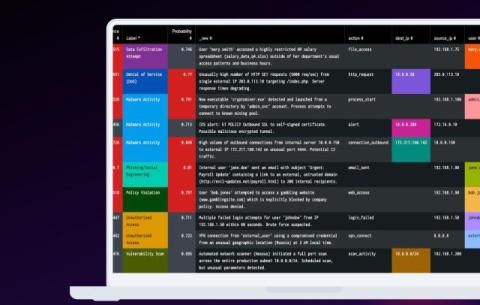
Earlier this year, we showcased how the Foundation-Sec-8B model’s chat capabilities can be leveraged within the Splunk App for Data Science and Deep Learning (DSDL) to summarize security events and provide detection suggestions. Building on its robust security expertise, Foundation-Sec-8B also supports zero-shot classification for a wide range of security tasks.

Why Veterans Are Cybersecurity's Secret Weapon

Veterans in cybersecurity are just built different. They show up like a well-timed patch, quietly, decisively, and with an instinct for risk you can't fake. When you've owned mission-critical systems where the blast radius of a mistake is measured in lives, not log lines, you develop a rare sixth sense for risk that you simply can't teach in a bootcamp.

Digital Resilience for State and Local Governments (Part Two)

In the first part of our series, we examined the challenges facing state and local governments as they work to secure and maintain the availability of increasingly complex digital systems. Today, we turn our focus to how collaboration—powered by shared data platforms like Splunk—can enhance incident response and overall digital resilience.

Splunk Ranked Number 1 in the 2025 Gartner Critical Capabilities for Security Information and Event Management Use Cases

In addition to Splunk’s recognition as an 11-time Leader in the 2025 Gartner Magic Quadrant for Security Information and Event Management (SIEM), we are honored to announce that Splunk has been ranked as the SIEM solution in all three Use Cases for the second consecutive time in the 2025 Gartner Critical Capabilities for Security Information and Event Management report.

Static Code Analysis: The Complete Guide to Getting Started with SCA

Static code analysis wasn’t always built into the development process. That means most bugs were detected during testing, after the code was already merged and deployed. By that point, fixing issues was time-consuming, expensive, and risky. Small mistakes slipped into production. Security gaps widened and quality suffered. Static analysis shifts all of that left by bringing security and quality checks into the earliest stages of development.

Build the SOC of the Future with Splunk and Cisco

I’m not one to blog, but speaking with clients, peers, and colleagues, I often hear statements like “SIEM is dead” or “this is the SOC of the future.” So what do they really mean? Honestly, I’m not entirely sure either — there are so many conflicting viewpoints and ways of addressing this.

The Lost Payload: MSIX Resurrection

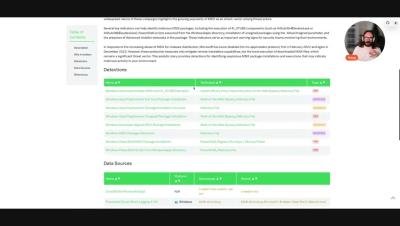
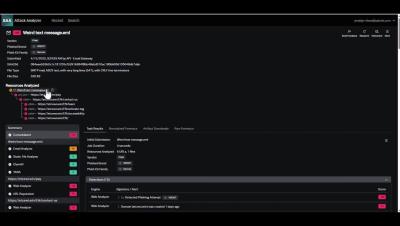
MSIXBuilder transforms what was traditionally a complex, multi-tool process into a single automated workflow that mirrors actual attacker techniques. By automatically handling certificate lifecycle management, dependency resolution, and package signing, the tool removes the technical barriers that previously prevented security teams from creating realistic test scenarios. This means defenders can quickly generate both signed and unsigned MSIX packages to validate their AppXDeployment event log coverage, confirm detection rules, and build detection coverage that actually works against real-world threats.

Incident Command Systems: How To Establish an ICS

Standardizing the management and coordination of incident response and resolution activities across different independent agencies is challenging. As part of its mission to help people before, during, and after disasters, the Federal Emergency Management Agency (FEMA) created the Incident Command System (ICS) as one of the components of the National Incident Management System (NIMS).