Security | Threat Detection | Cyberattacks | DevSecOps | Compliance

Ransomware protection for businesses and MSPs: the complete guide

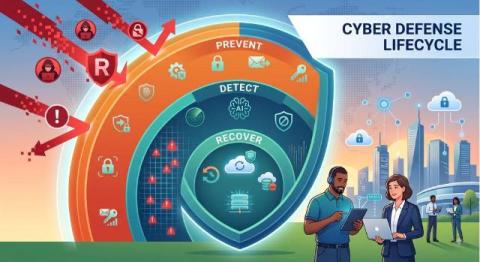
Ransomware protection is a coordinated set of controls that reduces the likelihood of compromise, detects and contains malicious activity, protects recovery infrastructure and restores operations when an attack succeeds. It spans identity security, vulnerability and patch management, endpoint protection, EDR or XDR, incident response, targeted rollback, immutable backup and disaster recovery. No single control covers the complete ransomware lifecycle.
How does EDR work? Architecture, monitoring, detection and response explained

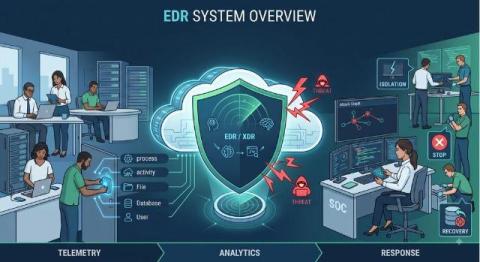
EDR (endpoint detection and response) works by deploying sensors on protected endpoints to continuously collect selected behavioral telemetry, forwarding that telemetry to a centralized analytics layer, commonly cloud-hosted, that applies detection rules, behavioral analytics, machine learning and threat intelligence, and surfacing prioritized incidents in a console where analysts can investigate and respond.

EDR and MDR for SMBs: enterprise-grade protection without an enterprise SOC

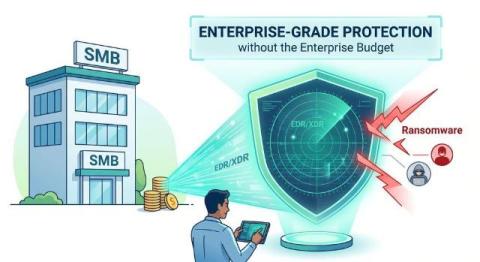
EDR (endpoint detection and response) is no longer an enterprise-only technology. SMBs face many of the same attacker techniques as larger organizations, but generally have fewer security and recovery resources available to contain the impact. Modern EDR platforms, especially when delivered through MDR (managed detection and response) and extended where needed with XDR (extended detection and response), make enterprise-grade protection operationally feasible for MSPs to deliver to SMB clients.

Best AI security tools for small and mid-sized businesses in 2026

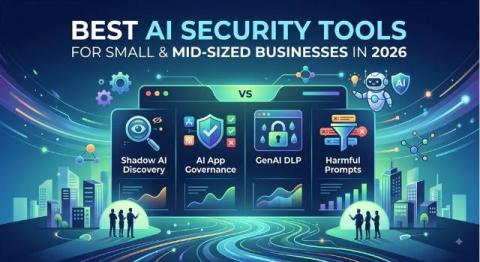
The best AI security tools for small and mid-sized businesses do more than detect risky AI use: they show which generative AI tools employees actually use, they let you govern which AI apps are allowed, monitored or blocked, they stop sensitive data from leaving in a prompt, and they defend against harmful prompts, including prompt injection. Most organizations now run AI without that visibility or control. AI use has moved into the mainstream.

Managed EDR and XDR services: how MDR delivers 24/7 protection for MSPs

EDR (endpoint detection and response) and XDR (extended detection and response) are technologies. MDR (managed detection and response) is the managed service that continuously operates them — the 24/7/365 SOC team that monitors, investigates and responds to threats on the client’s behalf, built on top of EDR, XDR, or another detection stack.

OT Downtime Estimation Workshop: Build Your Recovery Business Case

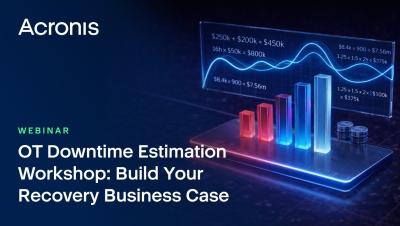
Unplanned operational technology (OT) downtime can have a significant financial impact, but how much could it cost your organization? In this practical workshop, learn how to estimate the cost of OT downtime using the Acronis ICS / OT Downtime Calculator and build a business case for faster recovery. You'll discover how to apply industry benchmarks, model recovery scenarios, and understand how reducing recovery time can help minimize operational risk and downtime-related losses.

How to detect and govern shadow AI in your organization

To detect and govern shadow AI, organizations need to discover which AI tools employees are using, understand who is using them and why, then turn that visibility into an enforceable AI app policy. The goal is not only to find unsanctioned AI use, but to control which GenAI and AI-enabled apps are allowed, blocked or monitored across the organization.

NGAV vs EDR vs XDR vs MDR: how to choose the right detection and response approach

NGAV (next-generation antivirus), EDR (endpoint detection and response), XDR (extended detection and response), and MDR (managed detection and response) are not four separate products bought independently — they are overlapping capabilities and delivery models. NGAV is a prevention capability, normally built into an endpoint protection platform or an EDR solution, that uses AI and behavioral analysis to block known and unknown threats.

Paul Maritz: Partner Cloud in the AI era | Acronis Accelerate Event

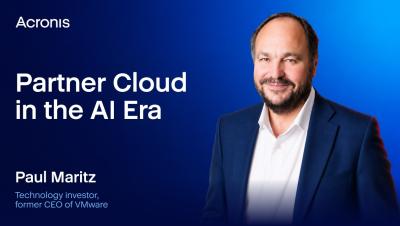
How is the AI era creating new opportunities for service providers through partner cloud? In this keynote from Acronis Accelerate, technology investor, former Acronis Chairman, and former VMware CEO Paul Maritz explores how service providers can turn local infrastructure into a cost advantage and competitive edge as customers increasingly require partner infrastructure for compliance and data sovereignty. Learn how Acronis Cyber Frame, built specifically for service providers, is a natively integrated solution that enables SPs to deliver infrastructure services (VMs, storage, networking) with integrated backup, DR, security and RMM.