Security | Threat Detection | Cyberattacks | DevSecOps | Compliance

Responsible vulnerability disclosure: Why it matters

The concept of responsible disclosure is a simple one. If you find a vulnerability, you let the affected organization or software vendor know before making the information public. This gives them time to patch the vulnerability before it can be exploited. It also helps maintain trust and fosters a collaborative environment between security researchers and companies. As a cybersecurity vendor, do we want our researchers to be credited when they discover vulnerabilities? Of course.

Homograph attacks: How hackers exploit look-alike domains

Several years ago, a security researcher discovered a vulnerability in Google Chrome that allowed fake domains to bypass the browser’s security measures. The researcher registered a domain that appeared as “xn--80ak6aa92e.com” but displayed as “apple.com” in the browser, demonstrating how easy it was to deceive users. This is just one example of what’s known as a homograph attack, or sometimes a ‘look-a-like domain’.

Unmasking EncryptHub: Help from ChatGPT & OPSEC blunders

This is the second part of Outpost24’s KrakenLabs investigation into EncryptHub, an up-and-coming cybercriminal who has been gaining popularity in recent months and is heavily expanding and evolving operations at the time of writing. We’ve already published one article explaining EncryptHub’s campaigns and TPPs, infrastructure, infection methods, and targets.

CrushFTP auth bypass vulnerability: Disclosure mess leads to attacks

Outpost24 analysts recently discovered a critical authentication bypass vulnerability in CrushFTP, identified as CVE-2025-31161. The vulnerability has a CVSSv3.1 score of CVSS:3.1/AV:N/AC:L/PR:N/UI:N/S:U/C:H/I:H/A:H (9.8). We reached out to MITRE for a CVE on 13th March 2025 and were within an agreed 90-day non-disclosure period with CrushFTP. The plan was to give users plenty of time to patch before attackers were alerted to the vulnerability and able to exploit it.

Threat Context Monthly: Green Nailao & UNC3886 - Briefing for March 2025

Welcome to the Threat Context Monthly blog series where we provide a comprehensive roundup of the most relevant cybersecurity news and threat information from KrakenLabs, Outpost24’s cyber threat intelligence team. Here’s what you need to know from March about espionage activities by threat actors Green Nailao and UNC3886.

Introducing dark web insights to Outpost24's EASM platform

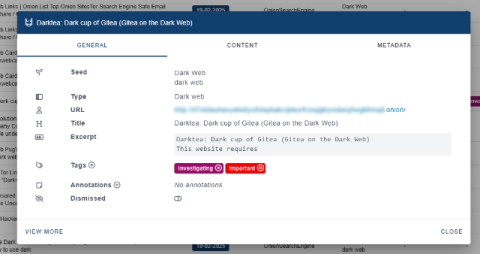
We’re pleased to announce that a new Digital Risk Protection (DRP) integration has been added to Outpost24’s External Attack Surface management (EASM) platform: the Dark Web module. Security teams need complete visibility on their organization’s exposure and potential threats. This doesn’t only include your owned online assets, but also your dark web presence.

Unveiling EncryptHub: Analysis of a multi-stage malware campaign

EncryptHub, a rising cybercriminal entity, has recently caught the attention of multiple threat intelligence teams, including our own (Outpost24’s KrakenLabs). While other reports have begun to shed light on this actor’s operations, our investigation goes a step further, uncovering previously unseen aspects of their infrastructure, tooling, and behavioral patterns.

Introducing Outpost24 CyberFlex

Today, Outpost24 is excited to announce the launch of its new CyberFlex solution, a flexible combination of ASM and PTaaS. With two-thirds of organizations having experienced a cyberattack via unmanaged internet-facing assets, the CyberFlex solution provides an unmatched approach to the comprehensive discovery, risk management, and protection of all your external-facing applications.

Security through obscurity: An illusion of safety?

Security through obscurity is based on the idea that if attackers don’t know how a system works or even if it exists, they’ll have a harder time breaching it. Despite repeatedly broken implementations and lacking support from standards bodies, this concept continues to be widely used. Secret doesn’t always mean safe – and it can even give a false sense of security.

Belsen Group: Analyzing a new and ambitious threat group

On January 14th, 2025, Belsen Group emerged in the underground forum Breach Forums publishing a list of sensitive data extracted from vulnerable Fortinet FortiGate devices. Since then, they have expanded their malicious activities into acting as initial access brokers. Who are they and what do we know about them? In this blog we’ll give you the lowdown on an ambitious new threat group to be aware of.