Security | Threat Detection | Cyberattacks | DevSecOps | Compliance

Cyber Hygiene: Concepts and Best Practices for Cybersecurity

Cyber hygiene has become a highly visible topic in all business segments. Creating software and new features happens at a very fast pace — requiring lots of internal processes and operations to keep this up to date. However, it's also very important to be concerned with the fundamentals of information security in order to keep the company's digital assets protected. In this post, we'll discuss in detail the concept of cyber hygiene and some good practices to follow.

Improving Security: Updates to Classic (SimpleXML) Dashboards Containing External Links or Content

Classic (SimpleXML) dashboards are a powerful tool for you to share information with users and can include links for users to continue their investigations in other pages. As you likely already know, you can include external content in your Classic dashboard using HTML panels. You can also include external links or configure drilldowns to external URLs.

Security 101: Vulnerabilities, Threats & Risk Explained

In cybersecurity, the things to consider are endless. Before we get ahead of ourselves, let’s make sure we fully understand three fundamental concepts of security: In this article, we’ll look at these security concepts in depth and hear from industry experts. (For the latest and greatest in all things security, check out the Splunk Security Blog & these Cybersecurity and InfoSec Events & Conferences.)

Defense Department's Multi-Cloud Cloud Strategy: A Role for SIEM

It’s difficult to recall a time over the last ten years when cloud requirements were not at the forefront of the Defense Department’s modernization efforts. Cloud capability reviews and requirements, in some form, extend from the Pentagon’s net-centricy efforts — to the Joint Information Environment, Digital Modernization, and up through to today.

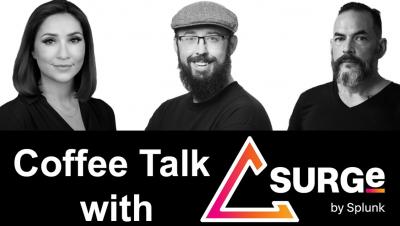
Coffee Talk with SURGe: Twitter Whistleblower, Roasting Oktapus, Montenegro Cyberattack

Grab a cup of coffee and join Ryan Kovar, Mick Baccio, and Audra Streetman for another episode of Coffee Talk with SURGe. The team from Splunk will discuss the latest security news including: Mick and Ryan competed in a 60 second charity challenge to explain why they think password managers are still your best option for password security. The team also discussed data privacy after the FTC announced it is suing a data broker for selling geolocation data. Meanwhile, the FCC is launching an investigation into mobile carriers' geolocation data practices.

Harmonizing the Federal Effort on Automating Software Bill of Materials

When the Biden administration released Executive Order 14028, “Improving the Nation's Cybersecurity”, it included guidance to enhance the security of the nation’s software supply chain. As a result, key building blocks are being developed to both strengthen software security and bolster software Supply Chain Risk Management (SCRM) programs across the Federal government.

Introduction to Splunk Common Information Model

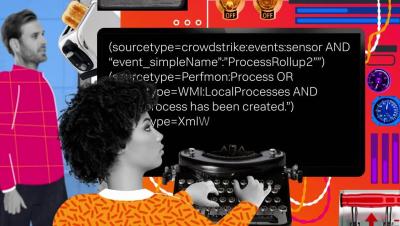
Security and IT analysts need to be able to find threats and issues without having to write complex search queries. The Splunk Common Information Model (CIM) delivers a common lexicon of field names and event types across different vendor data sources making them consistent so that analysts can write clearer queries and get better results with more true positives and fewer false positives.