Security | Threat Detection | Cyberattacks | DevSecOps | Compliance

Under The Light: Operationalizing CTEM with Falcon Exposure Management

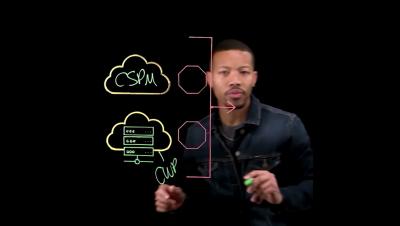
CTEM promises a better way to manage exposure but only if it can be operationalized. In this lightboard session, we break down the CTEM framework and show how Falcon Exposure Management turns it into a continuous, actionable program—helping teams reduce noise, validate real risk, and drive measurable exposure reduction.

Data Transformation Agent in Falcon Fusion SOAR

Modern security automation depends on clean, consistent data. The Data Transformation Agent in Falcon Fusion SOAR makes it simple to shape and interpret security data with natural language prompts. Teams can describe how data should be transformed in plain English, automatically generate expressions with full transparency, and reuse transformations across workflows. By embedding data normalization directly into automation, Fusion SOAR reduces complexity and helps teams act on signals faster.

Small Devices, Big Risk: USB Drives Threaten Enterprise Security

As cloud applications, SaaS platforms, and GenAI tools shape most modern workflows, one physical channel presents an ongoing risk: removable media. USB drives, external devices, and other portable storage remain some of the easiest ways for sensitive data to leave an organization and some of the quietest ways for threats to enter it.

Falcon for IT: Intelligence-Driven Defense and Response at Scale

Modern security teams need complete visibility across every asset to reduce exposure and stop threats before they escalate. Gaps in visibility, unmanaged devices, and delayed remediation increase risk and give adversaries more opportunity to operate. Falcon for IT empowers SecOps with the visibility and context needed to take decisive action.

The Architecture of Agentic Defense: Inside the Falcon Platform

The architectural divide in cybersecurity is no longer theoretical. It's operational. Adversaries are deploying AI-accelerated attacks and moving laterally across domains faster than human analysts can correlate evidence. Meanwhile, defenders are adopting AI tools that accelerate individual tasks but still operate on fragmented data and require manual correlation across disconnected systems.

Detect OPERATOR PANDA at the Edge with Falcon Adversary Overwatch

CrowdStrike Falcon Adversary Overwatch: ► Detect adversaries hiding in your blind spots. Falcon Adversary Overwatch exposes threats targeting network edge devices—firewalls, routers, and infrastructure traditional security tools can’t see. Watch the demo to see how CrowdStrike detects OPERATOR PANDA in real time and stops edge-driven intrusions that quickly turn into credential theft and identity abuse before they escalate.

CrowdStrike to Acquire Seraphic to Secure Work in Any Browser

I’m delighted to announce CrowdStrike’s intent to acquire Seraphic, the leader in browser runtime security. With this acquisition, we will extend the power of the CrowdStrike Falcon platform into the browser to enforce security within sessions across any browser, on any device. The browser is already the operating system of the enterprise workforce, connecting apps, data, and identity.

AI Tool Poisoning: How Hidden Instructions Threaten AI Agents

As AI agents become increasingly prevalent across business environments, their security is a pressing concern. Among the insidious threats facing AI agents is tool poisoning, a type of attack that exploits the way AI agents interpret and use tool descriptions to guide their reasoning. In this blog, we explain how AI tool poisoning works, the different forms it can take, and how organizations can strengthen their defenses against this type of attack.

CrowdStrike to Acquire SGNL to Secure Every Identity in the AI Era

I’m excited to announce CrowdStrike’s agreement to acquire SGNL, a leader in identity-first security. This acquisition will extend CrowdStrike Falcon Next-Gen Identity Security to deliver continuous, context-aware authorization for human, non-human, and AI agent identities across SaaS and hyperscaler cloud environments. As risk conditions and threats change, access to applications, data, and AI agents should change with them.