

Security | Threat Detection | Cyberattacks | DevSecOps | Compliance

CrowdStrike Accelerates the Shift to the Agentic SOC

CrowdStrike has been named a Leader in the inaugural 2026 Gartner Magic Quadrant for Integrated Security Operations Center (ISOC) Systems. We have also been named a Leader in the 2026 Gartner Magic Quadrant for SIEM. We believe this placement reflects one core principle: The unified CrowdStrike Falcon platform provides the foundation where expert SOC agents gain a complete view of the enterprise, reason over key decisions, and act at machine speed.


Securing Employees' AI Use Requires a Unified Architecture

AI is changing how employees work. From browser-based AI applications and coding assistants to autonomous agents that access tools, data, and systems, AI is becoming an integral part of everyday workflows. Much of this activity happens on the endpoint, where AI interactions can translate into real system actions. Securing employees’ use of AI requires more than visibility into which applications employees use or what they send to AI models.

Could you stop VAPOR PANDA?

Adversaries tried to avoid CrowdStrike. CrowdStrike caught them anyway. China-nexus adversary VAPOR PANDA used AI agents to target more than 200 organizations across at least 14 countries in just 11 days. The goal? Break into as many targets as possible, explore different ways in, and stay under the radar. But our Counter Adversary Operations team uncovered how the agents operated, including explicit instructions to find systems without the CrowdStrike Falcon sensor.

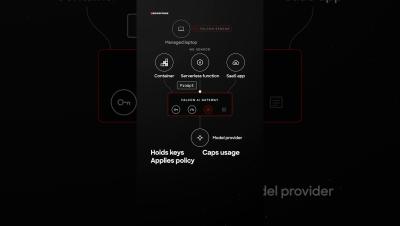
CrowdStrike Falcon Guardian's AI Gateway

What happens when your AI applications operate where there’s no Falcon sensor? From containers and serverless functions to SaaS applications, AI model calls need visibility and security controls. In our latest demo, see how CrowdStrike Falcon Guardian’s AI Gateway brings AI traffic through a centralized point of control. Block prompt injection before it reaches the AI model Secure provider API keys and control application access Enforce rate limits and monitor AI usage and cost.

NGINX2ROOT: Identify, Patch, and Protect with the CrowdStrike Falcon Platform

NGINX2Root: Identify, Patch, and Protect with the CrowdStrike Falcon Platform Five critical nginx vulnerabilities, collectively known as NGINX2Root, could allow attackers to remotely execute code on affected servers. See how the CrowdStrike Falcon platform helps security teams identify vulnerable systems, prioritize risk, assess exploitability, and accelerate remediation. This demo walks through using Falcon Exposure Management to identify and prioritize affected hosts, Falcon for IT to patch at scale, and Falcon Cloud Security to locate vulnerable container images and guide remediation.

Charlotte Agentic SOAR: Build, Run and Govern Security Automation with AI

CrowdStrike Charlotte Agentic SOAR brings AI agents, workflows, and automation together to accelerate security operations. Using natural language, security teams can build and refine response workflows that combine AI-powered reasoning with deterministic automation and human oversight. See how Charlotte AI transforms a critical endpoint detection into an automated response workflow, applying your organization's policies to make intelligent decisions while maintaining control over critical systems.

NGINX2Root: Identify and Protect with the CrowdStrike Falcon Platform

A set of five critical vulnerabilities in nginx, one of the most widely deployed open-source web servers, was disclosed on November 18, 2026. Collectively branded NGINX2Root by researchers, these flaws allow an unauthenticated remote attacker to execute code on a target host and, in a demonstrated exploit chain, escalate to root and escape a Docker container to reach the underlying host. The two most severe CVEs (CVE-2026-123007 and CVE-2026-123633) each carry a CVSS 4.0 score of 9.2.

Java4Shell (CVE-2026-114938): CrowdStrike Detects Exposure and Post-Exploitation Activity

CVE-2026-114938, dubbed "Java4Shell," is a memory corruption vulnerability in the HotSpot Java Virtual Machine (JVM), the runtime shared by Oracle Java SE, OpenJDK, and many downstream Java distributions. Although HotSpot is widely deployed, exposure to this vulnerability is narrower than its footprint suggests. Exploitation requires three conditions: an affected Java version, x86-64 hardware that supports AVX-512 VBMI, and an application that decodes attacker-supplied Base64 data.