Security | Threat Detection | Cyberattacks | DevSecOps | Compliance

How to manage browser extensions across all clients | ManageEngine MSP Central

Browser extensions are one of the most underestimated security gaps in your clients' environments, and most of them were never approved by your MSP team. In this tutorial, we walk through browser extension management in MSP Central: how to block unauthorized add-ons, restrict dangerous permissions like desktop capture, manage native messaging, and pin approved extensions—all from a single console and enforced automatically across every client.
Shadow AI has officially entered the enterprise

AI tools have become a workplace staple, but their unsanctioned use has given rise to shadow AI. It refers to the untracked usage of any AI tools or applications without approval or overview of the information technology (IT) or security team. This is substantiated by the Verizon 2026 Data Breach Investigations Report (DBIR) which shows how rapidly the shadow AI trend is growing.

DDI Central 6.3: Now with Windows Node Agent for agent-based server communication

DDI Central 6.2 introduced GSS-TSIG authentication for secure dynamic DNS updates, JIT user provisioning via LDAP and LDAPS, and native scavenging support for Windows AD-integrated and DDNS domains, giving network admins greater control over DNS updates, domain hygiene, and user access across their infrastructure. These new additions have addressed major pain points on how admins manage DNS security, authentication, and resources.

Top tips: How to use public Wi-Fi without handing your data to a stranger

Top tips is a weekly column where we highlight what's trending in the tech world and list practical ways to explore these trends. This week, we are tackling something almost everyone does without thinking twice: connecting to public Wi-Fi (and what it could be costing you without you ever knowing). You are at an airport, a coffee shop, or a hotel lobby. You notice your data plan is running low and scroll through the available networks. And there it is: Free Wi-Fi—no password required.

10 best network device management software

Network outages are still painfully expensive, and configuration mistakes are one of the biggest culprits. A 2023 analysis of Uptime Institute data shows that configuration and change management failures are the top cause of major network outages, responsible for around 45% of network incidents. Even a small configuration slip on a core switch can cascade into large-scale downtime. That’s why consistent, well-governed network device management is key to keeping business services uninterrupted.

Episode 2: Least privilege access

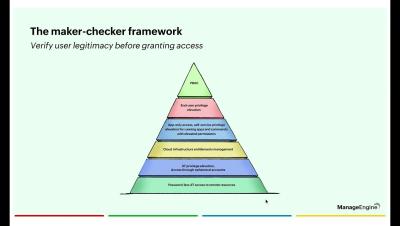
In this episode, we'll walk you through one of the core tenets of PAM360: eliminating standing privileges. You will learn how to replace permanent administrative access with just-in-time (JIT) privilege elevation, reduce your attack surface, and enforce least-privilege access across your endpoints and critical systems. We will also break down PAM360's privilege elevation framework—built on a maker-checker model and policy-based access—so you can configure and scrutinize access requests, automate approvals, and enable dynamic controls for applications and user actions.

Your fleet's firmware certificate is expiring: What June 2026 means for IT teams

Every Windows device your organization deployed before 2025 carries a set of certificates in its Unified Extensible Firmware Interface (UEFI) firmware. They've been there since 2011, quietly doing the work of validating boot signatures so nothing untrusted runs before the operating system loads. Most IT teams have never had a reason to think about them. That's about to change.

Why network vulnerability management is critical for businesses and how to automate it

Network vulnerability management is no longer a periodic security task. As networks expand across locations, vendors, and OSs, vulnerabilities can emerge quietly through configuration changes, outdated firmware, or delayed patching. Without consistent visibility and automation, teams often discover risks only after they affect availability, security, or compliance. Effective vulnerability management requires continuous awareness, structured assessment, and controlled remediation.