Security | Threat Detection | Cyberattacks | DevSecOps | Compliance

Cyber Insurance: Insuring the Intangible

Whichever way you look at it, the talk around cyber has been gathering steam. Plenty of commentators on the insurance market have predicted that 2021 will be the year that cyber insurance comes into its own. Cyber risks are constantly shifting and personal and commercial insurance is fast becoming a must-have. However, it’s hard to draw the line between the two as remote working becomes more common so insurers are finding it difficult to write cyber in a general sense. Demand won’t drop off though. Nor will the threats.

Continuous Cyber Monitoring and Rating with SecurityScorecard

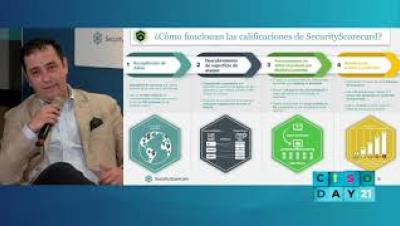
At Infocom Security Greece virtual event on April 23, 2021, Nadji Raib (Regional Sales Director, SecurityScorecard), Matthew McKenna (President of International Sales, SecurityScorecard), and Panagiotis Pierros (Managing Director, TICTAC LABORATORIES) presented how important it is not only to monitor your own security posture but also to monitor your 3rd party, 4th party, and your entire ecosystem of vendors and partners. The demo section shows how easy it is to instantly rate a company's current security posture and to prioritize what are the issues that need to be fixed to get a better security rating.

Third-Party Risk Management in Healthcare

Third-party risk management in the healthcare industry is getting increased attention (partly due to the worldwide Covid-19 pandemic) because of the new European rules and legislations concerning the Healthcare section. In this video, Matthew McKenna, President of International Sales, speaks about third-party risk management in the Healthcare space.

What Is a Cybersecurity Audit and Why Does it Matter?

As organizations embrace new digital technologies, the risk of cybersecurity threats is growing steadily. Digital transformation is increasing network complexity, which often creates security weaknesses and potential entry points for cyber adversaries to exploit. If left unaddressed, these cyber risks can disrupt business processes and harm goals. Therefore, effective cybersecurity policies and programs have become essential. A critical element of these programs is conducting regular cybersecurity audits.