Security | Threat Detection | Cyberattacks | DevSecOps | Compliance

SAP Commerce Cloud Implementation: A Practical Guide with Qnovate

Driving omnichannel excellence requires a strategic SAP Commerce Cloud implementation that seamlessly integrates front-end experiences with back-end operations. Qnovate enables enterprises to deploy scalable, cloud-native commerce ecosystems, leveraging modular architectures.

Get started with HaloSHARE in 3 steps

HaloSHARE streamlines and secures your workflows with internal colleagues and external partners. Here’s how you can get started in 3 simple steps. Digital supply chains require seamless workflows to function. Be it large multi-partner infrastructure projects or two-way collaboration with a custom parts supplier, digital supply chain security measures must therefore improve - not impede - the production process.

SAP Zero-Day CVE-2025-31324: Unauthenticated RCE in NetWeaver VCFRAMEWORK

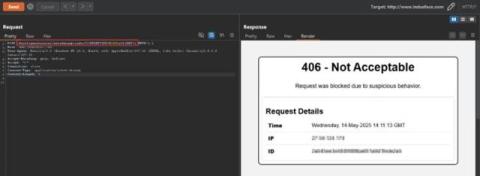
SAP disclosed a critical RCE vulnerability(CVE-2025-31324) on April 24, 2025, impacting the Visual Composer Framework in NetWeaver Application Server Java, version 7.50. This flaw poses a serious risk to enterprises relying on SAP NetWeaver for their mission-critical operations. Unauthenticated attackers can exploit this vulnerability to upload and run arbitrary files on SAP servers, potentially resulting in complete system compromise.

Emerging Threat: SAP NetWeaver Visual Composer CVE-2025-31324

On April 24th, 2025, SAP disclosed CVE-2025-31324, a critical missing authorization check vulnerability (CVSS 10.0) affecting the Metadata Uploader component of SAP NetWeaver Visual Composer. This vulnerability fails to restrict file upload content, allowing unauthenticated remote attackers to achieve full remote code execution (RCE) on affected servers.

CVE-2025-31324: Maximum-Severity File Upload Vulnerability in SAP NetWeaver Exploited in the Wild

On April 24, 2025, SAP released fixes for CVE-2025-31324, a maximum-severity zero-day unrestricted file upload vulnerability in the NetWeaver Visual Composer component. Visual Composer is a tool within NetWeaver for creating applications and user interfaces. The vulnerability was discovered by ReliaQuest, which initially observed its exploitation in the wild.

Digital supply chain security: How to secure your supply chain with DLP and Secude

Data loss prevention (DLP) software provides strong protection after data is stored, Secude provides Zero Trust protection before data is stored. Together, they secure your digital supply chain. Ensuring digital supply chain security is a fundamental part of the EU’s NIS2 Directive - and for good reason. In recent years, digital supply chains have become the main targets of cyberwarfare, with supply chain attacks rising 2,600% since 2018.

CVE-2017-12637: Exploitation of SAP NetWeaver Directory Traversal Vulnerability

On March 19, 2025, the CISA issued a warning about the active exploitation of CVE-2017-12637, a directory traversal vulnerability in SAP NetWeaver AS Java. This vulnerability, originally patched in 2017, has resurfaced due to incomplete mitigations, leading to increased risks for organizations using outdated or misconfigured SAP environments.

Protect Your SAP HANA Data With Air-Gapped Rubrik Solution

SAP HANA is a multi-model database that stores data in memory instead of on disk to handle high-speed transactions and real-time analytics simultaneously. Unlike traditional databases that rely heavily on disk I/O, SAP HANA's in-memory storage allows for significantly faster query execution and data processing, making it ideal for modern enterprise workloads. SAP HANA supports both OLTP (Online Transaction Processing) and OLAP (Online Analytical Processing) workloads within a single system.

Zero Trust in 2025: 5 Sensitive Areas to Prioritize

From external collaboration and compliance to key financial info and intellectual property, here are five areas that need Zero Trust as a priority. In mid 2024, Gartner research found that 63% of global organizations had fully or partially-implemented a Zero Trust strategy, but these strategies only covered a small portion of the organization’s environment and that many enterprises were still “not sure what the top practices are for Zero Trust implementations.”

How to build resilience in critical systems

From power grids and water systems to transport networks and healthcare facilities, critical infrastructure has become a key target for cyber attacks in recent years, such as US utilities suffering a 70% year-on-year increase in cyber attacks this year. The reason for targeting critical infrastructure is clear: they often use outdated software and the attacks have an outsized disruptive impact.