Security | Threat Detection | Cyberattacks | DevSecOps | Compliance

How Fireblocks Is Innovating MPC Wallet Technology

Our MPC-CMP algorithm at Fireblocks has brought a complete evolution in our clients’ security architecture. There are many benefits in utilizing MPC, such as the distribution of signing, the removal of a single point of failure from the system, and flexible M event signing structures. But MPC has its downsides, including a low transaction speed due to multiple rounds in the MPC signing process, and a lack of a truly air-gapped MPC solution.

What Is Cryptojacking and How Can You Defend Against It?

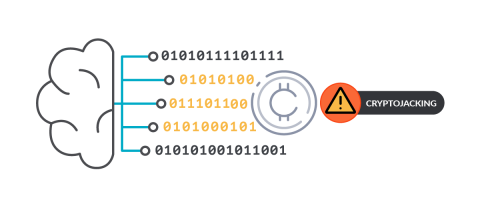
It should come as no surprise that as cryptocurrencies become more popular and edge towards the mainstream, the mining of these digital currencies—which uses computing power to solve complex math problem— has given rise to a new form of cyber attack: cryptojacking. Cryptojacking may sound like a way to steal someone's cryptocurrency assets, but it's a less obvious form of theft.

The Karakurt Web: Threat Intel and Blockchain Analysis Reveals Extension of Conti Business Model

Tetra Defense, an Arctic Wolf® company, partnered with Chainalysis to analyze the link between the Karakurt cyber extortion group to both Conti and Diavol ransomware through Tetra’s digital forensics and Chainalysis’ blockchain analytics. As recent leaks have revealed, Conti and Trickbot are complicated operations with sophisticated structures. But, our findings indicate that web is even wider than originally thought, to include additional exfiltration-only operations.

How Blockchain Streamlines Traditional Bank Processes

How does blockchain help traditional banks streamline their processes? Fireblocks Head of APAC & Vice President, Product Strategy and Business Solutions, Stephen Richardson, explains. For large and complex organizations like banks, their legacy technology has many inefficiencies in the recognition and settlement of assets. But once you put an asset on the blockchain, you create a singular basis for identifying assets and a central point of visibility for the entire organization to manage how that asset interacts across multiple business lines.

What role does blockchain play in cyberattacks and cybersecurity?

Most company decision-making executives know how blockchain technology works but few have adopted it within their organization at this stage. This is the conclusion drawn by the latest Pulse survey conducted on 145 senior IT managers from companies on three continents. It shows that only 8% have experienced this technology, compared to 53% who know how it works but are yet to use it.

Today's Crypto Storage Solutions & Wallets for Institutions

What secure, enterprise-grade crypto storage solutions (wallets) currently exist on the market? Fireblocks' Head of APAC & Vice President, Product Strategy and Business Solutions, Stephen Richardson, explains. There are two types of enterprise-grade crypto storage solutions (wallets) exist in the market: Multisig wallets (ex: Bitgo, Coinbase, Gemini, Paxos) and MPC wallets (Ex: Unbound, SharpX, Fireblocks).

Licensed Custodians vs. Self Custodians for Digital Assets

In 2022, many financial institutions across the globe are investing in digital assets. The crypto market now has a market cap of more than $2 trillion, and the number of crypto wallets has ballooned to 260 million. If your organization is looking to invest in the space – or already has – you may be wondering, “Do we need a ‘qualified cryptocurrency custodian’ to hold our digital asset investments?”

New Docker Cryptojacking Attempts Detected Over 2021 End-of-Year Holidays

Cryptocurrency mining has become very popular among malicious actors that aim to profit by exploiting cloud attack surfaces. Exposed Docker APIs have become a common target for cryptominers to mine various cryptocurrencies. According to the Google Threat Horizon report published Nov. 29, 2021, 86% of compromised Google Cloud instances were used to perform cryptocurrency mining.