What is Tines?
Tines is a no-code automation platform that enables you to transform your work.


Tines is delighted to announce we have joined the AWS Partner Network as a Select Partner, and our no-code automation platform is now live on AWS Marketplace. Additionally, we are very proud to have recently won an AWS Software Startup Award. The awards were created to shine a spotlight on innovative B2B/SaaS startups in the UK and Ireland.
The cybersecurity industry has talked about security automation for years. We’ve grappled with what, when and how to automate. We’ve debated the human vs machine topic. And when we’ve been burned by machines quarantining a system or blocking a port on a firewall in error, we’ve wondered if there’s any place at all for automation. But deep down we know that automation is the future, and the future is here.
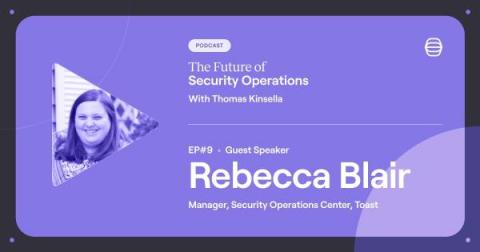
On this episode of the Future of Security Operations podcast, Thomas speaks with Rebecca Blair, Security Operations Center Manager at Toast, an all-in-one point-of-sale and restaurant management platform for food service and hospitality businesses. After working in various cybersecurity roles over the past decade, Rebecca joined Toast in 2021 as the first employee of its security operations center.
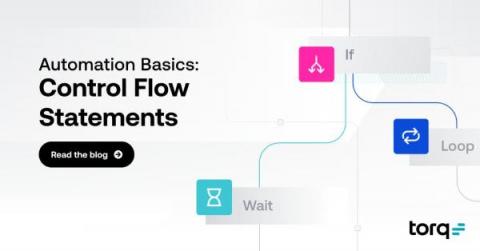
Control flows are the backbone of automation. Identifying what to do with a set of data – and how – is a key component of high-value automation, but it can also be confusing to wrap your head around at first. What is a conditional? And what does it have to do with a loop? How do you deal with a set of information versus a single data point?