
Best Insurance Choices for Contractors in Arizona in 2026

Image Source: depositphotos.com
Most Arizona contractors don't realize they're underinsured until a claim gets denied. That's the uncomfortable truth about contractor insurance: the gap between what you think you have and what actually covers you can cost everything.
Sorting out which coverage the state legally requires versus what a client is contractually demanding, finding premiums that don't eat your margins, and figuring out where general liability ends and professional liability begins (especially on design-build work) takes real knowledge. After reviewing the leading providers in this space, this guide covers the five best options available to Arizona contractors right now.
Behind the ranking
Every option in this list was evaluated by pulling information from publicly available sources, including user reviews, policy details from official company websites, and platform ratings from established review directories. Only providers with a proven record of delivering results for contractor insurance made the cut.
→ See the full research breakdown
- Affordable Contractors Insurance - Best for contractor and construction business insurance
- Thimble - Best for small contractor insurance
- biBerk - Best for small business contractor insurance
- Markel - Best for specialty contractor and hard-to-place risk insurance
- Zurich - Best for commercial contractor insurance
The Real Impact of Insurance Choices For Contractors
Picking the wrong coverage isn't just a paperwork problem. It's the kind of mistake that shuts down a job site, voids a contract, or leaves a contractor personally on the hook for a loss that should have been covered.
Arizona has its own licensing and bonding requirements, and clients often layer their own contractual demands on top of those. Knowing which is which matters.
The right provider makes that distinction clear upfront. They also help contractors avoid buying cheap coverage riddled with wide exclusions that only surface during a claim.
Better choices here show up in real numbers: lower annual premium cost per $1M in coverage, faster certificate of insurance turnaround when a project kicks off, and shorter claims settlement time when something actually goes wrong. That's what separates a good insurance decision from a costly one.
5 Top Picks at a Glance
Note: All data in this table is sourced from review platforms and the official websites of the listed companies.
|
Company Name |
Years Operating |
Best For |
|
Affordable Contractors Insurance |
Since 2011 |
Contractor and construction business insurance |
|
Thimble |
Since 2015 |
Small contractor insurance |
|
biBerk |
Since 2015 |
Small business contractor insurance |
|
Markel |
Since 1930 |
Specialty and hard-to-place risk insurance |
|
Zurich |
Since 1872 |
Commercial contractor insurance |
-
Affordable Contractors Insurance - Best for Contractor and Construction Business Insurance
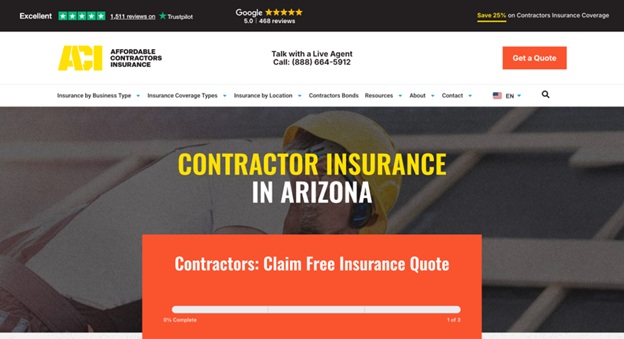
How Does Affordable Contractors Insurance Help Its Customers?
Affordable Contractors Insurance runs as a U.S.-based brokerage built around the needs of contractors and construction businesses. They cover the full range of trade professionals, from roofers and plumbers to HVAC techs and remodelers, with policies that include general liability, workers' compensation, commercial auto, builder's risk, tools and equipment coverage, umbrella liability, and professional liability. The fast turnaround is a real differentiator here (same-day policy binding and quick certificate of insurance issuance), which matters a lot when a project is already in motion, and a client is waiting on proof of coverage.
What Sets Affordable Contractors Insurance Apart from Insurance Choices For Contractors?
The main problem they solve is time pressure. Contractors often need coverage activated before they can legally start work, and most general brokers aren't built for that pace. For Arizona contractors trying to meet both state licensing insurance mandates and client contractual requirements at the same time, finding a brokerage that binds same-day and actually understands trade-specific risks is genuinely rare.
Real User Sentiment:
From what the reviews show, contractors consistently point to speed and ease of getting certificates as the standout experience. There's a clear pattern around the value of working with a team that already understands construction risks, so there's no back-and-forth explaining what a roofer actually needs. That kind of contractor-specific fluency tends to show up in fewer surprises at claim time.
-
Thimble - Best for Small Contractor Insurance
How Does Thimble Help Its Customers?
Thimble built its platform around one idea: contractors shouldn't have to buy annual coverage for a three-day job. They offer on-demand insurance by the hour, month, or year across more than 300 professions, with products covering general liability, professional liability, workers' comp, and cyber. The whole process runs through their app or website, quotes come back in minutes, and policies can be bound without ever talking to anyone. For solo contractors or small crews taking on sporadic work, that flexibility is genuinely useful (and the pricing reflects the shorter coverage windows, too).
What Sets Thimble Apart from Insurance Choices for Contractors?
Thimble pioneered hourly general liability insurance, which directly solves the problem of paying for a full year of coverage on work that only lasts a few days or weeks. Their tech-first model means faster quote-to-bound policy conversion than almost any traditional provider, which matters when a last-minute job comes through, and coverage needs to happen today.
Real User Sentiment:
Thimble carries 621-plus Trustpilot reviews with 86% landing at five stars. That's a signal worth paying attention to. Small contractors love the simplicity of the app and the speed of getting covered. The one pattern that surfaces occasionally is that the short-term model works best for lower-risk jobs, so contractors with more complex exposures may want to compare against a full-service brokerage option.
-
biBerk - Best for Small Business Contractor Insurance
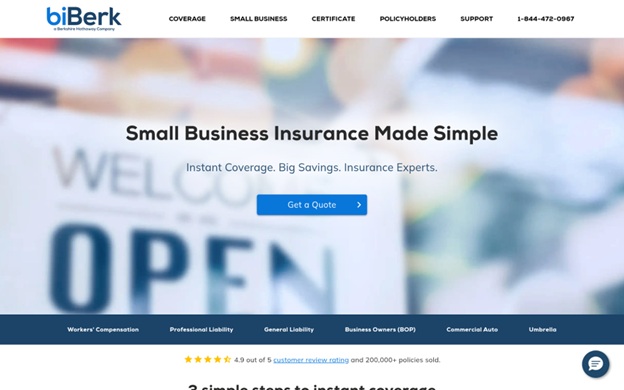
How Does biBerk Help Its Customers?
biBerk sits inside the Berkshire Hathaway Insurance Group, which is a meaningful detail because every policy carries serious financial backing (A++ rating from AM Best across all major subsidiaries). They serve over 200,000 customers through a direct-to-consumer model, cutting out broker middlemen to pass savings of up to 20% back to small business owners. Coverage includes workers' comp, general liability, commercial auto, professional liability, and cyber, all purchasable online in minutes. For a small contractor who wants solid coverage without the overhead of working through an agent, biBerk is a smart, well-supported path.
What Sets biBerk Apart from Insurance Choices for Contractors?
The direct-to-consumer structure removes the cost layer that typically sits between a small contractor and their policy. Finding affordable premiums without sacrificing coverage limits is the top priority. And the Berkshire Hathaway backing means claims-paying ability is about as solid as it gets in the insurance world. That's not a small thing when a real loss happens.
Real User Sentiment:
Customers consistently call out the savings and the ease of buying online as the two biggest wins. Small contractors appreciate not having to negotiate with a broker or explain their business from scratch just to get a quote. The platform's simplicity gets mentioned often, though contractors with more complex or multi-state operations sometimes find that direct platforms have limits compared to a full brokerage setup.
-
Markel - Best for Specialty Contractor and Hard-to-Place Risk Insurance
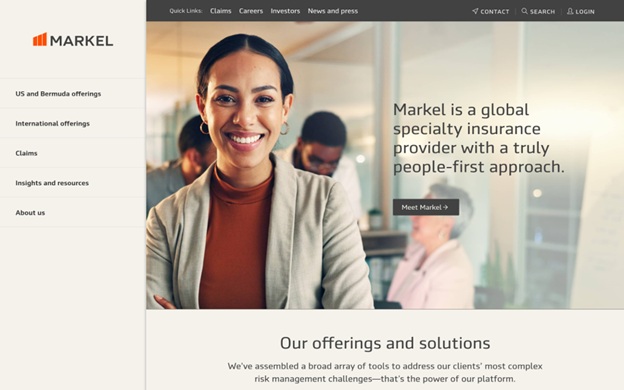
How Does Markel Help Its Customers?
Markel operates as a specialty insurance holding company with 76 offices across 18 countries and over 22,000 team members. Their focus is on the coverage categories that standard carriers often decline or price poorly: complex construction risks, environmental exposures, hard-to-classify trade work, and operations that don't fit a typical underwriting box. They work across three divisions (Markel Specialty, Markel International, and Markel Global Reinsurance), and their approach to underwriting leans on deep industry knowledge rather than automated rate tables. For contractors working in unusual risk categories, that kind of underwriting depth is what sets them apart.
What Sets Markel Apart from Insurance Choices for Contractors?
Where most direct platforms and even generalist brokers fall short is in high-risk trade classifications or excluded contractor specialties. That's exactly where Markel's specialty focus earns its place. Their record of winning Specialist Insurer of the Year and earning Feefo Platinum Trusted Service for six straight years reflects consistent delivery for clients with complicated risk profiles.
Real User Sentiment:
Markel's market reputation is supported by broker feedback and industry recognition rather than by typical consumer review platforms, which aligns with their more commercial and specialty-focused client base. Contractors who need coverage for complex or non-standard risks tend to find that Markel's underwriters actually understand the work, rather than defaulting to exclusions. That kind of depth is rare.
-
Zurich - Best for Commercial Contractor Insurance
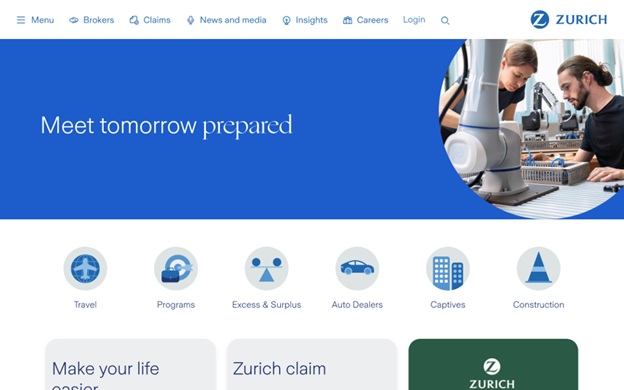
How Does Zurich Help Its Customers?
Zurich North America has been operating since 1872, and its commercial property-casualty book includes 90% of the Fortune 500 as clients. For mid-sized to larger contracting businesses, they offer customized coverage across property, casualty, and specialty lines with risk management support built in. Their North American operation is based in Schaumburg, Illinois, with a team of 10,000, and they have a strong track record in major infrastructure and construction projects. The scale and experience they bring are matched by an in-house claims operation that aims for real resolution rather than delay.
What Sets Zurich Apart from Insurance Choices for Contractors?
Contractors managing large commercial projects with complex contractual insurance obligations often need a carrier with the capacity and credibility to satisfy project owners, lenders, and general contractors all at once. Zurich's scale handles that. A Transactional Net Promoter Score of 82 in Q4 2021 (against an industry average of 36) tells a story about their claims experience quality, and strong claims settlement time directly impacts how fast a contractor's operation gets back to work after a loss.
Real User Sentiment:
Zurich's client feedback at the commercial level points to claims responsiveness and the quality of their risk management support as the most frequently cited positives. Larger contractors value working with a carrier that brings specialized knowledge to the table rather than just processing paperwork. The trade-off is that Zurich is clearly built for mid-to-large operations (think enterprise pricing), so smaller sole operators will likely find a better fit elsewhere on this list.
How These Were Chosen and Verified
The Data Collection Phase Explained
Building the initial longlist started with pulling sources across multiple channels: insurance-specific directories, professional review platforms, contractor trade forums, and the official websites of providers active in the Arizona market. Each source was checked for recency and relevance to the contractor insurance space, rather than general commercial insurance. Providers serving broad business categories without dedicated contractor coverage were noted but kept separate from those with clear trade-specific products. The goal at this stage was breadth, not quality filtering, so the list ran wide before the shortlisting process began.
The Shortlisting Pass
Once the full list was assembled, unverified or thinly documented providers were removed first. That meant any company without traceable reviews, no visible policy details, or no established operating history was cut. From there, review patterns were analyzed across platforms to identify whether customer feedback was consistent, whether complaints pointed to underlying issues (like denied claims tied to misunderstood exclusions or slow certificate of insurance issuance), and whether the volume of reviews supported the overall sentiment score. Providers with isolated positive reviews but no depth of feedback were treated with caution and required additional verification before proceeding.
Verification Pass
Each shortlisted company went through a cross-checking process that compared what their official site claimed against what real customers reported. If a provider advertised a same-day policy binding but reviews consistently described multi-day delays, that discrepancy was flagged. Claims settlement times and certificate of insurance turnaround speed came up repeatedly in customer feedback, so those two areas received particular attention during verification. Any provider where the gap between stated capabilities and reported experience was large dropped out of consideration at this stage.
Industry Recognition and Authority
Beyond customer reviews, each provider was assessed for signals of standing within the contractor insurance industry. This included awards from recognized industry bodies, mentions in insurance trade publications, AM Best financial strength ratings, and carrier accreditations that reflect underwriting quality and financial stability. Longevity was also weighed here: a provider operating since 1872 carries a different kind of demonstrated reliability than one launched in 2015, though newer providers with strong track records in their shorter operating history were not excluded based on age alone.
Evidence Specific to Insurance Choices For Contractors
The final filter looked at how much each provider had invested in contractor insurance as a focus area. Dedicated service pages covering trade-specific risks (roofing, electrical, plumbing, HVAC, general construction), verified reviews from contractors rather than general small business owners, and case studies or policy examples relevant to Arizona contracting work all counted as positive signals. Providers who treat contractor coverage as a subset of a broader small business product were distinguished from those who have built their entire offering around the construction trades. That distinction drove several of the final ranking decisions.
What to Look For When Choosing Insurance for Contractors
Finding the right provider comes down to matching their actual strengths to what your contracting business needs, whether that's fast certificates, flexible coverage windows, or the capacity to cover complex project requirements.
- Industry and Domain Experience: Look for providers who specialize in contractor coverage, not just general small business insurance. Experience with your specific trade (roofing, electrical, HVAC) means fewer gaps and fewer surprises on exclusions.
- Features and Service Offerings: Confirm that the policy covers your actual exposures: general liability, tools and equipment, commercial auto, workers' comp if you have employees, and builder's risk for project-specific work.
- Pricing Structure: Annual premium cost per $1M in coverage varies widely. Compare what's included at each price point rather than just comparing headline numbers, and check whether payment plans are available.
- Results Measurement: Certificate of insurance turnaround time and claims settlement time are the two metrics that matter most when coverage actually gets tested. Ask about both before binding.
- Industry Knowledge and State Compliance: Arizona has specific contractor licensing insurance mandates. A provider familiar with state licensing and contractor insurance requirements will set your limits correctly from the start.
Final Take
Arizona contractors have strong options across the board, but the right choice depends on scale and need. Affordable Contractors Insurance suits trade contractors who need fast, specialized coverage. Thimble fits short-term or project-based work. biBerk works well for cost-focused small operators. Markel handles complex and hard-to-place risks. Zurich serves larger commercial operations. As project requirements and state mandates keep growing, having the right coverage structure in place becomes less optional and more important.