Security | Threat Detection | Cyberattacks | DevSecOps | Compliance

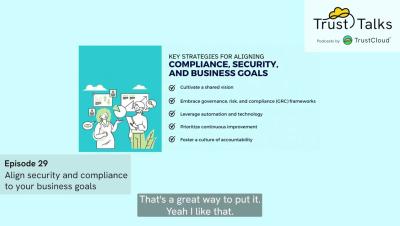
Align security and compliance to your business goals | TrustTalks - Ep 29 | Security and GRC Podcast

This podcast focuses on aligning business goals with compliance and security. It details strategies for successful alignment, including using GRC frameworks, automation, and continuous improvement. Numerous best practices and case studies illustrate how to integrate these elements effectively, ultimately fostering a culture of accountability and enhancing organisational success. Tools and resources are also highlighted to support this integration. The pursuit of success is a multifaceted endeavour.

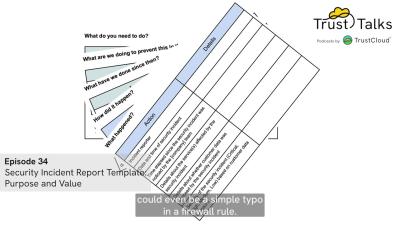
Security Incident Report Template | TrustTalks - Ep 34 | Security and GRC Podcast

This podcast focuses on a downloadable security incident report template, explaining its importance, use, and value in maintaining organizational security. A security incident report is a document that outlines the details of any security incident that occurs within an organization. This report serves as an official record of the incident and is used for documentation, analysis, and future prevention.

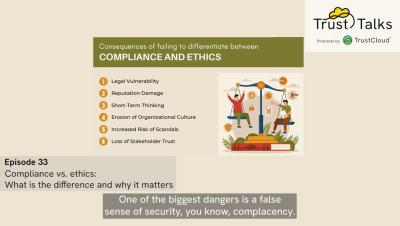
Compliance vs ethics | TrustTalks - Ep 33 | Security and GRC Podcast

This podcast focuses on the crucial difference between compliance (adhering to laws and regulations) and ethics (upholding moral principles) in business. It highlights the risks of prioritising one over the other, advocating for a balanced approach to foster a strong ethical culture. Several case studies illustrate the consequences of neglecting either compliance or ethics. It also offers strategies for integrating both into business practices to enhance reputation, reduce risk, and improve decision-making.

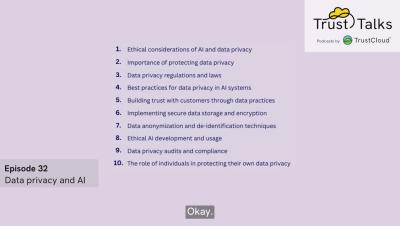
Data privacy and AI | TrustTalks - Ep 32 | Security and GRC Podcast

This podcast focuses on the ethical implications of AI’s data usage, emphasizing the importance of transparency, informed consent, and robust security measures. It discusses the ethical considerations and best practices for data privacy in the age of artificial intelligence (AI). It is a platform offering resources and tools for governance, risk, and compliance (GRC) and support for various compliance standards like GDPR, HIPAA, and ISO 27001, utilizing AI to streamline audit processes.

Data Governance 2025: Building Trust and Resilience | TrustTalks - Ep 31 | Security and GRC Podcast

This podcast focuses on how data governance is evolving, what the 2025 landscape looks like, and what enterprises need to do today to be future-ready. As enterprises march towards an AI-driven, hyper-connected digital future, the strategic importance of data governance is more critical than ever. In 2025, data will no longer just be an asset – it will be the foundation of trust, innovation, and resilience. Yet many organizations still treat data governance as a compliance checkbox rather than a competitive differentiator.

Impact of blockchain on regulatory compliance | TrustTalks - Ep 30 | Security and GRC Podcast

Navigating the intricate landscape of regulatory compliance has always been a challenge for businesses, but the rise of blockchain technology brings both unprecedented opportunities and formidable challenges. Blockchain, with its transparent and immutable ledger, promises to revolutionize how companies approach compliance by offering real-time audits, reducing fraud, and enhancing data security. However, embracing this innovation isn’t without its hurdles.

Quick guide to ISO 42001 and NIST AI RMF | TrustTalks - Ep 2

As businesses increasingly turn to artificial intelligence (AI) to enhance innovation and operational efficiency, the need for ethical and safe implementation becomes more crucial than ever. While AI offers immense potential, it also introduces risks related to privacy, bias, and security, prompting organizations to seek robust frameworks to manage these concerns. In response to this surge in AI adoption, national and international bodies have been developing guidelines to help companies navigate these challenges. These frameworks not only aim to mitigate potential risks but also ensure compliance with evolving regulations.