Security | Threat Detection | Cyberattacks | DevSecOps | Compliance

Who's Winning the AI Security Race: Attackers or Defenders?

Defenders have gained early access to powerful AI tools, creating an opportunity to improve security outcomes and strengthen cyber resilience. But as these capabilities become more widely available, that advantage may not last. Rik Ferguson, VP of Security Intelligence at Forescout, shares his perspective on what security teams should be doing now to prepare.

Where Security Breaks First in the AI Era

Most security programs were built for a slower clock. But as AI-assisted and autonomous attackers accelerate the pace of attacks, manual approval gates can become the point where defenders fall behind. This short video explores why security teams need to reexamine the processes, decision points, and response workflows that may slow them down when speed matters most.

The First Hour of a Zero-Day: Why Preparation Must Start Before Disclosure

The window between vulnerability disclosure and exploitation is shrinking. As exploit development accelerates, organizations can no longer afford to wait for a vulnerability to be disclosed or a patch to become available before taking action. Daniel dos Santos, VP of Research, explains why effective zero-day response depends on preparation that happens before an incident occurs.

Let's Talk Security: The Control Gap

In this conversation, Forescout CEO Barry Mainz will be joined by Karsten Abata, tech evangelist at Forescout, former cybersecurity practitioner, and co-author of The Control Gap, to discuss how to close the Control Gap: the widening space between seeing cyber risk and having the ability to control it before it becomes operational impact.

PQC Post Quantum Cryptography Explained: Why Today's Encryption Has an Expiration Date

The encryption protecting today’s data isn’t broken, but it does have a timeline. This video breaks down why current systems like TLS, PKI, and RSA remain secure today, and how quantum computing will change that. As progress accelerates toward large-scale quantum machines, organizations must prepare for a new era of security. Learn how PQC (post quantum cryptography) helps address emerging risks like “harvest now, decrypt later,” and why tracking adoption of quantum-safe encryption is critical now, not later.

Strategic Investment: Navigating Cybersecurity in an Autonomous Era

Unlock the secrets to strategic investment in cybersecurity that every business leader needs to know. Avoid the pitfalls of over-investment and instead, focus on understanding your cybersecurity architecture, processes, and unique risks. Discover how a solid foundation can bolster your security architecture and enhance business operations. Protect your critical assets and ensure real-time visibility across your network.

Let's Talk Security: Leading Healthcare Security Through Constant Change

Healthcare CISOs are navigating one of the most complex security environments. In this conversation, Barry Mainz will be joined by David Finkelstein, CISO, St. Luke’s University Health Network, a seasoned healthcare security leader with experience spanning cyber, operations, and military service, to discuss what it takes to build a modern healthcare cybersecurity program that is resilient today and ready for tomorrow.

Why Segmentation is Crucial for Cybersecurity in Today's World

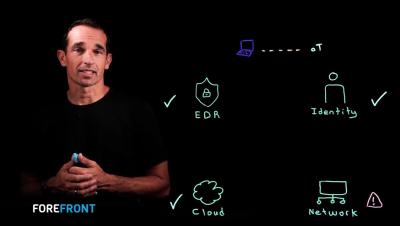
This video delves into the importance of segmentation in cybersecurity and why it matters more than ever. As attacks become more sophisticated, they don't just stop at entry but rather succeed through lateral movement. An expert explains how effective segmentation limits this movement, contains the blast radius, and buys you the most critical resource in combating cyber threats—TIME. In a world where machine speed exploits are on the rise, machine speed containment is key. Discover how immediate and well-designed segmentation can provide the much-needed AI defense to protect what truly matters.

Why Speed is Changing the Game in Cybersecurity

This YouTube Short dives into how cybersecurity is evolving in today’s digital age. While the threat from attackers is nothing new, what's changed is the speed at which they can act, thanks to advancements like Frontier AI. This acceleration is reshaping how we manage vulnerabilities, challenging traditional security methods that depend on human involvement. Learn why grasping this shift is essential and how the Control Gap White Paper offers insights into the future of cybersecurity.

Shifting CEO Focus: From Detection to Containment in Cybersecurity

Discover why CEOs need to rethink their cybersecurity strategies for 2023. Instead of merely asking, "Are we patched?" they should focus on "Are we exposed?" Emphasizing the importance of containment over detection, this short highlights the critical role of AI in defense strategies and the necessity for swift action to prevent widespread business disruptions. Learn how CEOs can effectively prioritize their efforts on critical systems and empower their teams to act with authority, ensuring business continuity in the face of evolving cyber threats.