Teramind In 10 | Employee Monitoring & Productivity Software Overview
A 10-minute overview of Teramind's all in one; employee monitoring, user behavior analytics, insider threat detection and data loss prevention platform.


Human Resources departments are typically tasked with conducting workplace investigations into allegations of misconduct or criminal activity. Every complaint or allegation has the potential to turn into a lawsuit or criminal case, which is why it’s so important to conduct thorough investigations to find out exactly what happened. Having the right tools can make it far easier for Human Resources departments to uncover the truth.
Supply chain attacks are one of the trickier challenges for organizations to defend against since they undermine our trust in otherwise trusted systems that we depend on for running our software and protecting our data. If an adversary is able to successfully compromise a key component of a popular supply chain product, the impact can be widely felt by many organizations.
According to the American Management Association, nearly half of employers monitor their employees’ digital activity on company-owned devices to some degree. Some of these employers manually read employees’ emails and track their activity. But the vast majority use software for monitoring computers, which is far more efficient. The right software can help you keep track of what your employees are doing during work hours, regardless of whether they are in the office or working remotely.
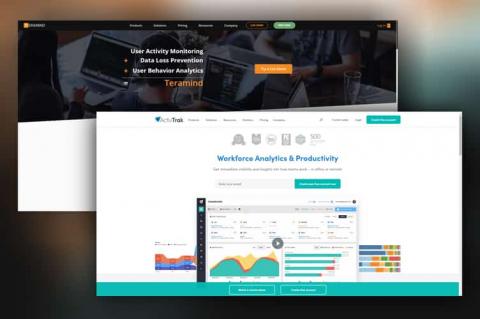
Teramind and ActivTrak are both popular employee monitoring software. Each of them has their strengths and weaknesses which might make it suitable (or not) for your unique business needs. The table below compares Teramind vs. ActivTrak side-by-side in terms of key features and capabilities so that you can decide which solution is right for you.
For organizations and their employees, 2020 was a uniquely transformative and challenging year. Although this reality is expressed in many ways—including a global pandemic, a deep economic recession, perpetual social unrest and a litany of natural disasters—in the professional environment, it is most acutely observed in the rapid and wide-spread transition to remote work.
2020 will go down in history as a year of surprises. The Covid-19 pandemic resulted in challenges to health, wealth, business, and cybersecurity. The early part of the year saw a rapid movement out of the office, introducing a sudden need to support home working. According to Gartner, 88% of companies sent their workforce home to work during the peak of the pandemic. This remote work environment is continuing for many organizations in 2021. In 2020, businesses were forced to adapt fast.
In many ways, 2020 was a year of reckoning for data privacy on the internet. After more than a decade of enthusiastically embracing a “freemium” model in which consumers traded copious amounts of personal data for access to digital platforms, many are adopting a rapid about-face. Now, privacy is essential, and stakeholders are taking notice. To date, it’s clear that many companies see this as an obstacle, not an opportunity.
Every company monitors their employees to some extent. In the past, companies may have relied solely on time sheets and surveillance footage to keep an eye on their employees. But these tools cannot be used to track what employees are doing on their company-owned computers, smartphones, and tablets. To monitor these devices, managers must turn to more sophisticated tools such as monitoring software.