Security | Threat Detection | Cyberattacks | DevSecOps | Compliance

Insignary Launches Clarity AIR to Detect Undeclared Open-Source and AI-Written Code

Insignary Launches Clarity AIR: Closing the Blind Spot Between What Your Developers Declare and What's Actually in Your Code. New snippet-level scanning shows security and compliance leaders which open-source code and which AI-written code never made it into a manifest.
How to Build the Business Case for ASPM Software

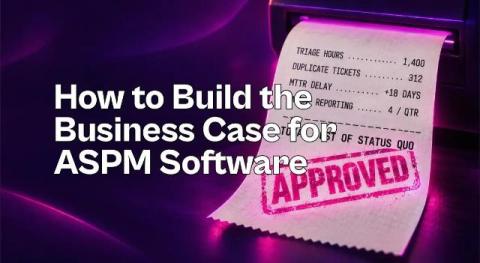
Start with what the current backlog already costs: analyst hours spent on triage, developer time lost to duplicate tickets, slow MTTR, and manual reporting. Then tie each benefit of ASPM software to one of those costs, such as fewer tickets per fix or faster remediation. Compare pricing models on your real numbers, including integration upkeep, and propose a measurable pilot on five to ten high-value applications. Most AppSec teams don’t need to be sold on ASPM software.

How Aikido helps you meet SOC 2 Type 1 and Type 2

If you've ever gone through a SOC 2 audit, you know the drill. It’s weeks of screenshotting dashboards and chasing down evidence across some dozen tools, while hoping the auditor doesn't ask a follow-up question you can't answer. Fortunately, SOC 2 doesn't have to be that painful, especially if the tools you already use for security are generating the evidence for you as a byproduct of just doing their job. That's what Aikido Security can do for application and cloud security.

State of Application Security

Our View from the Front Lines of Technical Assessments Kroll analyzed five years of penetration testing data. Of the trends that emerged, we focus on three in this report: the static application security testing (SAST)/software composition analysis (SCA) plateau, the need for more attention around authentication and authorization, and the security health divergence, which shows that regulation is not a reliable predictor of attack surface health.

AI is building your software. Who's making the security decisions?

AI coding assistants are changing how software gets built. Traditional AppSec tools focus heavily on scanning the final code artifact, but as AI agents move from simple code dependencies to autonomous decision-makers and execution paths, traditional security controls enter the process too late.

How to Choose an Application Security Solution

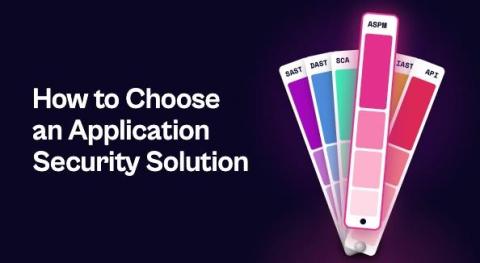
Most teams need a combination of application security tools rather than a single one. Common categories are SAST, DAST, IAST/RASP, SCA, API and container security, and ASPM, and each covers a different stage of development. When you evaluate options, look for coverage that matches your stack, integration with developer workflows, accurate findings, risk-based prioritization, and actionable remediation guidance.