Security | Threat Detection | Cyberattacks | DevSecOps | Compliance

What is managed XDR (MXDR)? A complete guide for service providers

Security teams rarely lack alerts. The harder problem is working out which ones belong to the same attack — and doing it quickly enough to stop the damage. An endpoint tool may flag suspicious activity on a device. An identity platform may record an unusual sign-in. An email security product may spot a malicious message. When those systems operate separately, each one shows only part of the incident.

Acronis Cyber Protect Cloud earns 18/18 score in AV-TEST's business Windows evaluation

Acronis Cyber Protect Cloud has once again earned the highest possible score in AV-TEST’s business Windows endpoint protection evaluation, achieving 18 out of 18 points in the May–June 2026 test. The latest result also extends a consistent record in AV-TEST’s business Windows evaluations. Acronis achieved the same 18/18 result in the February and April 2026 tests, making the May–June evaluation its third consecutive perfect overall score in 2026.

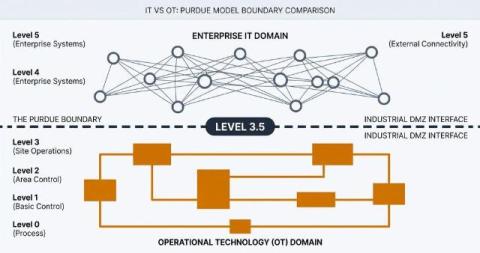
OT vs IT: The Key Differences Between Operational Technology and Information Technology

Information technology and operational technology are increasingly connected, but they are not interchangeable. IT is built around information and business services; OT is built around physical processes, equipment and safe operation. That difference shapes their security priorities, asset lifecycles, maintenance practices, network architecture and recovery requirements.

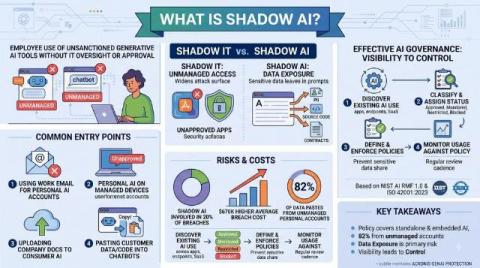
How to stop sensitive data leaking into ChatGPT, Copilot and other GenAI tools

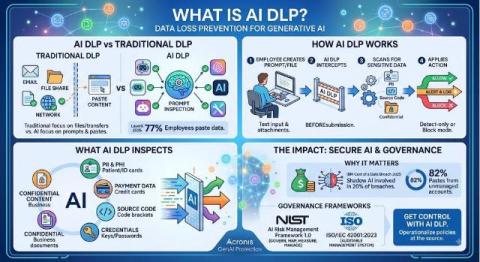
AI productivity tools are creating a prompt-level data leakage problem: 77% of employees paste data into generative AI tools, and 82% of that activity comes from unmanaged accounts, according to the LayerX Enterprise AI and SaaS Data Security Report 2025. Every paste into ChatGPT, Copilot or another GenAI tool is a potential exposure of sensitive data that traditional file-focused controls were never built to see.

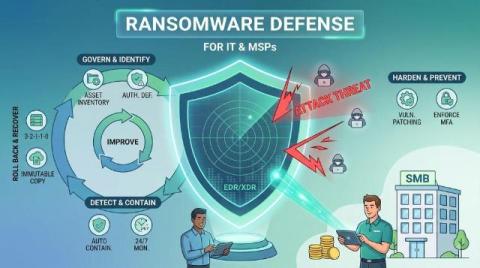
How to prevent ransomware damage: a 12-step checklist for IT teams and MSPs

No combination of controls guarantees that ransomware actors will never gain access or cause any impact. What the 12 controls below do is reduce the attacker's opportunities, accelerate containment and preserve the ability to restore operations without relying on ransom payment. Think of ransomware resilience as a continuous lifecycle rather than a fixed sequence: govern and identify, harden and prevent, detect and contain, roll back and recover, and improve and patch.

Ransomware protection for businesses and MSPs: the complete guide

Ransomware protection is a coordinated set of controls that reduces the likelihood of compromise, detects and contains malicious activity, protects recovery infrastructure and restores operations when an attack succeeds. It spans identity security, vulnerability and patch management, endpoint protection, EDR or XDR, incident response, targeted rollback, immutable backup and disaster recovery. No single control covers the complete ransomware lifecycle.

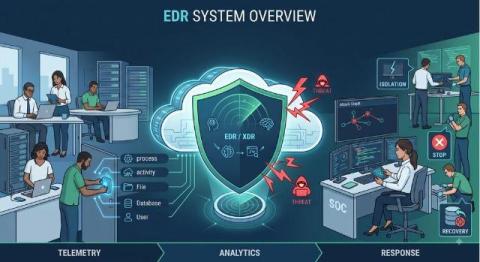
How does EDR work? Architecture, monitoring, detection and response explained

EDR (endpoint detection and response) works by deploying sensors on protected endpoints to continuously collect selected behavioral telemetry, forwarding that telemetry to a centralized analytics layer, commonly cloud-hosted, that applies detection rules, behavioral analytics, machine learning and threat intelligence, and surfacing prioritized incidents in a console where analysts can investigate and respond.

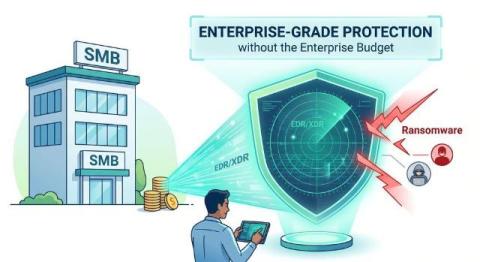
EDR and MDR for SMBs: enterprise-grade protection without an enterprise SOC

EDR (endpoint detection and response) is no longer an enterprise-only technology. SMBs face many of the same attacker techniques as larger organizations, but generally have fewer security and recovery resources available to contain the impact. Modern EDR platforms, especially when delivered through MDR (managed detection and response) and extended where needed with XDR (extended detection and response), make enterprise-grade protection operationally feasible for MSPs to deliver to SMB clients.

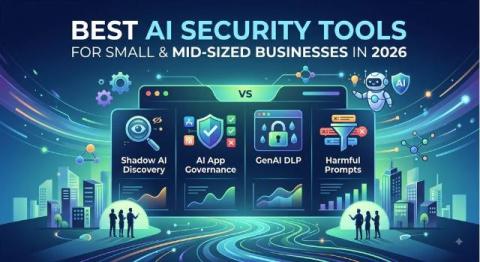
Best AI security tools for small and mid-sized businesses in 2026

The best AI security tools for small and mid-sized businesses do more than detect risky AI use: they show which generative AI tools employees actually use, they let you govern which AI apps are allowed, monitored or blocked, they stop sensitive data from leaving in a prompt, and they defend against harmful prompts, including prompt injection. Most organizations now run AI without that visibility or control. AI use has moved into the mainstream.

Managed EDR and XDR services: how MDR delivers 24/7 protection for MSPs

EDR (endpoint detection and response) and XDR (extended detection and response) are technologies. MDR (managed detection and response) is the managed service that continuously operates them — the 24/7/365 SOC team that monitors, investigates and responds to threats on the client’s behalf, built on top of EDR, XDR, or another detection stack.

OT Downtime Estimation Workshop: Build Your Recovery Business Case

Unplanned operational technology (OT) downtime can have a significant financial impact, but how much could it cost your organization? In this practical workshop, learn how to estimate the cost of OT downtime using the Acronis ICS / OT Downtime Calculator and build a business case for faster recovery. You'll discover how to apply industry benchmarks, model recovery scenarios, and understand how reducing recovery time can help minimize operational risk and downtime-related losses.

How to detect and govern shadow AI in your organization

To detect and govern shadow AI, organizations need to discover which AI tools employees are using, understand who is using them and why, then turn that visibility into an enforceable AI app policy. The goal is not only to find unsanctioned AI use, but to control which GenAI and AI-enabled apps are allowed, blocked or monitored across the organization.

NGAV vs EDR vs XDR vs MDR: how to choose the right detection and response approach

NGAV (next-generation antivirus), EDR (endpoint detection and response), XDR (extended detection and response), and MDR (managed detection and response) are not four separate products bought independently — they are overlapping capabilities and delivery models. NGAV is a prevention capability, normally built into an endpoint protection platform or an EDR solution, that uses AI and behavioral analysis to block known and unknown threats.

Paul Maritz: Partner Cloud in the AI era | Acronis Accelerate Event

How is the AI era creating new opportunities for service providers through partner cloud? In this keynote from Acronis Accelerate, technology investor, former Acronis Chairman, and former VMware CEO Paul Maritz explores how service providers can turn local infrastructure into a cost advantage and competitive edge as customers increasingly require partner infrastructure for compliance and data sovereignty. Learn how Acronis Cyber Frame, built specifically for service providers, is a natively integrated solution that enables SPs to deliver infrastructure services (VMs, storage, networking) with integrated backup, DR, security and RMM.

The AI-Native Platform for the Autonomous MSP | JJ Jager and Yury Averkiev | Acronis Accelerate

What does it take to run an AI-native MSP? In this keynote from “Acronis Accelerate: The Journey to Autonomous IT,” Acronis CEO JJ Jager and Chief Product Officer Yury Averkiev showcase how the Acronis platform turns the foundation of the AI era into a daily reality for MSPs. See how Acronis simplifies the complexity of managing multiple tools with a flexible, unified platform that supports both Acronis and third-party services, while enabling no-code and low-code automation built for modern service providers with AI built in from the start, not bolted on.

Why MSPs Need Infrastructure Built for MSPs | Jürgen Weiss, Sigmavista & ARES | Acronis Accelerate

What should an MSP look for in the infrastructure powering its business? In this session from “Acronis Accelerate: The Journey to Autonomous IT,” Jürgen Weiss, CISO, Sigmavista and Head of Managed Operations, ARES, shares why infrastructure decisions have a direct impact on profitability, customer experience and long-term growth. Hear how Acronis Cyber Frame is helping service providers move beyond infrastructure built for enterprises and hyperscalers to a platform designed specifically for the MSP business model.

The AI Opportunity with Acronis: Building Autonomous IT | Rob Rae, Pax8 | Acronis Accelerate

The industry is shifting and Rob Rae, Corporate VP of Community and Partner Experience at Pax, addresses the $700 billion opportunity MSPs have in front of them at “Acronis Accelerate: The Journey to Autonomous IT.” Discover how Pax8 and Acronis are building the future of AI together, giving small and mid-sized businesses the tools, technology, expertise and AI agents they need to offer enterprise-level services.

How agentic AI works inside your tools: A practical example with Acronis Service Desk

Author: Alexander Ivanyuk, Senior Director, Technology For many MSPs, AI still looks like an extra tool outside the real workflow: open a chatbot, paste in a ticket, ask for help, copy the answer back and continue working. It may save a few minutes, but it also creates more steps and more places where context can be lost.

How to migrate to Acronis Cyber Frame | Yury Averkiev | Acronis Accelerate

It’s hard and expensive for MSPs to distribute, resell and manage hyperscaler instances, VMware environments, and sub-optimal VMs. See how easy it is to migrate virtual workloads to Acronis Cyber Frame — a platform built with and for service providers with security and management included. In this demo from “Acronis Accelerate: The Journey to Autonomous IT,” Acronis Chief Product Officer Yury Averkiev showcases the Acronis Migration Assistant, designed to help MSPs move from VMware and other hypervisors to Cyber Frame with a fast, automated migration experience.

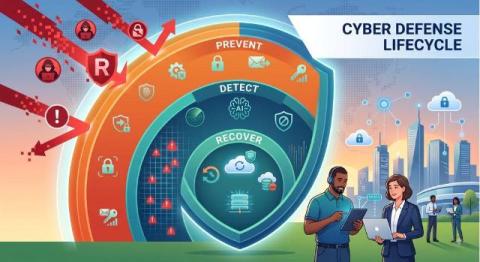
Modern cybersecurity threats: All you need to know

Quick definition: Cybersecurity threats are potential attacks that aim to gain unauthorized access to a network, steal or destroy data or disrupt business operations and critical infrastructure. Key takeaways: Organizations of all sizes can fall victim to modern cyberthreats. A malicious actor can have various motives for carrying out an attack, though financial gain remains the most common.