Security | Threat Detection | Cyberattacks | DevSecOps | Compliance

5 Best Mobile Device Management (MDM) Tools in 2026

Mobile devices have become the backbone of the modern workplace. Employees use smartphones to access business applications, tablets to support customer interactions, rugged devices to manage field operations, and laptops to stay productive from virtually anywhere. With remote work, hybrid teams, and BYOD policies becoming standard practice, organizations now rely on a growing mix of devices to keep business operations running.

How to Setup SAML SSO for Confluence with a Custom Identity Provider (IdP)

This step-by-step video tutorial walks you through the complete configuration of the miniOrange SAML SSO for Confluence plugin using a Custom Identity Provider. Learn how to set up secure Single Sign-On (SSO) for your Confluence users, verify the integration, and experience seamless login using your Custom IdP. Timestamps: With this plugin, you can: Enable secure login to Confluence using your Custom IdP credentials Configure SAML responses and user attributes as per your IdP Map IdP user groups to Confluence roles for access control Improve user experience with seamless authentication.

How to Setup SAML SSO for Jira with a Custom Identity Provider (IdP)

This step-by-step video tutorial walks you through the complete configuration of the miniOrange SAML SSO for Jira plugin using a Custom Identity Provider. Learn how to set up secure Single Sign-On (SSO) for your Jira users, verify the integration, and experience seamless login using your Custom IdP. Timestamps: With this plugin, you can: Enable secure login to Jira using your Custom IdP credentials Configure SAML responses and user attributes as per your IdP Map IdP user groups to Jira roles for access control Improve user experience with seamless authentication.

How to Appear in AI Search Results

A few years ago, the goal was simple: rank on page one of Google. If your website appeared among the first 10 blue links, people would find you. That equation is changing. Search behavior is shifting from keyword lookups to answer-led queries. Instead of scanning a list of results, more people are turning to AI-powered search tools that read across the web, consolidate information, and deliver a direct answer. ChatGPT, Google AI Overviews, Perplexity, and Claude all work this way.

New in miniOrange PAM: Bringing EPAM to Windows and macOS

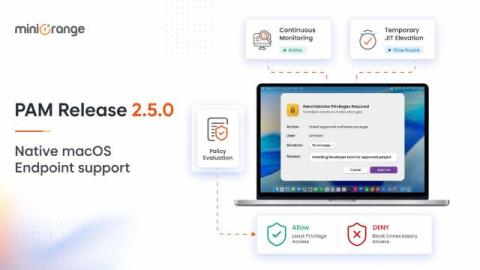
Privileged access has become significantly more complex over the last few years. Security teams are managing Windows and macOS devices, administrators rely on native tools to do their jobs, network infrastructure continues to expand, and operational technology environments are becoming increasingly interconnected. At the same time, manual approval processes and fragmented controls often create more friction than protection.

Least Privilege Access for AI Agents: How to Secure Autonomous Systems in 2026

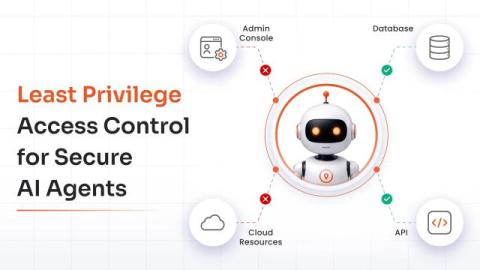
AI agents are no longer just answering queries or summarizing documents. They are booking meetings, pulling customer data, triggering workflows, and even making decisions across systems. And they don’t ask for permission every time. That’s where the real problem starts. Because once an AI agent is connected to your tools, APIs, and internal systems, the question isn’t what it can do, it’s what it should be allowed to do.

Blocking USB Devices and Whitelisting Authorized Peripherals with DLP

Data Loss Prevention (DLP) is all about keeping your business data safe from getting leaked, lost, or accessed without admin permission. It protects, identifies, analyzes, and blocks unauthorized data transfers within the network and through connected devices and outbound emails. DLP enforces company policies, preventing users from sharing confidential information. It further allows organizations to set USB restrictions to protect sensitive information at every stage of operations.

DPDP Rules, 2025: A Guide to Digital Personal Data Protection

The notification of the Digital Personal Data Protection (DPDP) Rules, 2025, marks a major turning point in how businesses in India collect, use, and safeguard personal data in the digital ecosystem. Together with the Digital Personal Data Protection (DPDP) Act, 2023, these Rules create a rights-based, consent-driven framework that places citizens at the centre of data processing while still enabling responsible innovation and growth in the digital economy.

7 Best Endpoint Security Software for Businesses

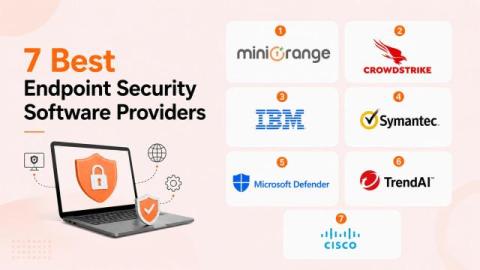
Picking the best endpoint security for business depends on your org's size, stack, and how much in-house security muscle you actually have. CrowdStrike Falcon leads on pure detection, Microsoft Defender wins on value for M365-heavy shops, miniOrange is the strongest choice for mid-market businesses that need identity-first device security without the enterprise price tag, and IBM MaaS360 covers the UEM-first crowd that needs mobile + BYOD sorted from a single console.

mTLS for AI Agents

AI agents are increasingly accessing APIs, databases, SaaS applications, MCP servers, and other services without human intervention. As these autonomous systems become part of enterprise infrastructure, organizations need reliable ways to verify their identity before granting access to sensitive resources. Traditional authentication methods such as API keys and bearer tokens were designed for applications and users, not autonomous agents operating continuously across distributed environments.

RBAC vs. ABAC: Core Differences, Use Cases, & The AI Agent Era

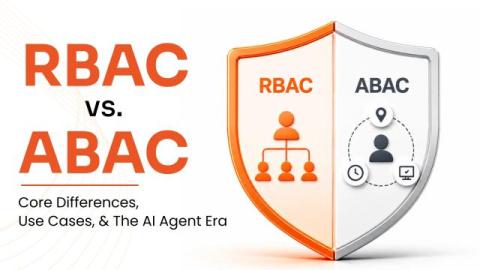
As organizations expand across cloud platforms, SaaS applications, remote teams, and AI-driven systems, managing access becomes more challenging. Security teams must ensure users, applications, and automated workflows can access the resources they need without exposing sensitive data or critical systems. This is where the RBAC vs ABAC discussion becomes important.

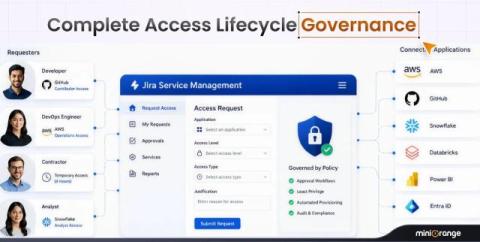
Turn Jira Service Management into a Governed Access Control Platform

As a fintech organization, you depend on multiple systems like AWS, Databricks, Snowflake, Power BI, Stripe Treasury, Identity Providers (IdP), developer tools, internal operational platforms, and many more. Managing access and access level across platforms is often disconnected and spread across emails, Slack approvals, tickets, and sometimes spreadsheets. Obviously, this is inefficient. There'll be delays in onboarding. But that's the least of your worries.

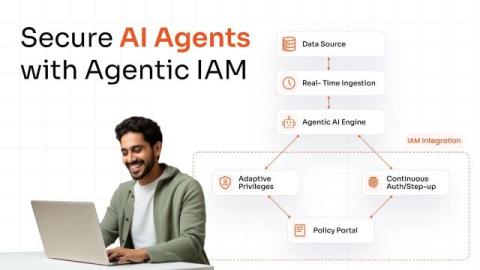
Agentic IAM: The Complete Guide to Identity Security for Autonomous AI Agents

If you’ve deployed your first AI agent, then you must have given it access to your CRMs, ticketing systems, and your cloud storage. This AI agent is programmed to run 24/7, make decisions, call external APIs, and trigger actions (without a human in the loop). Now, answer these questions: If you cannot answer these questions, then you have an agentic AI identity issue. Traditional Identity and Access Management (IAM) was built for service accounts with static API keys and users with usernames.

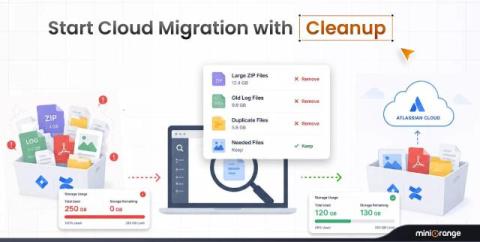
Clean Up Jira and Confluence Attachments Before Atlassian Cloud Migration

Since the announcement of the Atlassian Data Center end-of-life, organizations have started planning their migration to the cloud. However, it’s not a simple copy-and-paste job. Over time, your Jira and Confluence instances accumulate years of attachments. These might include screenshots, log files, ZIP files, duplicate uploads, and other items nobody remembers uploading. You might not even realize these files exist until migration begins and the bloat starts causing delays.

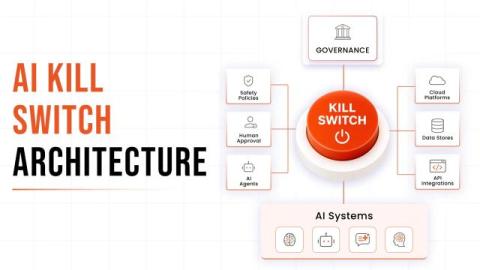
AI Kill Switch Architecture: How to Stop a Rogue AI Agent

AI agents today are becoming a part and parcel of everyday enterprise operations. They can access databases, trigger workflows, send emails, approve requests, and interact with business systems with very little human involvement. What started as AI assistants is now evolving into autonomous operators capable of making decisions and executing actions at machine speed.

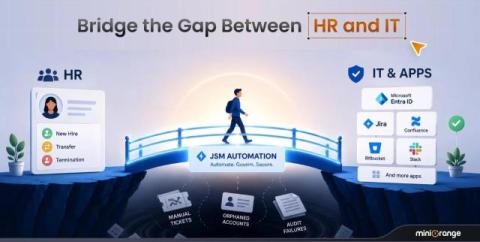
Automating Identity Governance in Jira Service Management for HR to IT Access Control

In many organizations, the gap between HR and IT is a "black hole" of productivity and security. When a new hire starts, they often spend their first day staring at a login screen because their access wasn't provisioned. Worse, when an employee leaves, their access to Jira, Slack, or Entra ID might remain active for days or even weeks. This isn’t just an administrative headache; it’s a major security and compliance risk.

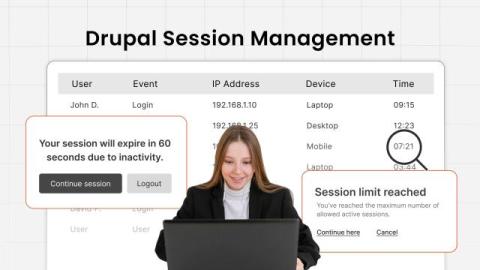
How to Monitor and Manage User Sessions in Drupal

Most Drupal security strategies focus on protecting user accounts before login. Organizations invest in strong passwords, multi-factor authentication (MFA), and Single Sign-On (SSO) to prevent unauthorized access. While these controls are important, security risks do not disappear once a user successfully authenticates. Users may remain logged in for extended periods, share credentials with others, access accounts from multiple devices simultaneously, or leave active sessions unattended.

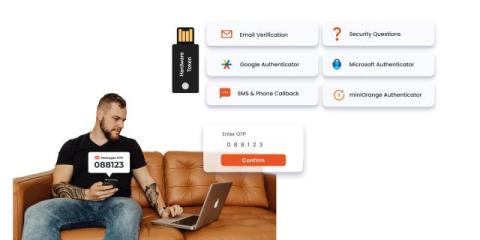
What is Multi-factor Authentication? MFA Explained

With the growing vulnerability of password-only security systems, your applications, devices, and operating systems would need an authentication system that creates foolproof security. Moreover, as vulnerabilities in cyber ecosystems evolved and password breaches became increasingly common, organizations needed stronger authentication methods to protect sensitive data and user accounts.

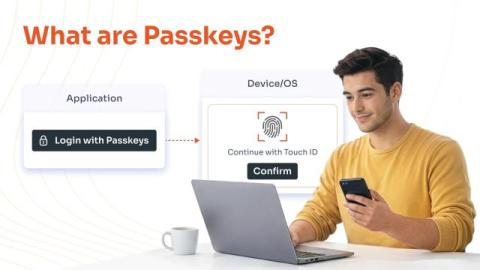
Passkeys Explained: What Is a Passkey and How Do Passkeys Work?

Data breaches hit headlines weekly, and phishing scams evolve faster than we can patch them. Amongst this, passwords feel like relics from the dial-up era. Enter passkeys, a modern authentication solution, and a game-changing shift in authentication that's already being made available by giants like Amazon, Google, and Sony Interactive Entertainment. Passkeys promise phishing-resistant, frictionless logins without the endless "password123?" frustration.

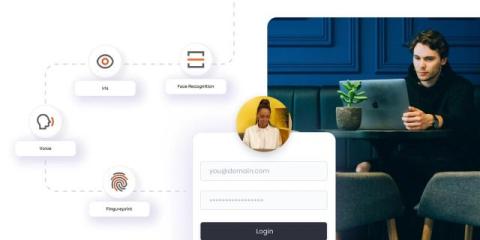
What is Biometric Authentication, and How Does it Work?

Over 93% of organizations are reportedly experiencing two or more identity-related attacks a year due to weak passwords, and at this critical level, organizations are looking out for an additional layer of security with biometric authentication to verify their users. Multi-factor authentication plays an integral role in verifying user identities.

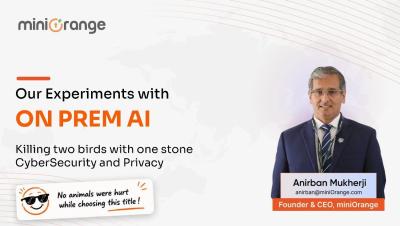
miniOrange at Infosecurity Europe 2026 - On-Prem AI Agents for Healthcare, Defense & Finance

In this session at Infosecurity Europe 2026, Our Founder & CEO Mr. Anirban Mukherji discussed miniOrange’s approach to secure, on-prem AI agents for healthcare, defense, and finance. He covers the global LLM landscape, risks of using foreign AI, benefits and challenges of on-prem LLMs, AI governance (including Shadow AI), AI firewalls and access policy enforcement, AI-enabled security testing, and practical deployments across sectors.

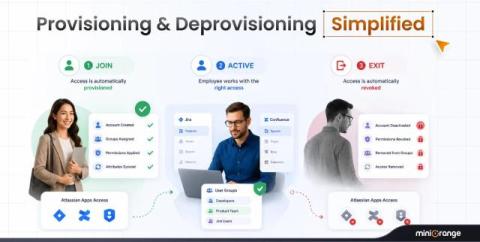
How miniOrange User Sync/SCIM Automates User Provisioning for Atlassian

Managing users in Atlassian manually, especially with large numbers of users, is time-consuming and error-prone. It’s inconvenient, but more importantly, it introduces major security risks in case an ex-employee still has access. Also, there’s no point in paying for extra licenses. miniOrange User Provisioning for Atlassian addresses this. It synchronizes users, groups, and directories directly from their identity providers into Jira and related Atlassian applications.

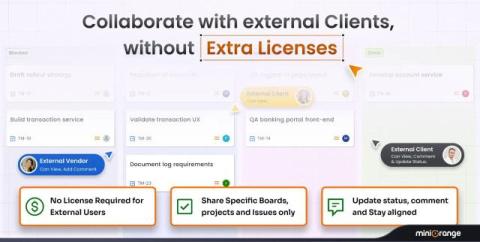
How to Collaborate with Vendors and Clients in Jira and Confluence Without Giving Full Access

Most teams using Jira and Confluence hit the same wall the moment external users get involved. You need clients and vendors to collaborate. But the platform forces a bad choice. Either give them full access and risk exposing internal data, or lock things down and slow everything to a crawl. Add to that the cost of licenses, and it becomes a structural problem, not just an operational one. The reality is simple. External users do not need your system.

From Small Town to Global Clients - Growth, AI & Cash Flow Lessons | Podcast with V Gautham Navada

V Gautham Navada, founder of ForthFocus, shares his entrepreneurial journey from freelancing in a small town to serving 350+ clients across 8+ countries. The discussion centered around "forthfocus" and its "10 Years of Vision, Innovation & Growth.

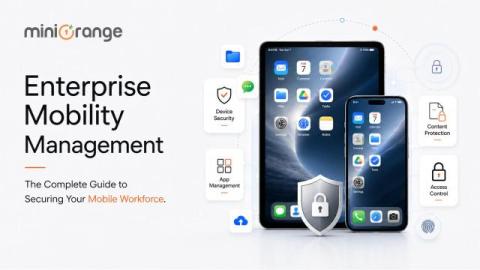
Enterprise Mobility Management: The Complete Guide to Securing Your Mobile Workforce

During and after the COVID-19 pandemic, workplaces are no longer confined to just office cubicles. With organizations adopting a Bring Your Own Device (BYOD) policy and employees using mobile devices for work, managing the security and productivity of a mobile workforce has become a critical business priority.

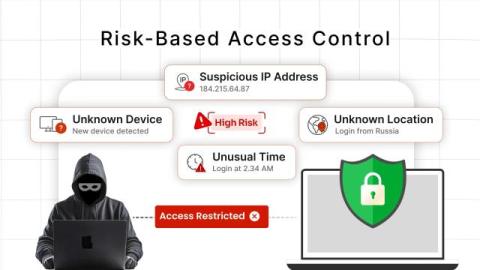
Drupal Risk-Based Access Control: Smarter Login Security for Modern Threats

A password alone isn't enough to ensure that there will be no unauthorized access to your systems. Someone could enter the correct credentials from another country, from an unknown device, at 3 AM, through a suspicious proxy network - and traditional login systems would still let them in. That’s the problem with static authentication. Modern Drupal websites, especially in healthcare and government sectors, need login security that can evaluate context, behavior, and risk before granting access.

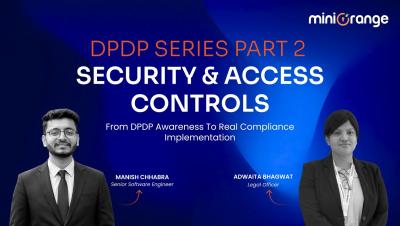
DPDPA Series Part 2: Security & Access Control (Live DPDP Webinar)

DPDP Act Stage 2 webinar moved beyond the fundamentals of India’s DPDP Act and focused on the practical side of implementation. The session explored the technical, operational, and governance layers organizations need to operationalize compliance at scale. Key highlights from the session: If you're leading privacy, security, compliance, or engineering initiatives, this session provides actionable guidance to help translate DPDP requirements into executable systems and processes.

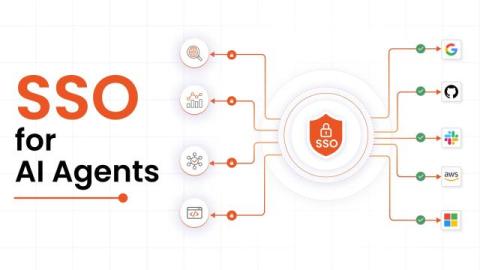
SSO for AI Agents: The Identity Gap No One is Talking About

Single Sign-On (SSO) means fewer password headaches, faster access, and better security for human users. But the same cannot be said for AI agents. SSO, a core part of Identity and Access Management (IAM), which was initially built for humans, can no longer be used for AI agents. For humans, it was quite simple - just log in once, and authenticate across connected apps. However, when an AI agent tries to authenticate the same way, the traditional access model breaks fast.

SSO Access Governance: How Enterprises Control, Monitor & Secure Identity at Scale

One compromised login should never unlock an entire enterprise environment. Yet that is exactly the risk many organizations face when Single Sign-On is implemented without governance controls. While SSO simplifies authentication and improves user experience, it also concentrates access into a single identity layer that attackers actively target. That is why enterprises are investing in SSO access governance to bring structure, visibility, and accountability into identity management.

What Is the IAM Maturity Model? A Complete Guide

Most organizations do not fail IAM because they chose the wrong technology. They fail because identity controls evolve unevenly across the environment. MFA may protect workforce users but not contractors. Provisioning may be automated for SaaS applications while privileged accounts are still managed manually. Access reviews may exist on paper but lack enforcement, visibility, or accountability.

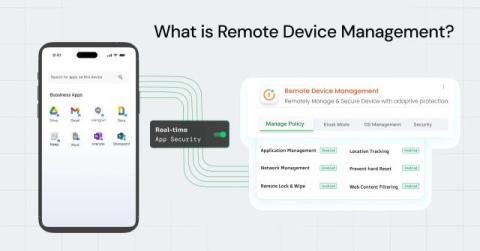
What is Remote Device Management? RDM Guide

The shift from traditional office setups to remote and hybrid work has changed how IT teams operate. Employees are no longer working from a single location. They use laptops, smartphones, tablets, and even rugged devices across homes, offices, and field environments. Managing all of this securely is not simple. IT teams now have to balance speed, security, and support without physical access to devices. When something breaks, they cannot walk up to a desk and fix it.