Security | Threat Detection | Cyberattacks | DevSecOps | Compliance

12 Penetration Testing Myths Blocking MSP Revenue, Margins, and Client Trust

Managed Service Providers (MSPs) sit on the front line of cyber‑defence for thousands of small and midsize businesses. Yet many still hesitate to add penetration testing (pentesting) to their security stack, largely because of persistent myths—myths that are steadily being dismantled by real‑world breach data. Fresh breach evidence makes the cost of that hesitation impossible to ignore.

OWASP Top 10 2021 - A09: Security Logging and Monitoring Failures

Logging and monitoring failures occur when security-relevant events are not properly captured, stored, or analyzed, making it difficult or impossible to detect ongoing attacks or respond effectively. These failures include missing logs, incomplete data, ineffective alerting mechanisms, insecure log storage, and inadequate retention policies. Such gaps are often exploited by attackers who rely on invisibility to move laterally across systems.

OWASP Top 10:2021 - A02 Cryptographic Failures

Cryptographic failures refer to the improper use, implementation, or management of cryptographic systems. These issues often result in unauthorized exposure of sensitive data like passwords, credit card numbers, or personal records. In the OWASP Top 10 – 2021, this category replaced the broader ‘sensitive data exposure’ from the 2017 list, with a sharper focus on the misuse or failure of cryptographic mechanisms.

What is Union-based SQLi? How Hackers Exploit Your Database

Union-based SQL injection is one of the oldest—and most dangerous—ways attackers steal sensitive data from your databases. By exploiting the UNION operator in SQL, they can merge malicious queries with legitimate ones and extract usernames, emails, passwords, and more. This video explains how the attack works, why it's still a threat, and what steps you can take to prevent it.

Ensuring ISO/IEC 23894:2023 Compliance for AI Systems with AppTrana WAAP

ISO/IEC 23894:2023 is a relatively new international standard focused on AI risk management. It is designed to help organizations manage risks arising from the development, deployment, and use of Artificial Intelligence (AI) systems. While it’s AI-specific, many of its security-related clauses—especially those concerning web applications, APIs, and external-facing systems—apply broadly to ensure AI systems are secure, trustworthy, and resilient.

ISO/IEC 27001:2022: Key Requirements and How AppTrana WAAP Supports Compliance

With ever-evolving cyber threats and increasing regulatory scrutiny, ISO/IEC 27001:2022 offers a solid framework to manage information security systematically. Whether you are protecting sensitive data, building trust with stakeholders, or aiming for compliance, adhering to this standard is critical. This blog covers ISO/IEC 27001:2022’s key requirements and how AppTrana WAAP helps organizations stay compliant with robust security, threat detection, and vulnerability management.

What is NoSQL Injection? | Examples & How to Prevent It

NoSQL Injection is a serious web security flaw that targets NoSQL databases like MongoDB. In this video, you’ll learn: What NoSQL injection is How attackers exploit unsanitized inputs Real-world NoSQL injection examples Best practices to prevent these attacks Secure your applications with proper input validation and safe query building techniques.

Layer 7 DDoS Attacks: How Hackers Target the Application Layer

Layer 7 DDoS attacks—also known as application-layer attacks—target the part of your application that users interact with, like login pages, search boxes, and APIs. Unlike traditional volumetric DDoS attacks, these are stealthy, harder to detect, and can take down your app using fewer requests.

CVE-2025-31324: Critical SAP Flaw Exposes Systems to Remote Attacks

Active exploit targets SAP NetWeaver via unauthenticated remote code execution. This flaw allows unauthenticated attackers to upload and execute arbitrary files, leading to complete system compromise. In this video, we break down how the vulnerability works, why it’s dangerous, and what steps you must take to secure your systems.

SAP Zero-Day CVE-2025-31324: Unauthenticated RCE in NetWeaver VCFRAMEWORK

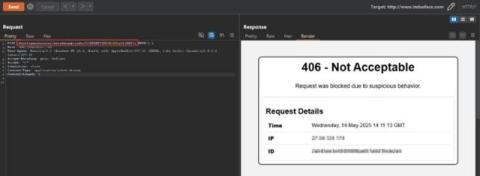
SAP disclosed a critical RCE vulnerability(CVE-2025-31324) on April 24, 2025, impacting the Visual Composer Framework in NetWeaver Application Server Java, version 7.50. This flaw poses a serious risk to enterprises relying on SAP NetWeaver for their mission-critical operations. Unauthenticated attackers can exploit this vulnerability to upload and run arbitrary files on SAP servers, potentially resulting in complete system compromise.

Free vs. Paid WAFs in 2025: What Your Business Needs to Stay Secure

Are you relying on free WAFs to keep your business safe? While they might seem like an easy, budget-friendly option, can they really protect you from sophisticated cyber threats like SQL injections, XSS, and bot attacks? Or are you missing critical layers of defense as your business scales? In this guide, we’ll answer these questions and more, comparing free and paid WAFs to help you understand the risks, features, and real-world implications of each.

CVE-2025-31650 - Apache Tomcat DoS Risk via HTTP Priority Header

The Apache Software Foundation has disclosed a high-severity vulnerability in Apache Tomcat that could let attackers exploit improperly handled Priority headers in HTTP/2 to cause a denial of service (DoS). Tracked as CVE-2025-31650, this flaw stems from improper input validation, specifically when the server handles malformed Priority headers in HTTP/2, resulting in memory leaks and potential OutOfMemoryExceptions.

Why CI/CD Security Scanning Is Non-Negotiable in Modern DevSecOps

In the race to deliver software faster and more frequently, Continuous Integration and Continuous Deployment (CI/CD) pipelines have become the backbone of modern DevOps workflows. But with this speed comes a critical trade-off — security. Integrating security checks into your CI/CD pipeline is no longer optional; it’s a necessity. This is where CI/CD security scanning steps in.

The Rise of Vulnerability Exploits: Why Hackers Are Moving Beyond Phishing

The 2025 edition of Verizon’s Data Breach Investigations Report (DBIR) shows a new reality: about one in five confirmed breaches now starts with exploitation of a software vulnerability, a 34 percent jump over the previous year and the first time the vector has surpassed phishing.

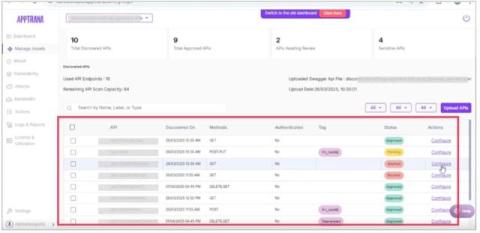
AppTrana's Enhanced API Protection: Complete Visibility, Instant Security

APIs are now prime targets for attackers, and as your API landscape grows, so does the challenge of securing it. AppTrana’s API protection just got more powerful—with new enhancements designed to deepen discovery, increase visibility, and strengthen security.

Must-Have WAAP Features Healthcare Organizations Need in 2025

Hospitals, clinics, pharma companies and digital‑health start‑ups are now on the front line of application‑layer threats. Without purpose‑built Web Application and API Protection, vital services and patient safety are placed at risk. Some concerning stats.

Must-Have WAAP Features Financial Institutions Need in 2025

Banking & Financial Services (BFS) firms are shouldering a uniquely heavy share of the global threat load. The newly released Indusface State of Application Security 2025 study paints a stark picture: Why the laser focuses on finance? Strict regulations mean banks generally run strong perimeters, so adversaries pivot to bots, API abuse, and nuanced business-logic exploits that slip past ‘default’ defences.