Security | Threat Detection | Cyberattacks | DevSecOps | Compliance

How AI Is Transforming Detection Engineering

One of the most important shifts AI enables in detection engineering is changing where engineers spend their time. Traditionally, a significant portion of detection development effort is consumed by implementation details: writing complex SQL queries, building enrichment pipelines, handling edge cases, tuning rule logic, writing tests, documenting detections, and repeatedly iterating on detection logic. Those tasks are necessary, but they are also time-consuming.

Arctic Wolf: A Higher Standard

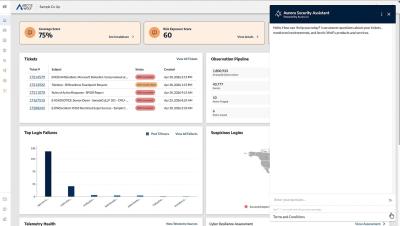
Powering modern security operations with AI is no longer optional. It’s essential. The Aurora Superintelligence Platform is built for the AI era, combining specialized AI agents, real-world security data, and human expertise to deliver outcomes security teams can trust. At its core, the Swarm of Experts, Security Operations Graph, and AI Trust Engine work together to drive faster detection, more accurate investigations, and more decisive response across the attack surface.

Accelerating Cloud Security Outcomes Together: Why Arctic Wolf and Wiz are Redefining What's Possible

Across every industry, one thing has become abundantly clear: Cloud security has never been more critical, nor more complex. Organizations are scaling cloud environments faster than ever, but the explosion of identities, configurations, and services has created an attack surface that traditional approaches simply can’t keep up with. Teams are drowning in alerts, struggling to identify which issues matter, and facing increasing pressure to respond to threats with limited resources.

How to Integrate ITSM in Aurora Vulnerability Management for Better Visibility & Faster Remediation

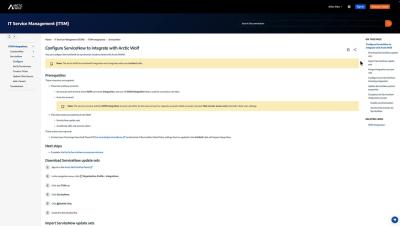
See how Arctic Wolf Aurora Vulnerability Management turns risk visibility into remediation through seamless integrations with partners like ServiceNow and ConnectWise. This demo shows how automated ticketing, unified workflows, and prioritized findings help security and IT teams accelerate remediation without added workload.

Turning Security Telemetry Into Actionable Insights

Modern security environments generate enormous volumes of telemetry. Authentication events from identity platforms, API activity from cloud services, endpoint security logs, email interactions, and network traffic can all flow into centralized systems. For most organizations, the challenge is no longer data collection. The real problem is extracting meaningful insight from that data without overwhelming analysts or introducing operational friction.

OpenAI Daybreak and the Future of Secure Software Development

OpenAI recently introduced Daybreak, a cybersecurity initiative designed to apply frontier AI models to vulnerability discovery, secure code analysis, and earlier remediation across the software lifecycle. By combining advanced reasoning and planning capabilities, Daybreak aims to help organizations identify and address weaknesses before they reach production. This is a meaningful step forward, but it is also a continuation of a long-standing approach.

The Howler Episode 30 - Will May, Chief Revenue Officer

This month, we sit down with Will May, our new Chief Revenue Officer. Take a listen to get to know Will, his leadership philosophy, how he's using AI in his every day, and so much more! Will brings more than 15 years of go-to-market leadership experience across high-growth software, cybersecurity, and cloud technology companies. He has built a strong reputation for helping organizations adopt innovative technologies—including AI-driven platforms—to improve operational efficiency, reduce complexity, and deliver measurable business value.

Detecting Identity Attacks at Scale with Herd Immunity

Modern identity‑based attacks often rely on shared infrastructure and reusable attack frameworks, rather than bespoke tooling built for a single target. Phishing kits and phishing‑as‑a‑service (PhaaS) platforms are the clearest example of this model — and today they are the most prevalent sources of account compromise across organizations of all sizes. Device code phishing illustrates how quickly this model evolves.

Aurora Mobile Threat Defense is Now Available

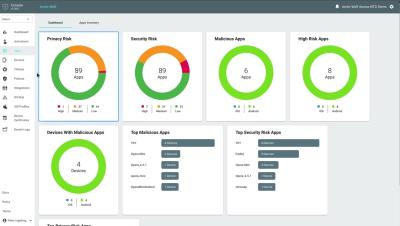
Mobile devices are becoming the highest‑trusted endpoints that are the least protected. Phones sit between your people and your most important systems: identity, email, collaboration, and cloud apps. They’re also where modern social engineers are turning their attention, leveraging SMS and messaging services, QR codes, and email-based attack vectors to harvest credentials.

Turning Visibility Into Action: Introducing Aurora Exposure Management

Today, we’re introducing Aurora Exposure Management, a new product family at Arctic Wolf built to help organizations take a more complete and continuous approach to reducing cyber risk. The first two offerings are Aurora Vulnerability Management and Aurora Attack Surface Management. They are designed to work powerfully together, but they can also deliver meaningful value independently, depending on an organization’s priorities, existing architecture, and current stage of security maturity.

How to Gain Visibility and Reduce Exposure with Aurora Attack Surface Management

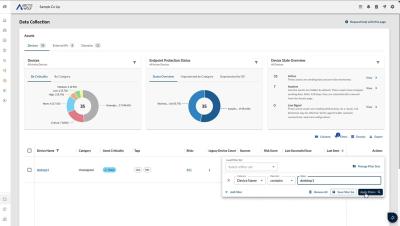
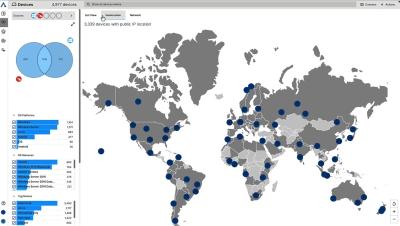
This demo will illustrate how Aurora Attack Surface Management builds a continuously updated attack surface inventory, correlates asset and exposure data from multiple sources, and identifies gaps in security controls. It enables prioritization and remediation verification so that organizations can focus on what matters most and effectively drive risk reduction.

How Aurora Vulnerability Management Unifies Visibility, Prioritization & Remediation

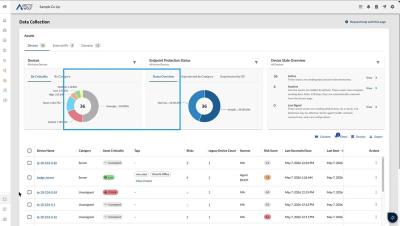
With Arctic Wolf Aurora Vulnerability Management, organizations can monitor their risk score, gain comprehensive visibility, prioritize vulnerabilities and remediate risks with options including patch management and ITSM integrations.

CVE-2026-0300 - Critical Buffer Overflow in PAN-OS User-ID Authentication Portal

On May 6, 2026, Palo Alto Networks disclosed a critical buffer overflow vulnerability (CVE-2026-0300) in the User-ID Authentication Portal (Captive Portal) component of PAN-OS. This vulnerability allows an unauthenticated, remote attacker to execute arbitrary code with root privileges on affected PA-Series and VM-Series firewalls by sending specially crafted packets. No user interaction or credentials are required.

Should Your Organization Rely on XDR For Cybersecurity?

The cybersecurity industry’s evolution from perimeter protection to holistic visibility, detection, and response is perhaps best illustrated in the evolution from endpoint protection platforms (EPP) to comprehensive security solutions that provide holistic protection for an organization’s ever-expanding attack surface, including network, cloud, and identity. Extended detection and response (XDR) is one of those solutions.

Beyond the Bug: Why Cybersecurity Still Matters Even If AI Improves Secure Development

Anthropic has officially launched Claude Security, moving its AI‑driven code vulnerability detection, validation, and patching capabilities from a limited research preview into public beta. Improving software security before code ships is a positive step for the industry and can help reduce future risk. However, stronger secure‑by‑design development does not address the scale of exposure organizations face today.