Security | Threat Detection | Cyberattacks | DevSecOps | Compliance

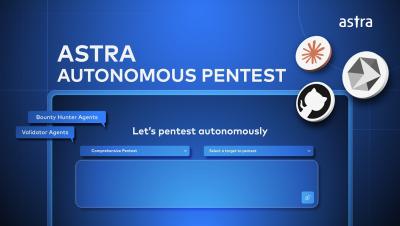
Astra Autonomous Pentest Product Video | Astra Security

Astra Autonomous Pentest is an AI-powered Autonomous Penetration Testing platform built to discover, exploit, validate, and help fix security vulnerabilities at scale. Trained on 10M+ security findings and 5,000+ real-world penetration tests, Astra AP uses specialized AI agents to ideate attack strategies, execute real-world attack scenarios, and validate findings with under 5% false positives. Its attack chain-driven approach uncovers complex vulnerabilities, including business logic flaws, IDORs, price manipulation, GraphQL vulnerabilities, and WAF bypasses.
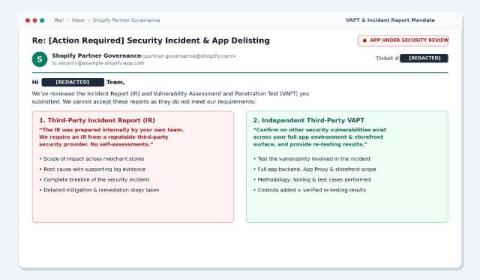

Shopify App Store Requirements: Do You Need a Pentest?

Shopify App Store requirements have a lot to say about app security, and almost none of it says “get a pentest.” Dig through the App Store review rules, the protected customer data requirements, the Built for Shopify criteria, and the Certified Technology Partner list, and you’ll find only one program that mentions penetration testing. Others are just expected to be secure, which is fair, except there is no clear definition of the word or process for proving the same.

CORS Misconfiguration Was the #1 Mistake in Every App We Tested

We gave four AI coding tools the same prompt and asked each one to build the same application. Emergent, Replit, Lovable, and Base44 all shipped something that ran, and none of them knew a pentest was coming. We then pointed our autonomous pentest agents at all four builds, and 137 confirmed vulnerabilities came back. One finding turned up in every app, which is a CORS misconfiguration.

Replit Security Under an Independent Pentest

We built an application on Replit from a single prompt, gave it no special instructions about security, and then pentested it the way an attacker would. Replit had no advance notice that any of this was happening, and there is no vendor relationship between us. The app worked, which is worth saying first, because nothing about the build looked wrong from the outside.

10 Skills Every Modern CISO Needs Beyond Technical Expertise

CISOs are hired for their technical depth and then judged on everything else: can they get a budget approved? Can they calm an executive team at 2 a.m. while the incident is still unfolding? Can they convince a product lead to delay a launch without making an enemy? Almost no one is trained for this second job, and yet, it’s the one that decides whether a security program succeeds. This article will highlight ten crucial Chief Information Security Officer (CISO) skills.

CVE-2026-115560: Another PHP Session-Handler RCE

Two days after PHP shipped emergency patches for PHP2Shell (CVE-2026-109618 and CVE-2026-109619), the project is back with another RCE advisory: CVE-2026-115560. Looks like PHPoclypse is going to stick around till the weekend. In this blog, we break down what CVE-2026-115560 actually is, the narrow configuration that makes it exploitable, and the one-line mitigation you can apply before the weekend.

AI Agents in Bank Accounts: From "Who Logged In" to "Who Decided"

The banks aren’t being hacked, at least not in the way the headlines imply. They’re being out-authenticated. No breach of JPMorgan’s, Morgan Stanley’s, Bank of America’s, Citi’s, or Wells Fargo’s core systems has been publicly reported. Instead, Axios reported on October 22—and Reuters corroborated—that AI agents in bank accounts (major U.S. banks) are being detected and blocked.

PHP2Shell Security Checklist: What to Ask Your Vendors

You might not run PHP yourself. That doesn’t mean you’re safe from PHP2Shell, which is why we created the PHP2Shell Security Checklist. Your SaaS provider might use PHP. Your hosting provider might manage PHP runtimes on your behalf. A third-party application could bundle PHP inside a container or software package you didn’t know existed. This is what makes PHP2Shell a supply-chain security concern.