Security | Threat Detection | Cyberattacks | DevSecOps | Compliance

Why VAPT is Critical for Financial Services and FinTech

In 2024 alone, banks and financial institutions witnessed an alarming escalation in cyberattacks. According to the Indusface State of Application Security Report 2025, over 1.2 billion attacks targeted this sector, with each financial application experiencing twice as many attacks per site compared to the global average. Even more concerning, attacks on known vulnerabilities surged 74% between Q1 and Q4.

The Complete Penetration Testing Methodology: Frameworks That Matter

According to the latest IBM Cost of a Data Breach Report, the global average stands at $4.44 million. These high-impact incidents often stem from a single, overlooked vulnerability, one that could have been discovered and mitigated with the right security testing. This underscores the importance of a structured, proactive penetration testing methodology. It is not just about running automated tools.

How to Conduct Web Application Penetration Testing

According to Verizon’s Data Breach Investigations Report, 43% of confirmed breaches on vulnerabilities involved web application vulnerabilities, making them one of the most common attack vectors. So how do you find the vulnerabilities before attackers do? That is the real challenge in modern web application security. As organizations scale digital services, APIs, and user-facing portals, the attack surface grows rapidly, and with it, the risk of exposure.

10 Signs Your Organization Needs a Penetration Test Immediately

Over 2,200 cyberattacks hit businesses every day. Most exploiting known but unpatched vulnerabilities. These blind spots are why the average cost of a breach has climbed to $4.88 million, impacting not just finances but trust, compliance, and operations. One of the biggest signs you need a penetration test is the presence of undetected vulnerabilities lurking in your systems, despite existing security controls. Pen testing helps uncover these hidden risks before attackers do..

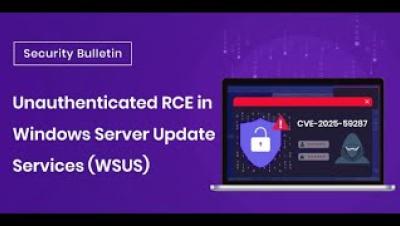
CVE-2025-53770: SharePoint Zero-Day Under Active Exploitation

CVE-2025-53770 is a live, high-severity threat that is already being exploited across global networks. This critical vulnerability in Microsoft SharePoint Server allows unauthenticated attackers to execute arbitrary code remotely, effectively handing them the keys to your infrastructure. As of July 2025, over 85 SharePoint servers have reportedly been breached. And if your organization uses SharePoint 2016, 2019, or Subscription Edition on-premises, you could be next.

Autonomous Vulnerability Remediation: Securing Web & API Apps Instantly

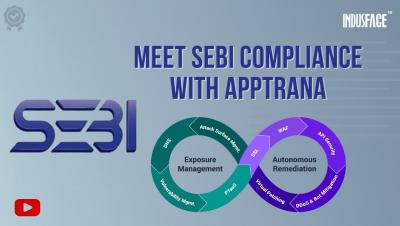
One-third of critical and high vulnerabilities remain open for 180+ days from the time they are discovered. When it comes to business growth vs security, business always wins by prioritizing features over vulnerabilities. This gives hackers enough time to exploit the vulnerabilities, putting the organization at risk. However, most of these vulnerabilities can be virtually patched within a few hours using solutions like AppTrana's SwyftComply, with zero impact on business continuity.

Beyond Block: Rethinking AI Crawler Policies

Why blocking should always be the final step, not the first instinct Artificial intelligence has changed the way people discover information online. Instead of scrolling through ten blue links, millions now ask chat assistants for instant answers. Those assistants rely on automated software known as AI crawlers. These crawlers visit public websites, collect text, code, and metadata, and then feed that material into large language models.

Understanding NIST AI RMF 1.0 and How AppTrana WAAP Strengthens AI Risk Management

AI systems depend heavily on secure web applications, APIs, and third-party data sources, but these interfaces are often the most exposed and exploited. The NIST AI Risk Management Framework (AI RMF 1.0) helps organizations govern, map, measure, and manage AI-related risks comprehensively.