Notable Enhancements to the New Version of NIST SP 800-53
As an infosec professional, you’ve likely heard of the National Institute of Standards and Technology (NIST).


As an infosec professional, you’ve likely heard of the National Institute of Standards and Technology (NIST).
Since NIST Cybersecurity Framework is the best solution for better prevention, detection, and response to cybersecurity incidents, various organizations have adopted it to safeguard their IT assets. The 2019 SANS OT/ICS Cybersecurity Survey spells out the NIST CSF as the number one cybersecurity framework in use today. However, it is imperative to consider that how should we comply with NIST CSF in 2020 and beyond? Here is some help!
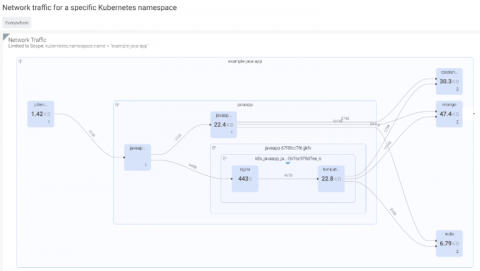
In this blog, we will cover the various requirements you need to meet to achieve NIST 800-53 compliance, as well as how Sysdig Secure can help you continuously validate NIST 800-53 requirements for containers and Kubernetes.
“Doubt is an unpleasant condition, but certainty is an absurd one.” Whilst I claim no particular knowledge of the eighteenth-century philosopher Voltaire, the quote above (which I admit to randomly stumbling upon in a completely unrelated book) stuck in my mind as a fitting way to consider the shift from traditional, perimeter-focused ’network security’ thinking to that of ‘ZTA’ (Zero Trust Architecture.)
The Cybersecurity Framework (CSF) was developed by the National Institute of Standards and Technology (NIST), a division of the U.S. Department of Commerce. This framework was created through collaboration between various private-sector and government experts to provide high-level taxonomy of cybersecurity outcomes and a methodology to assess and manage those outcomes.
In September 2019, the National Cybersecurity Center of Excellence (NCCoE) at the National Institute of Standards and Technology (NIST) announced the release of a draft practice guide entitled, “NIST Special Publication (SP) 1800-23: Energy Sector Asset Management.” The NCCoE spent the next two months collecting comments from the public to improve their guide. They then used this feedback to improve upon their initial draft. But the wait is finally over.
Security configurations are security-specific settings used to secure heterogeneous endpoints such as servers, desktops, laptops, mobile devices, and tablets. As endpoints in your network diversify, securing each endpoint becomes a challenge. One way to ensure effective endpoint security is by automating it, which is where security configurations come into play. Security configurations are utilized to secure and control every facet of your network.
At the beginning of March 2020, Fifth Domain reported that Colorado-based aerospace, automotive and industrial parts manufacturer Visser Precision LLC had suffered a DoppelPaymer ransomware infection. Those behind this attack ultimately published information stolen from some of Visser’s customers. Those organizations included defense contractors Lockheed Martin, General Dynamics, Boeing and SpaceX.
The National Institute of Standards and Technology (NIST), a physical sciences laboratory and a non-regulatory agency of the United States Department of Commerce, recently released their guidelines for password security. Some of them are contrary to what we’ve come to believe are good password policies. Our IT security expert will talk more about these guidelines in our upcoming webinar. Let’s take a look at what some of them are.