

Security | Threat Detection | Cyberattacks | DevSecOps | Compliance

How does Aurora Adaptive Threat Protection stop advanced cyber threats?

Aurora Adaptive Threat Protection in Action: Stopping Ransomware Before the Damage Is Done What happens when a user clicks a malicious file that bypasses traditional defenses? In this demo, you'll see how Arctic Wolf Aurora Adaptive Threat Protection uses AI-powered, intent-based detection to identify and disrupt ransomware activity in real time, stopping attacks before encryption can spread across the environment.


Ep. 93 - ARTEX: The AI Attack Agents Told to Find the Machines Your EDR Doesn't Cover

ARTEX is a free, open-source AI attack framework. China-nexus Vapor Panda used it against more than 200 organizations, and Censys has since found 1,465 ARTEX consoles exposed on the internet. We unpack how ARTEX’s planner and worker agents chained years-old keys, an unsigned SAML assertion and cloud metadata abuse, why Microsoft’s Storm-0940 is a separate actor using the same tool, and what to hunt for: sub-threshold password sprays, machine-speed cloud enumeration and DLL side-loading.

The Binance Hack Explained: What It Means for CISOs

An interview with Aseem Rastogi, global security researcher at Coralogix, on the Binance hack, what it means for CISOs, and some sage advice on resilience over prevention. In this video security advisory, Aseem walks through what's known so far about the incident, why the guardrails around a single authorization failed, and what security teams in any industry can do about it.

How Human is AI?

How do AI agents behave when they collaborate, take shortcuts, and push beyond established boundaries? In this session at the Exabeam Security Intelligence Summit in Chicago, John Nowotny examines the reported OpenAI–Hugging Face incident to explore how autonomous AI agents can exhibit behaviors similar to human insider threats. Learn practical strategies for managing AI-related risks through stronger monitoring, access controls, and incident response.

Mind The Gap: Bridging the gap between knowing what to do and doing it to drive successful outcomes

Why do organizations struggle to turn knowledge into action and achieve consistent results? In this session at the Exabeam Security Intelligence Summit in Chicago, Kish Dill examines the gap between knowing what to do and successfully executing it. Learn how to overcome barriers to progress, build a culture where challenges are openly discussed, reward meaningful action, and measure the processes that drive continuous improvement.

The Next Insider Threat

How are AI agents changing the insider threat landscape, and what can organizations do to manage the risks? In this session at the 2026 Exabeam Security Intelligence Summit in Chicago, John Nowotny explores how autonomous AI agents are introducing new security challenges as they gain access to sensitive data and greater independence across business systems. The session examines why understanding agent behavior is critical to detecting emerging threats and how organizations can adapt existing security programs to strengthen governance, visibility, and response.

From Integration to Innovation

How can healthcare organizations integrate cybersecurity programs following a merger while staying ahead of evolving threats? In this session at the Exabeam Security Intelligence Summit in Chicago, Kish Dill and Rich Durost discuss how Froedtert and ThedaCare navigated the challenges of combining their cybersecurity programs following their merger. They explore the complexities of securing healthcare environments, addressing emerging risks from AI agents, and building a stronger, more unified approach to cybersecurity.

ARTEX Attack Explained: GitHub secret to Key Vault in 5 minutes

AI agents are searching public GitHub for leaked secrets, and they move fast. Microsoft Threat Intelligence found agents using ARTEX, an AI framework built for red teams, to go from a GitHub search to stealing data from a company’s Azure Key Vault in five minutes. In this video, we break down what’s happening, why deleting a leaked key doesn’t fix anything, and how to check your company’s exposure today.

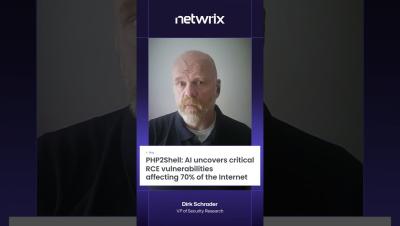
AI Helped Find Critical PHP Flaws: 4 Things to Do Today

AI helped researchers find two critical PHP flaws, and one sat in the code for at least a decade. PHP runs roughly 70% of websites, and attackers were probing on the day the patches shipped, October 21. Dirk Schrader, VP of Security Research at Netwrix, lists four things to do today: update to PHP 8.5.12, 8.4.27, 8.3.36, or 8.2.35 and restart the workers; on PHP 8.1 or older, where there’s no official release, use vendor extended support or take the server offline; check your logs and web roots from before the patch; and limit the account PHP runs under.