Security | Threat Detection | Cyberattacks | DevSecOps | Compliance

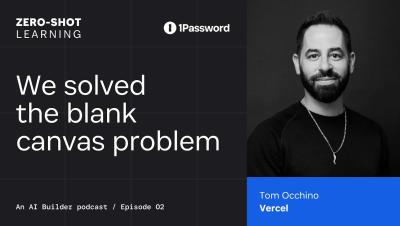
We solved the blank canvas problem | Tom Occhino from Vercel

The prototype is the new PRD. In 2013, Facebook’s development of React changed the way software engineers build and write code. Today, LLMs are transforming that process again. This episode features Tom Occhino, React co-creator and current CPO at Vercel, whose work sits at the center of both shifts. In conversation with 1Password CTO Nancy Wang and Google’s Dev Tagare, Tom explores the platform changes driven by AI-written code, builds a full-stack app in real time, and sets up a deeper discussion on the security risks of agents building software.

Codex builds at AI Speed, 1Password Secures it

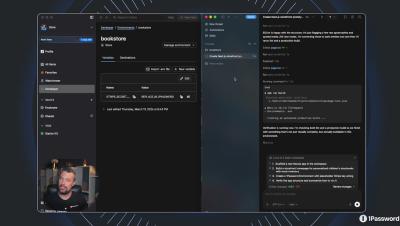
Secure secrets for agentic workflows with 1Password MCP Server and Codex As AI agents write, execute, and ship production code, they need access to systems like databases, APIs, and deployment pipelines. With 1Password Environments MCP Server for Codex, instead of putting credentials directly into prompts or files, we provision a secure runtime environment where secrets are mounted, used, and discarded, with user authentication required at the moment of access.

Agents need boundaries with Fotis Chantzis from OpenAI, Zero-Shot Learning

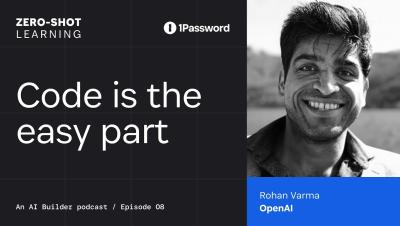
Agents need boundaries | Fotis Chantzis from OpenAI Agents don't fit old identity models. As OpenAI’s Agent Security Lead, Fotis Chantzis has a front-row seat to see how agents push identity systems beyond what they were built to control. That’s where things start to fall apart and where most teams lose control.

Eliminate organization-wide credential risk

Many critical tools — social platforms, finance apps, and AI tools — can't be put behind SSO, leaving credentials shared over Slack, stored in spreadsheets, and reused across accounts. In this video, we walk through how 1Password extends identity security beyond SSO, giving teams like Marketing and Finance simple, secure access to shared credentials — while IT and Security gain the visibility, control, and auditability they need. Because attackers don't care about org charts, and now, neither do your security controls.