Security | Threat Detection | Cyberattacks | DevSecOps | Compliance

Migrating Off VMware: What Will Change?

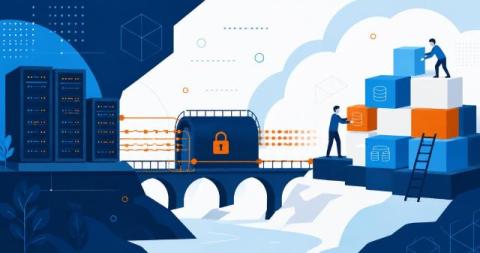
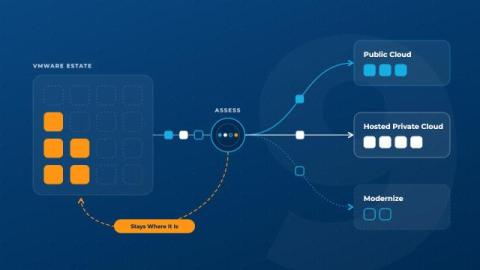
A VMware migration is usually planned as a hypervisor decision and experienced as an operations project. The virtual machines are rarely the hard part. What takes the time is everything that grew up around the platform over the last decade: the backup configuration, the monitoring, the runbooks, the automation, and the assumptions your team stopped noticing years ago. This is a practical account of what changes when you move, what does not, and what to settle before the first workload is touched.
RTO vs RPO: What They Mean and How to Set Them Honestly

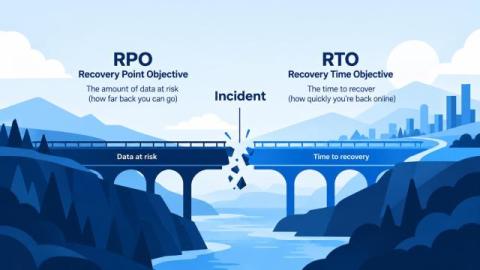
Recovery time objective (RTO) is how long a system can be down before the impact becomes unacceptable. Recovery point objective (RPO) is how much data the business can afford to lose, measured as a window of time before the incident. RTO looks forward from the moment things break. RPO looks backward from it. That distinction takes a paragraph to explain and years to get right, because the difficult part was never the definition.

Disaster Recovery for Multi-Site Businesses: Protecting Branch Offices Without Multiplying Cost

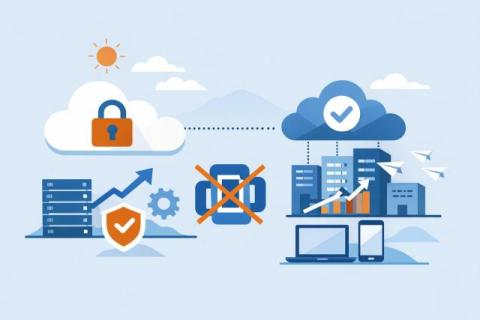
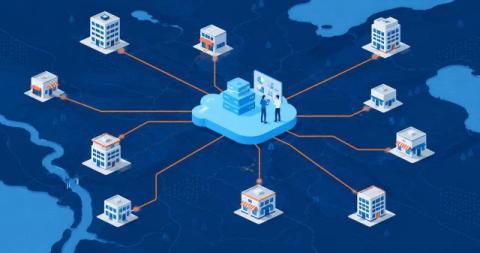
Here’s the DR planning problem that businesses with multiple locations run into: the math doesn’t scale. If you have one office, you need one DR solution. Straightforward. But if you have five offices, or ten, or fifteen, the traditional approach says you need DR infrastructure at every site, or at least a secondary site that mirrors the primary. That means duplicating hardware, licensing, networking, and staff time across every location.

How to Build a Disaster Recovery Architecture on AWS with Veeam

Most organisations know they need disaster recovery. Far fewer know what a well-designed DR architecture actually looks like. The gap between “we have backups” and “we can recover our business in under an hour” is architectural. It’s the difference between storing copies of your data somewhere offsite and building a recovery environment that’s been pre-configured, tested, and ready to take over when your production systems fail.

Building a Future-Proof Cloud Strategy Without VMware

For two decades, VMware was the default answer for virtualization. It worked, it was well supported, and the commercial terms were predictable enough that infrastructure strategy could largely ignore the underlying platform and focus on workloads. Broadcom’s acquisition ended that. Perpetual licences are gone. Product catalogues have collapsed from 168 offerings into four mandatory bundles. Per-core minimums have created fixed costs for capacity many organisations don’t use.

Navigating the New VMware Reality: What Broadcom's Changes Mean for Your Business

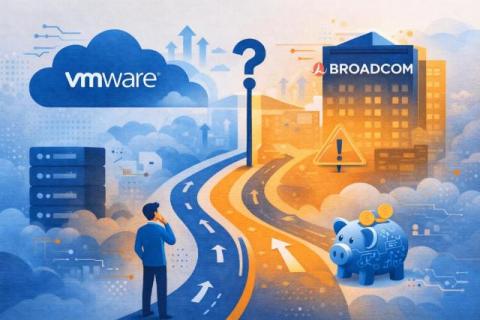
When Broadcom completed its $69 billion acquisition of VMware in November 2023, most customers assumed the initial disruption would settle. Licensing models would stabilise. Partner programmes would find a new equilibrium. Pricing would normalise. Two years in, it’s clear that didn’t happen.

The 7 Rs of AWS Application Migration: Choosing the Right Path for Each Workload

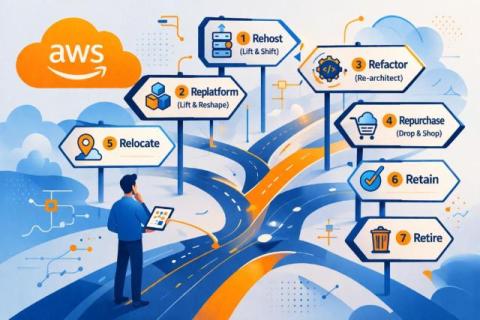
Most application migration projects fail the same way: someone picks a single strategy for the entire portfolio, then tries to force every workload into it. Lift-and-shift everything to meet a data centre exit deadline. Refactor everything because someone read a cloud-native manifesto. Retire nothing because no one wants to make the decision. AWS’s 7 Rs framework exists to prevent that.

What AWS Transform Means for Your Application Modernization Strategy

Technical debt costs US enterprises an estimated $2.41 trillion per year, according to Accenture research cited by AWS. For most organisations, roughly 30% of engineering time gets absorbed by maintaining legacy systems – work that’s necessary, but produces no new business value. That’s the problem AWS has been trying to solve with AWS Transform, its agentic AI service for enterprise application modernization.

Lift and Shift vs. Refactor: Choosing the Right AWS Migration Strategy

The debate over lift and shift versus refactoring is one of the most persistent in cloud migration planning. It’s also frequently framed as a binary choice when it shouldn’t be. Most organizations will do both — the question is which approach applies to which workload, and in what order. Getting this decision wrong is expensive. Over-refactoring adds months to migration timelines and cost that’s difficult to justify.

Opti9 Becomes Authorized Anthropic Reseller via Amazon Bedrock

Opti9 recently announced it has been approved as an authorized reseller for Anthropic models through Amazon Bedrock, further strengthening its ability to deliver secure, enterprise-grade AI solutions on Amazon Web Services (AWS). In October, AWS enabled its Solution Provider Partners to resell Amazon Bedrock, a fully managed service that provides access to a wide range of leading foundation models from top providers.