Security | Threat Detection | Cyberattacks | DevSecOps | Compliance

Real-time threat response for Kubernetes workloads, using threat intelligence feeds and deep packet inspection

Cloud-native transformations come with many security and troubleshooting challenges. Real-time intrusion detection and the prevention of continuously evolving threats is challenging for cloud-native applications in Kubernetes. Due to the ephemeral nature of pods, it is difficult to determine source or destination endpoints and limit their blast radius. Traditional perimeter-based firewalls are not ideal fit for Kubernetes and containers.

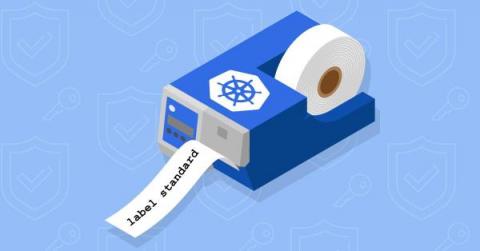
Label standard and best practices for Kubernetes security

In this blog post, I will be talking about label standard and best practices for Kubernetes security. This is a common area where I see organizations struggle to define the set of labels required to meet their security requirements. My advice is to always start with a hierarchical security design that is capable of achieving your enterprise security and compliance requirements, then define your label standard in alignment with your design.

Workload access control: Securely connecting containers and Kubernetes with the outside world

Containers have changed how applications are developed and deployed, with Kubernetes ascending as the de facto means of orchestrating containers, speeding development, and increasing scalability. Modern application workloads with microservices and containers eventually need to communicate with other applications or services that reside on public or private clouds outside the Kubernetes cluster. However, securely controlling granular access between these environments continues to be a challenge.

Kubespray 2.17 released with Calico eBPF and WireGuard support

Congratulations to the Kubespray team on the release of 2.17! This release brings support for two of the newer features in Calico: support for the eBPF data plane, and also for WireGuard encryption. Let’s dive into configuring Kubespray to enable these new features.

Why securing internet-facing applications is challenging in a Kubernetes environment

Internet-facing applications are some of the most targeted workloads by threat actors. Securing this type of application is a must in order to protect your network, but this task is more complex in Kubernetes than in traditional environments, and it poses some challenges. Not only are threats magnified in a Kubernetes environment, but internet-facing applications in Kubernetes are also more vulnerable than their counterparts in traditional environments.

Calico integration with WireGuard using kOps

It has been a while since I have been excited to write about encrypted tunnels. It might be the sheer pain of troubleshooting old technologies, or countless hours of falling down the rabbit hole of a project’s source code, that always motivated me to pursue a better alternative (without much luck). However, I believe luck is finally on my side.

Kubernetes security issues: An examination of major attacks

In a never-ending game of cat and mouse, threat actors are exploiting, controlling and maintaining persistent access in compromised cloud infrastructure. While cloud practitioners are armed with best-in-class knowledge, support, and security practices, it is statistically impossible to have a common security posture for all cloud instances worldwide. Attackers know this, and use it to their advantage. By applying evolved tactics, techniques and procedures (TTPs), attackers are exploiting edge cases.

Kubernetes security policy design: 10 critical best practices

In this blog post, I will be looking at 10 best practices for Kubernetes security policy design. Application modernization is a strategic initiative that changes the way enterprises are doing business. The journey requires a significant investment in people, processes, and technology in order to achieve the desired business outcomes of accelerating the pace of innovation, optimizing cost, and improving an enterprise’s overall security posture.

CVE-2021-31440: Kubernetes container escape using eBPF

In a recent post by ZDI, researchers found an out-of-bounds access flaw (CVE-2021-31440) in the Linux kernel’s (5.11.15) implementation of the eBPF code verifier: an incorrect register bounds calculation occurs while checking unsigned 32-bit instructions in an eBPF program. The flaw can be leveraged to escalate privileges and execute arbitrary code in the context of the kernel.

How Calico Cloud's runtime defense mitigates Kubernetes MITM vulnerability CVE-2020-8554

Since the release of CVE-2020-8554 on GitHub this past December, the vulnerability has received widespread attention from industry media and the cloud security community. This man-in-the-middle (MITM) vulnerability affects Kubernetes pods and underlying hosts, and all Kubernetes versions—including future releases—are vulnerable. Despite this, there is currently no patch for the issue.