Security | Threat Detection | Cyberattacks | DevSecOps | Compliance

New Abuse of the ClickOnce Technology, Part 1: The Inner Workings of ClickOnce Application Deployment

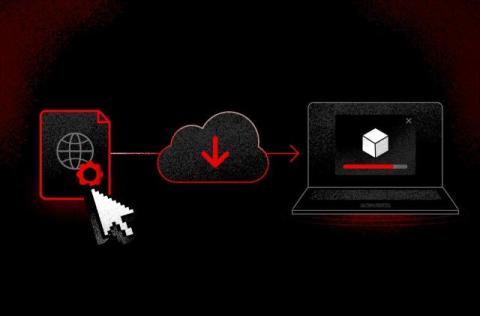
Sharing applications with the world is no easy task. Developers struggle to ensure compatibility across different platforms, vendors continually search for new channels to showcase and distribute their software, and users often encounter hurdles when installing and updating the applications. To help solve this challenge, Microsoft offers multiple solutions including its Microsoft Store, the native Windows Installer component (.msi packages), and a lesser-known but powerful option: ClickOnce technology.

New Abuse of the ClickOnce Technology, Part 2: Stop Threat Actors from Clicking Once and Staying Forever

Following our deep dive into the internals of ClickOnce application deployment in Part 1 of this two-part blog series, let’s focus on the security implications of this technology. In this blog, we examine how threat actors can weaponize ClickOnce features, and we reveal what we believe to be a new abuse that security teams need to be aware of.

After Executive Order 14409: Next Steps for Securing AI

Adversaries are using AI to attack with unprecedented speed and precision. This trend, coupled with the rapidly growing use of agentic AI, means it is now necessary to use AI to protect and defend the modern tech stack. It is timely that on June 2, 2026, President Trump signed Executive Order 14409 on Promoting Advanced Artificial Intelligence Innovation and Security. At a high level, this EO validates that security is fundamental to reaping the benefits of AI.

Falcon Exposure Management Now Available for Third-Party Environments

Frontier AI is poised to change cybersecurity faster than most organizations can adapt. It’s accelerating vulnerability discovery, which puts new pressure on security teams to handle more vulnerabilities, in less time, with workflows built for much slower technology. The primary challenge of the frontier AI era is not the increase in vulnerabilities. It’s understanding which exposures are most critical and how to address them before adversaries target them.

CrowdStrike Announces Continuous Identity for AI Agents

Identity security has long been built around a simple premise: Authenticate a user, grant access, and trust that decision until their next login. While for many this model worked well enough when identities were primarily human and access patterns were predictable, that’s no longer the case for humans and definitely not the case for AI agents.

Why AI Projects Stall and How CIOs Can Respond

Across enterprises, a familiar pattern is emerging. A business unit identifies an AI tool with a clear upside in productivity or revenue. Their proposal moves into procurement. Security raises concerns, and the legal team asks new questions about the tool. Compliance starts hesitating and the momentum slows. Finally, the project stalls. This friction is not due to resistance to innovation. It reflects a deeper structural issue: Most enterprise governance models were not designed for AI.

CrowdStrike Named an Innovation and Growth Leader in the 2026 Frost Radar: Cloud and Application Runtime Security

We're proud to announce that Frost & Sullivan has named CrowdStrike a Leader for the second consecutive time in the 2026 Frost Radar: Cloud and Application Runtime Security (CARS). Building on last year's recognition, CrowdStrike scored highest on both the Growth and Innovation indices.

CrowdStrike Expands Identity Leadership with OpenID and IDPro

CrowdStrike has joined the OpenID Foundation as a Sustaining Corporate Member, its highest level of membership, and is also now a member of IDPro. Together, these commitments reflect a focused effort to help shape the future of identity-first security through both standards leadership and real-world deployment and a shift beyond static authentication toward more dynamic, interoperable, and effective identity security.

CrowdStrike and Zscaler Bring Continuous Identity to Zero Trust Access

Modern adversaries are accelerating attacks across identities, endpoints, cloud environments, and SaaS applications, often moving faster than security teams can respond. Identity has become a primary attack vector as attackers leverage credential abuse to evade detection and expand their foothold. Stopping today’s threats requires visibility and context across every domain to accurately assess risk before adversaries can move laterally.

3 Principles to Safely Scale Agentic AI

AI is moving from experimentation to execution. What started as copilots is quickly evolving into autonomous AI agents that can make decisions, execute tasks, and operate across enterprise environments. As organizations accelerate adoption of agentic AI, they’re expanding their attack surface in ways traditional security models weren’t built to handle.