Security | Threat Detection | Cyberattacks | DevSecOps | Compliance

Cloud lateral movement: Breaking in through a vulnerable container

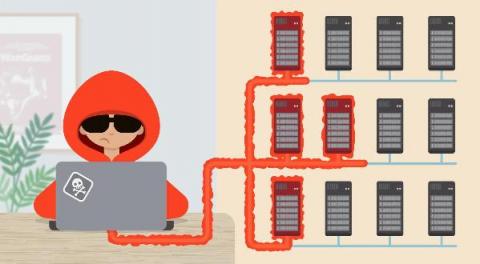
Lateral movement is a growing concern with cloud security. That is, once a piece of your cloud infrastructure is compromised, how far can an attacker reach? What often happens in famous attacks to Cloud environments is a vulnerable application that is publicly available can serve as an entry point. From there, attackers can try to move inside the cloud environment, trying to exfiltrate sensitive data or use the account for their own purpose, like crypto mining.

AWS CIS: Manage cloud security posture on AWS infrastructure

Implementing the AWS Foundations CIS Benchmarks will help you improve your cloud security posture in your AWS infrastructure. What entry points can attackers use to compromise your cloud infrastructure? Do all your users have multi-factor authentication setup? Are they using it? Are you providing more permissions that needed? Those are some questions this benchmark will help you answer. Keep reading for an overview on AWS CIS Benchmarks and tips to implement it.

AWS S3 security with CloudTrail and Falco

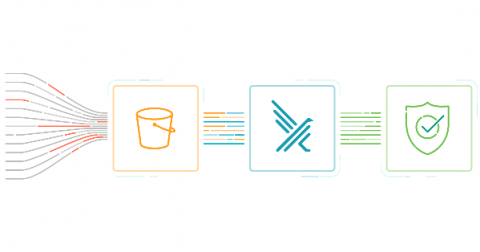
One of the major concerns when moving to the cloud is how to approach AWS S3 security. Companies may have moved their workflows to Amazon, but are still cautious about moving their data warehouse. And that is totally understandable. We have all heard about data breaches in companies like Facebook, GoDaddy, and Pocket. It’s important that access to information is done properly, in a limited and controlled fashion, to avoid such breaches.

ECS Fargate threat modeling

AWS Fargate is a technology that you can use with Amazon ECS to run containers without having to manage servers or clusters of Amazon EC2 instances. With AWS Fargate, you no longer have to provision, configure, or scale clusters of virtual machines to run containers. This removes the need to choose server types, decide when to scale your clusters, or optimize cluster packing. In short, users offload the virtual machines management to AWS while focusing on task management.

Running commands securely in containers with Amazon ECS Exec and Sysdig

Today, AWS announced the general availability of Amazon ECS Exec, a powerful feature to allow developers to run commands inside their ECS containers. Amazon Elastic Container Service (ECS) is a fully managed container orchestration service by Amazon Web Services. ECS allows you to organize and operate container resources on the AWS cloud, and allows you to mix Amazon EC2 and AWS Fargate workloads for high scalability.

Detecting and mitigating Apache Unomi's CVE-2020-13942 - Remote Code Execution (RCE)

CVE-2020-13942 is a critical vulnerability that affects the Apache open source application Unomi, and allows a remote attacker to execute arbitrary code. In the versions prior to 1.5.1, Apache Unomi allowed remote attackers to send malicious requests with MVEL and OGNL expressions that could contain arbitrary code, resulting in Remote Code Execution (RCE) with the privileges of the Unomi application.

Detecting MITRE ATT&CK: Privilege escalation with Falco

The privilege escalation category inside MITRE ATT&CK covers quite a few techniques an adversary can use to escalate privileges inside a system. Familiarizing yourself with these techniques will help secure your infrastructure. MITRE ATT&CK is a comprehensive knowledge base that analyzes all of the tactics, techniques, and procedures (TTPs) that advanced threat actors could possibly use in their attacks.

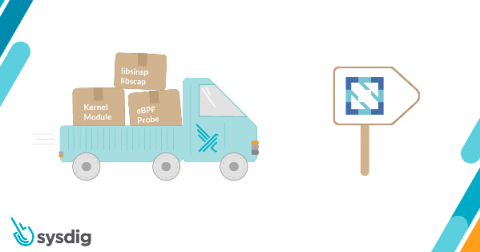
Sysdig contributes Falco's kernel module, eBPF probe, and libraries to the CNCF

Today, I’m excited to announce the contribution of the sysdig kernel module, eBPF probe, and libraries to the Cloud Native Computing Foundation. The source code of these components will move into the Falco organization and be hosted in the falcosecurity github repository. These components are at the base of Falco, the CNCF tool for runtime security and de facto standard for threat detection in the cloud.

Sysdig achieves Red Hat Vulnerability Scanner Certification

Image vulnerability scanning is a critical first line of defense for security with containers and Kubernetes. Today, Red Hat recognized Sysdig as a certified Red Hat security partner based on our work to standardize on Red Hat’s published security data with Sysdig Secure.

Runtime security in Azure Kubernetes Service

Runtime security for Azure Kubernetes Service (AKS) environments requires putting controls in place to detect unexpected and malicious behavior across your applications, infrastructure, and cloud environment. Runtime threats include things like: Even if you’re taking advantage of tools like container image vulnerability scanning, Kubernetes pod security policies, and Kubernetes network policies with AKS, not every risk will be addressed.